

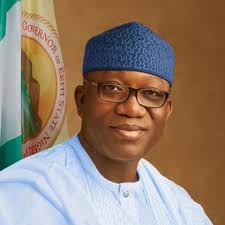
Text of the Keynote Address by His Excellency Dr. Kayode Fayemi, CON, Governor, Ekiti State, Nigeria, entitled: Towards A More Perfect Union, Presented at the Towards A Viable Union: National Dialogue on Remaking Nigeria, Abuja, August 19, 2021
Protocols
It is my pleasure to give the keynote address at this National Dialogue on Remaking Nigeria. I am reallyimpressed by the great effort which Chido and his team have put into this work. This dialogue itself is a fall out of the book: Remaking Nigeria: Sixty Years, Sixty Voices which is like a hansard of a public square parliament of some of the brightest and soundest minds in Nigeria today. I like to extend my sincere appreciation to every member ofthe team that has put this beautiful, insightful and incisive work together. I have had the privilege of a complimentary copy and I have gone through, I deeply appreciate the depth, diversity and quality of the intellect and industry therein. I am not surprised about the output because the authorship is truly star-studded, and one should not expect anything but excellent thinking and elegant style.
This book has, in several ways, a lot of attributes similar tothe final report of International Commission for the Studyof Communication Problems, which was empanelled in1976 by United Nations Scientific, Education and Cultural Organisation (UNESCO) headed by Sean McBride. The outcome of that commission was the bookentitled: Many Voices, One World; this book could in fact, have been, “Many Voices, One Nigeria” because of therichness of its content, demography of contributors, plurality of opinions, diversity in cultural and geographical spread as well as engaging perspectives shared in the book. Remaking Nigeria: Sixty Years, Sixty Voices is historic in that it was published to mark the epochal 60th anniversary of Nigeria’s nationhood. It also coincided with a timeofinternational distress as a result of the COVID- 19 pandemic when the whole world was thrown into one of the most trying socioeconomic challenges in history.
I am particularly glad that the theme of today’s dialogue is consistent with the title of the paper I delivered at ArewaHouse in 2020 where I spoke on the topic: Unfinished Greatness- Towards a more perfect union in Nigeria. And when I was asked to write the foreword to this book, I thought it was nice I wrote from the perspective of my idea of nation building as an unfinished business. I am therefore glad that the theme of this dialogue is very much in sync with my previous opinion. My contribution in this address will therefore be a reiteration of what I had previously voiced out on the future of Nigeria and what I think weneed to do for us to have a more perfect union that gives her citizens a future that is inspiring and prosperous.
Ladies and gentlemen, I sometimes ask the question as tohow best we should approach the challenge of nation building that ails Nigeria. There are those who think the problem with Nigeria is her size, some others think it is the many ethnic interests conflating one another for domination. Others think it is all about bad leadership, while some others believe it is the constitution. There are those who blame poverty as the issue, while some pan-Africanists believe colonialism, foreign religions and intellectual imperialism are the reasons we are still lagging behind. The thirst for excuses and culprits to blame for our obvious challenges is an insatiable one. In the midst ofthese epistemological melee, there have even been more disillusioned solutions to how to end the problem – theloudest of these today are the clamours for secession and unending complaints about marginalisation, which ismutual anyway! I therefore tend to assume that the idea of “remaking Nigeria” itself stems from the mind-set that sees the country as a fallen or collapsing edifice rather than a country still in the hands of architects and builders. For me, the idea of remaking the nation should not suggest a strategic demolition for us to erect a totally new structure.
The question that we must however be willing to answer is where the inhabitants of a nation as big as Nigeria take shelter if we must collapse it, because for many, the idea of remaking Nigeria includes unmaking? And if the problem with the current structure is less of the competence of the architects and structural engineers as much as it is with the estate managers and occupants, how will the new erection or the “remade” structure fare in the hands of the same occupants who are unwilling to change until every other person has changed? For me, whatever defects that currently ails our country can be corrected without having to collapse the whole structure. This is very logical if we understand that nation building is an endless endeavour and that no generation is ever satisfied with the work it hasdone, it is the generation that comes after that can truly appreciate the progress that has made when they begin to take for granted what was scarcely available for the generation before them. Nation building is an unfinished business.
Every generation, Frantz Fanon said, “Must out of relative obscurity discover its mission, fulfil it, or betray it.” It is therefore illusory for us to believe that Nigeria can actually reach perfection from her foundation. To start with, there isno nation today that is wholly satisfied with its present status. Every nation at all times strives to better its best and reach new heights. For us as a people our focus should be about how we can reinvent our nation, work for the prosperity of our people and ensure their peace and prosperity.
Indeed, few people would disagree with the view that there is a significant gap between our potential for greatness as a country, and the reality of where we are now. It is thereforea sacred duty for all of us to continue to seek every opportunity to make the dream of a great nation come topast. It is even more important to know that for as long asman continues to sleep, he will continue to dream. There is no end to dreaming. Imperatives for a more Perfect Union Therefore, to speak of building a more perfect union is tobe superfluous. But embedded in that deliberate superfluity is a fundamental notion of eternal work in progress, a perpetual commitment to, and improvement no matter how satisfying or dissatisfying the present condition is. Thesecond stanza of our national anthem ends with an infinitive that underlines that nation building is an unending search for perfection. It says: “To build a nation, where peace and justice shall reign.” For the next one thousand years, no matter the progress we would have made, as long as this country continues to exist, generations after generations, will continue to seek “to build a nation, wherepeace and justice shall reign. It is credit to the genius of whoever invented that line that both the mission and the means to achieve the mission is captured in one simple phrase.
The path to nation-building is peace, the path to peace isjustice, and the path to justice is equity and inclusion. Evenfor Americans who coined the mantra of a more perfect union, it was done out of the understanding that the work of nation building is never done. If a country like the United States, forged out of a common purpose and commonconsent, perpetually seeks to makea more perfect union, we have no excuse to give up on the task of nation- building in Nigeria. This truth is what the celebrated novelist, Ben Okrimakes the center-piece of his magical reality novel: The Famished Road. He metaphorises the road as the unending journey of man and the unfinished work of nation building. For him, in the road “each new generation begins with nothing and with everything. They know all the earlier mistakes. They may not know that they know, but they do. They know the early plans, the original intentions sand the earliest dreams. Each generation has to reconnect the dreams for themselves. They tend to become a little wiser, but don’t go very far. It is possible that they now travel slower, and will make bigger mistakes. That is how they are, as a people. They have an infinity of hope and an eternity of struggles. Nothing can destroy them except themselves and they will never finish the road that is their soul and they do not know it.” Okri tells us that the work of nation building is for all generations. And how far each generation is able to go on the journey to nation-building and the attainment of greatness depends on the aggregate character and predilections of that generation. Perhaps, as products of a specific period of our history and national experience, we are distrustful of change, even if change is what our situation recommends. We must however take note that the generation that wants to take over from us are products of a different historical experience.
A great number of young Nigerians today did not experience colonialism or military dictatorship. They are akin to the post-apartheid South Africans which are referred to as the “born free generation”. Because they can take the fact of democracy for granted, it is difficult for them to see democracy as an end in itself. What really matters to them is what democracy can do for them, how it can work for them and how it can help to facilitate their dreams. Nurtured in the cusp of some of the most rapid transformation in human history, they are less fearful of change and experimentation. If it is not working, they want it fixed urgently, sometimes, with little thought about the costs and benefits. The #EndSARS protest of2020 and itsimplications are an attestation to this proclivity. What started as an innocuous online protest over police brutality soon snowballed before our very eyes into a movement that assumed destructive dimensions.
But the core demands of #EndSARS, should not be lost today or tomorrow, not even in the ashes of the ruins that followed the protest. In the protest wasa genuine desire for accountability, inclusion, and respect for human dignity, responsive and responsible leadership and liberalisation of democratic gains in terms of economic opportunity, equity and fairness. For over a decade, several analysts have noted that our massive youth population could be a major demographic advantage to our country if it is properly harnessed. Years of neglect and failure to make the right investments to support this population is now, quite predictably, turning it to a major disruptive force and a time bomb. Restructuring, Devolution, Fiscal Federalism and Greatness In our quest towards a more perfect union therefore, the main challenge is one of remodeling the union and the basis of its fundamental national association.
Unfortunately, this is one issue that we have allowed to be implicated in our instinctive mutual suspicion and unnecessary brickbats. Caught in our politics of difference and otherness, devolution, decentralisation, restructuring and such other concepts have come to mean different things to different people, depending on the ethnic and regional toga they wear. Our age-long distrust and suspicion of one another are now being tested and contested on the basis ofthis issue that should be the pivot of our nation- building effort. However, stripped of all opportunism and dysfunctional baggage, these concepts should simply refer to a way to re-imagine and remake our country to make it work well for everyone. I associate fully with the views of respected scholar and former Chairman of INEC, Professor Attahiru Jega when he said that “sooner than later, these matters have to be addressed squarely but dispassionately. The challenge is how to address the issue of restructuring the Nigerian federal system without upsetting the applecart; that is, how to add value to the structure and systemic efficacy of the federal arrangement, without unleashing instability occasioned by the mobilisation of ethnic, regional and religious sentiments and identities. (Jega: 2017)
I will argue therefore, that our idea of restructuring must bemotivated only by our generational responsibility to perfect our union and to build a nation where peace and justiceshall reign based on an operative principle that true greatness lies in building a country that works for everyone, regardless of the language they speak, or how they understand and worship God. The evolution of Nigeria’sfederalism has not served our best interests and it is not surprising that we have witnessed protests at every attempt at constitutional reengineering. Two prominent examples were the 2005 Constitutional Reform Conference convened by President Obasanjo’s administration and the 2014 National Conference at the instance of President Jonathan. In the two conferences, the delicate issue remains that of restructuring (often dubbed Devolution of Power, Decentralisation, True Federalism, etc.). But for how long can we continue to run away from this issue and continue to pretend that somehow it would resolve itself someday? In my view, structural changes (like state creation and merger) would appear to me, unrealistic in a democratic dispensation. I also do not think we can easily go back to the pre-1966 regional structure or adopt the 54 federating-units proposal of the 2014 conference, which I find unrealistic, no matter the appeal or attraction. Rather, our preoccupations should be, how can we make the current structure work better for us in terms of, first our governance system; second, our economy and national productivity; and third citizenship and inclusion. There maybe other issues that should be the object of our restructuring, but I consider these to be paramount. Therefore, in my view, restructuring should be less about redrawing the map of Nigeria, but about building a more efficient governance system that is capable of deliveringthe greater good to the greatest number of our people.
In essence, our desire to build a more perfect union should be anchored on the principle of devolution of powers – that is, re-allocation of powers and resources to the country’s federating units. The reasons for this are not far- fetched. First, long years of military rule has produced an over-concentration of powers and resources at the centre to thedetriment of the states. Two, the 1999 constitution, as hasbeen argued by several observers, was hurriedly put together by the departing military authority and was not a product of sufficient inclusiveness. Part of the focus of such an exercise should be: what items should remain on the exclusive legislative list and which ones should be transferred tothe concurrent list? Other topical issuesinclude derivation principle; fiscal federalism and revenue allocation; land tenure, local government creation and autonomy; etc. All points considered, the fiscal burden of maintaining a largely inefficient and over-bloated bureaucracy is a metaphor for shooting oneself on the foot. Again, in arriving at a position on what ought to be in the quest for a more perfect union, I wish to further say that my sentiments are more associated with strengthening the sub-national units in the re-allocation of powers and resources.
The assignment of functions that would be consistent with a devolved but strengthened federal system would have a short, exclusive federal list focusing on national defence and security, macro-economy, foreign affairs, customs and excise; joint responsibility in respect of certain functions that are currently assigned exclusively to the federal government (tor example, internal security and policing) and primary responsibility of the sub-national governments in respect to other functions in the second schedule of the 1999 constitution whilst the remaining powers devolve to states. On revenue collection and sharing, the position of the Nigeria Governors’ Forum to which I subscribe is that the sharing formula should be reviewed in favour of the states, especially given the argument of devolved responsibilities to the sub-nationals. In the context of the-proposed new federal structure, Governors have argued for a formula along the lines of 42% to states, 35% to the Federal and 2.3% to Local Governments.
Remaking Nigeria through devolution of powers and re-organisation of the federating units is an idea whose timehas come. To quote Attahiru Jega again, by working hard and rationally, scientifically, to remove all the distortions in our federal system, we would have a better functioning federation with only states as federating units with conscious commitment to zonal cooperation among contiguous states, with local governments subsumed under states… with substantial devolution of power, responsibilities and resources from the federal government to the states, and with mechanisms of ensuring greater equality of opportunity for all and affirmative action for inclusion of the marginalised, minorities and groups discriminated against in the country. (Jega 2017) Greatness beckons – The Power of Leadership
While we set out as a country on a somewhat progressive footing under the Founding Fathers’, the reversals that we experienced mainly from the implosions that arose within the polity and the incursion of authoritarian rule, alongsideits ‘civilian’ inflections, enthroned a paradigm ofgovernment and public governance that coalesced around waste, bureaucratic inefficiency, red-tapism and certainly, corrosive corruption. Thereafter, we witnessed how theState became more and more unitary, and how the contest for the privileges of the centre took on an increasingly desperate tenor among the different groups and stakeholders in the country. While corruption and state exclusion thrived, several groups began to feel a sense of alienation, leading to their desertion of a sense of national citizenship and affiliation to the State, which they subsequently considered as being contraption to beexploited for individual gain – a ‘cake’ that everyone needed to grab a share of. Thus, whatever could be taken out of the centre more illegally was considered acceptable and just within the perception of local interest. From the foregoing what is evident is that most prominently at the national level the Nigerian post-colonial state has not behaved in a fundamentally different way from the colonialstate. Even though operated by Nigerians, the post-colonial state has been as alien and as predatory as its colonial predecessor.
As late Professor Claude Ake argued in the early 1990s, this legacy has its roots in the colonial era when politicaldiscourse excluded not only democracy but even the idea of good government, and politics was reduced to the clash of one exclusive claim to power against another. The questiontherefore is: How can the business of state be serious business in a context in which public governance is largely a predatory exercise in which power is captured from citizens and not freely given by citizens; a context in which the consent of the people is not integral to the constitution of legitimacy? Against the backdrop of the post-colonialstate in Africa, it is still possible to argue that political leadership remains a major determinant of good public governance.
The African experience, among others, has shown that the quality, vision, patriotism and competence of the political leadership is critical to the transformation of African states and the possibilities of good governance. In our specific experience in Nigeria, we also have instances of how the quality of the leadership has produced good system of public governance, even if few and far between. Yet, important as the power of leadership is, until and unless we recompose the Nigerian State and make it derive her original consent and legitimacy from the people, then we labour in vain. Contrary to the pretensions of neo-liberal economists, without a modern state there cannot be an economy or society: therefore, before public governance, there must be a modern state in the real sense. A predatory state cannot give birth to proper public governance and a sense of justice and fairness.
Those of us in public office may delude ourselves, but theevents of the recent times have brought the contradictions of the Nigerian state into a sharper focus. Whether your immediate concern is police brutality and the need for police reform or you reflect upon the rationale and the challenges of those who insist that until Nigeria becomes a theocracy, there shall be blood and tears unlimited; whether you look towards the Niger Delta where, despite the amnesty and the industry of graft and greed that it has re-produced, there is a continuous and bloody demand for justice and equity; or you examine the endless pretexts for ethnic strife and blood-letting between the indigenous people and the settlers in the Middle Belt; whether you scrutinise the regular apocalyptic predictions of many Nigerians about the fate of the country, or you contemplatewhat would happen if measures are not taken to arrest the drift, you cannot escape the conclusion that Nigeria needsto be re-imagined and re-created. These are issues that need to be tackled frontally and courageously too. I have no doubt that Nigeria is a viable country and that her place in the comity of great nations is well assured. With all handson deck, we will make this land a place of pride.
My final word in our journey to a more perfect unionwould be that we should deemphasise negative energy, deactivate fault-finding but concentrate on building consensus and generating pragmatic solutions. Petty antagonism, ethnic profiling, religious clashes and hatemongering cannot build a nation. With a hopeful and positively minded people, there is no mountain we cannot surmount and that’s why I commend the essays in this book to all Nigerians and friends of Nigeria.
I thank you for listening.
Dr. Kayode Fayemi, CON, Governor, Ekiti State, Nigeria, and Chairman, Nigeria Governors’ Forum.
