
Close Menu
Ikenga Online
    What's Hot

    Africa and the deadly dust from Iran by Azu Ishiekwene

    March 5, 2026

    AE-FUNAI college of medicine inducts 42 pioneer doctors

    March 5, 2026

    Varsity offers free respiratory treatment to Ebonyi rice mill workers

    March 5, 2026
    Facebook X (Twitter) Instagram
    Ikenga Online
    Facebook X (Twitter) Instagram YouTube
    Donate
    • Home
      • Igboezue
      • Hall of Fame
      • Hall of Shame
    • News
      1. Other States
      2. National
      3. International
      4. Interviews
      5. Personalities
      6. View All

      Kaduna victims’ coalition demands probe of alleged abuses under El-Rufai

      February 16, 2026

      Dadiyata: Kperogi raises questions as El-Rufai, Ganduje trade allegations

      February 15, 2026

      Kole Shettima, others to be turbaned by Machina Emirate

      January 26, 2026

      APC makes it 29 governors as Yusuf defects with 22 Kano lawmakers

      January 26, 2026

      RULAAC urges safeguards, democratic oversight in proposed state police framework

      March 5, 2026

      Just in: Tinubu nominates ‘tax man’ Taiwo Oyedele as minister of state for finance

      March 3, 2026

      ICPC confirms seized items from El-Rufai’s residence

      March 3, 2026

      Digital membership register, trap set for opposition parties — ADC

      March 3, 2026

      A Critical review of Reparations: History, Struggle, Politics and Law, by Chido Onumah 

      March 4, 2026

      Iran strikes: US issues security alert to citizens in Nigeria, worldwide

      March 2, 2026

      Iran supreme leader, Ayatollah Ali Khamenei killed in US–Israel strikes

      March 1, 2026

      US, Israel launch attacks on Iran as explosions rock Tehran

      February 28, 2026

      Slash jumbo salaries to pay minimum wage, Bishop tells Tinubu

      June 19, 2024

      Nigeria remains a country in crisis that needs to heal – Chido Onumah

      January 24, 2024

      The Ekweremadus: Obasanjo writes UK court, seeks pardon for them

      April 5, 2023

      I’m coming with loads of experience to re-set Abia – Greg Ibe

      February 1, 2023

      Anambra-born Ugochi Nwizu shines as UNN best graduating doctor with multiple distinctions

      September 29, 2023

      Bulwark for women, girls: Meet Ikengaonline September town-hall guest speaker, Prof Joy Ezeilo

      September 27, 2023

      Rufai Oseni, the most dangerous man on Nigerian TV by Okey Ndibe

      February 13, 2023

      Stanley Macebuh: Unforgettable pathfinder of modern Nigerian journalism by Uzor Maxim Uzoatu

      February 7, 2023

      AE-FUNAI college of medicine inducts 42 pioneer doctors

      March 5, 2026

      Varsity offers free respiratory treatment to Ebonyi rice mill workers

      March 5, 2026

      RULAAC urges safeguards, democratic oversight in proposed state police framework

      March 5, 2026

      Rev Father escapes death, two vigilantes killed, as gunmen invade Enugu community

      March 5, 2026
    • Abia

      Abia tops climate change preparedness ranking, wins PACE commendation

      March 5, 2026

      Rights Abuse: Army warns soldiers, threatens sanctions over gambling, misconduct

      March 5, 2026

      Otti applauds Ohanaeze leadership, reaffirms support for Igbo unity, development

      March 4, 2026

      Otti flags off functionalisation of PHCs, unveils Alaukwu ward health centre

      March 4, 2026

      APC targets Abia in 2027 as Ikoh hails party unity, Tinubu’s reforms

      March 4, 2026
    • Anambra

      ALGAF: JDPC tasks fellows on project monitoring for grassroots development

      March 2, 2026

      Thousands to benefit from IDEAS-TVET project in Anambra — Prof Onyeizugbe

      February 24, 2026

      Sit-at-home: Anambra govt urges transporters to resume full operations

      February 24, 2026

      Soludo shuts down Nnewi auto parts market over sit-at-home

      February 23, 2026

      IWA, Igbo stakeholders push for enforcement of laws to strengthen Igbo language

      February 22, 2026
    • Ebonyi

      AE-FUNAI college of medicine inducts 42 pioneer doctors

      March 5, 2026

      Varsity offers free respiratory treatment to Ebonyi rice mill workers

      March 5, 2026

      Former Ebonyi deputy governor’s father kidnapped

      March 1, 2026

      Ebonyi orders contractor to stop work over substandard materials

      March 1, 2026

      Gov Nwifuru suspends two commissioners in Ebonyi

      February 28, 2026
    • Delta
    • Enugu

      Rev Father escapes death, two vigilantes killed, as gunmen invade Enugu community

      March 5, 2026

      Enugu govt takes over warehouse renovated by UNICEF, thanks donor

      March 5, 2026

      APC concludes congresses, elects new executives in Enugu

      March 4, 2026

      Enugu council boss inaugurates six solar-powered boreholes

      March 1, 2026

      Mbah urges Enugu youths to seize opportunities in technology, innovation

      February 25, 2026
    • Imo

      Disband ‘Tiger Base’ now, Igbo group petitions Gov Uzodimma

      February 25, 2026

      RULAAC urges Imo CP to probe alleged atrocities by vigilante leader in Njaba

      February 13, 2026

      Akagburuonye @ 60: Ex-Eagles stars storm Mbaise to honour humanitarian

      February 13, 2026

      RULAAC petitions Imo attorney-general over alleged torture, sexual abuse of trainee nurse

      January 25, 2026

      Reporters’ diaries: S-East governors earn praise for rural road improvements

      January 6, 2026
    • Rivers

      Aba Power breaks new ground with electricity supply to Rivers

      February 22, 2026

      Investigate Asari Dokubo over anti-Igbo rants now, IIC tells security agencies

      February 20, 2026

      Ohanaeze inaugurates committee on Igbo strategic engagement

      February 2, 2026

      Rivers assembly vows to proceed with Gov Fubara, deputy’s impeachment process 

      January 16, 2026

      Financial disagreements fuel impeachment moves against Fubara — Aide alleges

      January 16, 2026
    • Politics

      APC targets Abia in 2027 as Ikoh hails party unity, Tinubu’s reforms

      March 4, 2026

      APC concludes congresses, elects new executives in Enugu

      March 4, 2026

      Digital membership register, trap set for opposition parties — ADC

      March 3, 2026

      APC dismisses ADC allegations over attack on Peter Obi, Odigie-Oyegun, others 

      February 26, 2026

      NJF calls for justice, equity, fair play in replacement of Okey Ezea

      February 23, 2026
    • Opinion & Editorial
      • Editorial
      • Columnists
        • Osmund Agbo
        • Chido Onumah
        • Uche Ugboajah
        • Hassan Gimba
        • Edwin Madunagu
        • Rudolf Okonkwo
        • Azu Ishiekwene
        • Osita Chidoka
        • Owei Lakemfa
        • Chidi Odinkalu
      • Opinion
    • Special Reports
    • Art & Entertainment
      • Nollywood
      • Music
      • Ikengaonline Literary Series (ILS)
      • Life
      • Travels
    • Sports
    Ikenga Online
    Home » The country that lost its testicles by Chidi Anselm Odinkalu
    Chidi Odinkalu

    The country that lost its testicles by Chidi Anselm Odinkalu

    EditorBy EditorApril 23, 2022Updated:April 24, 2022No Comments8 Mins Read
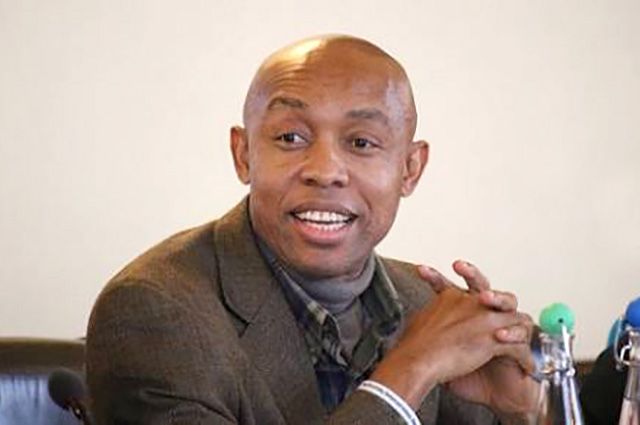
    Professor Chidi Odinkalu

    By Chidi Anselm Odinkalu

    In the currency of public policy and political communication in Nigeria, one word occupies the Platinum standard all by itself – “virile.” No major speech by a Nigerian ruler is complete without it.

    Soon after assuming office in his first term, Nigeria’s President, Major-General Muhammadu Buhari, proudly informed the European Parliament that his ambition was to have Nigeria “be counted among the most stable, strong and virile democracies in Africa.” His European audience must have been forgiven for wondering why this African president appeared to be distracted by an anatomical part closely associated with change.

    Buhari’s Vice-President, Yemi Osinbajo, a law professor, desires to see Nigeria build “a virile sanitation economy.” Another of Buhari’s would-be successors and current governor of Ekiti State, Kayode Fayemi, aspires to “rebuild a strong, united and virile nation,” suggesting, unlike Buhari, that stable and strong doesn’t necessarily virile make.

    Nigeria’s rulers are not the only people detained by aspirations to virility. It is, indeed, the mission of every sector in the country. Nigeria’s media has, for instance, been described, as “the biggest and most virile press community in Africa.” Broadcasters in the country aspire to be “virile,” ostensible to ensure that they inseminate the public with a rich dose of information. In one of the more unsettling turns of the word, the country apparently even seeks to establish a “virile chemical industry.” Hopefully, this has nothing to do with whether or not Nigerian men habitually need chemical assistance to achieve virility.

    No one has been able to fully explain when Nigeria’s fixation with virility began. I have tried unsuccessfully to search for it in the lexicon of the early rulers of post-colonial Nigeria. They were all men but, discountenancing the assertion by Cameroon’s Achille Mbembe that “post-colony is a world of anxious virility,” their language did not appear to be much beholden to the testicularities of virility.

    That appears to have changed after the soldiers took over power in 1966. In announcing the creation of 12 States on 27 May, 1967, Nigeria’s second military ruler, Yakubu Gowon, then a Major-General and dashing model of virility in the army, declared the desire of the country under his leadership to “march manfully together to alter the course of this nation once again for all.” This was an early indication of how the military was about to vigorously impregnate power and the public space in Nigeria with martial masculinity.

    Gowon’s usurpers would take this a notch higher. When he announced the takeover of government on 29 July, 1975, Gowon’s successor both as Head Boy of Barewa College and as military Head of State, the very masculine General Murtala Mohammed, declared in his inaugural broadcast that he was inspired by his desire “to build a strong, united and virile nation.”

    Shehu Shagari, the ascetic civilian who succeeded the military as president in 1979, did not exactly campaign on his claims to virility.

    By contrast, in announcing his first coming as Nigeria’s military Head of State on 1 January, 1984, Muhammadu Buhari, then a Major-General, teased the country with the prospect of “building a virile and viable economy.”

    This narrative of virility is not merely a statement of future aspiration; it is also used to explain the under-development of Africa. Addressing the world in New York at the end of 1990, Nigeria’s then ruler and Buhari’s military successor, Ibrahim Babangida, an army General, argued that “before the coming of the slave trade and the capture of ‘young, virile Africans’ who would have helped build the continent, Africa and Europe were almost equal in levels of development.”

    By the time military rule officially ended in 1999, the civilians had become somewhat converted to the rampantly reproductive vocabulary of the soldiers. While the return to civil rule civilianized the soldiers, therefore, the civilian politicians who arguably felt diminished in their manhood in comparison to the soldiers, decided to upgrade by enhancing the masculinity of their repertoire of military metaphors.

    Thus, we are told that the political trajectory of leading presidential aspirant and former Lagos State Governor, Bola Ahmed Tinubu, is “driven by the need to build a virile opposition.” His acolyte and former Secretary to the Government of the Federation, Babachir David Lawal, has made a preoccupation of the task of “building a cohesive and virile political party.” In Nigeria’s leading oil producing state, Rivers, Dakuku Peterside of the All Progressives Congress (APC) promises to “provide a virile opposition.” Not to be outdone, we are told that the ambition of former Vice-President, Atiku Abubakar, for the presidency on the platform of the Peoples Democratic Party (PDP) “holds prospect (sic) for a united and virile Nigeria.”

    In an acknowledgement of the narrative force of testicular power in Nigeria’s political imagination, Festus Adedayo has taken to addressing senior executive office holders by the appellation “sexellencies”.

    The appeal of virility reflects more than merely the masculinization of power and its insecurities. If the reproductive role is seen as guaranteeing sustenance of the race, virility underpins this role. It is also a uniquely male fixation in much the same way that fertility applies to the female of the species. It is not at all an accident, therefore, that the resort to virility as the cure-all metaphor for Nigeria’s public life and aspirations associated with nation-building coincided with the abduction of the country by the masculine vocation of the military.

    The physical representation of virility in popular imagination is found in the testicles, a set of two nuts contained in a sack tucked into a usually concealed part of the male anatomy. In addition to masculine strength, this metaphor contains and conveys a potent subliminality about the pervasively penetrating potentialities of political power.

    In wider imagination, of course, a promise to reduce a male figure to something less than a man is usually conveyed in the form of a threat to their testicles or to the sack that envelopes them. It’s called castration. When a man suffers this fate, whether surgically or chemically, his virility suffers irreparable decapitation. So, as a physical representation, Nigeria’s preoccupation with virility finds residence fittingly in the testicles.

    The discursive tendency to clothe the Nigerian sovereign in the garments of manhood is rather unfortunate at this time for, in the face of existential threats, the country appears to have found a most inauspicious time to lose its sovereign testicles. Far from conveying strength, Nigeria’s narrative of sovereign virility right now is very much a tale of masculinity decapitated.

    A galloping population may be proof of literal virility but an inability to feed, clothe or educate its youth or provide them with pathways to gainful employment suggests virility misplaced.

    Beset on all sides by an invasion of murderous terrorists – foreign and local – Nigeria’s security services and political leadership appear to be short of both ideas for a fightback or reassurance in rallying the country. A country that scorns its best, leaving her to slow, painful death in the face of terror or, which abandons a talented singer to death in violent instalments at the hands of a murderous husband, can hardly lay claims to virility or masculinity.

    Surely, a country whose rulers lack the testicular fortitude to protect its best and most vulnerable cannot claim or aspire to be mistaken for virile.

    When they should be doing their best to lead the country against a toxic mix of bandits, arms, drugs and terrorism which endanger the country, Nigeria’s politicians are instead embarked on a misbegotten electoral rat-race in a country in which many communities have been sacked by terror and a lot more live under terminal uncertainties inflicted by a leadership that long ago lost its manhood.

    When General Gowon asked the country to “march manfully together” 55 years ago, Nigeria’s current ruler, Muhammadu Buhari, was an established officer in the Nigerian Army. On the day Murtala Mohammed promised to build a virile country eight years later, he also announced Buhari as one of his principal acolytes in that task in the capacity of military governor of what was then the largest state in Nigeria.

    As happy an exponent of the narrative of a virile polity himself as any that has existed, Muhammadu Buhari would go on to rule Nigeria not once but twice. The one certainty about Nigeria’s 2023 elections is that whoever is declared Buhari’s successor will be a fully paid-up apostle of the political metaphor of virility. The other certainty is that they will be taking over from a soldier who will best be remembered as the ruler under whom the country found a way to lose its sovereign testicles.

    If there is any silver lining in this story, it is the hope that a country shorn of its manhood in this way may yet see a compelling need to invent a more inclusive narrative for its national project.

    A lawyer and a teacher, Odinkalu can be reached at chidi.odinkalu@tufts.edu

    Editor
    • Website

    Related Posts

    Africa and the deadly dust from Iran by Azu Ishiekwene

    March 5, 2026

    Metabolism does not tolerate stagnation by Mukaila Kareem

    March 2, 2026

    From Tehran to Zamfara: The cost of abandoning diplomacy, by Cheta Nwanze 

    March 2, 2026
    Editors Picks

    Africa and the deadly dust from Iran by Azu Ishiekwene

    March 5, 2026

    AE-FUNAI college of medicine inducts 42 pioneer doctors

    March 5, 2026

    Varsity offers free respiratory treatment to Ebonyi rice mill workers

    March 5, 2026

    RULAAC urges safeguards, democratic oversight in proposed state police framework

    March 5, 2026
    Latest Posts
    Azu Ishiekwene

    Africa and the deadly dust from Iran by Azu Ishiekwene

    Ebonyi

    AE-FUNAI college of medicine inducts 42 pioneer doctors

    Ebonyi

    Varsity offers free respiratory treatment to Ebonyi rice mill workers

    Subscribe to Updates

    Get the latest news from Ikenga Online.

    Advertisement
    Demo

    IkengaOnline is a publication of the Ikenga Media & Cultural Awareness Initiative (IMCAI), a non-profit organisation with offices in Houston Texas and Abuja.

    We're social. Connect with us:

    Facebook X (Twitter) Instagram YouTube LinkedIn WhatsApp RSS
    • Home
      • Igboezue
      • Hall of Fame
      • Hall of Shame
    • News
      • Other States
      • National
      • International
      • Interviews
      • Personalities
    • Abia
    • Anambra
    • Ebonyi
    • Delta
    • Enugu
    • Imo
    • Rivers
    • Politics
    • Opinion & Editorial
      • Editorial
      • Columnists
        • Osmund Agbo
        • Chido Onumah
        • Uche Ugboajah
        • Hassan Gimba
        • Edwin Madunagu
        • Rudolf Okonkwo
        • Azu Ishiekwene
        • Osita Chidoka
        • Owei Lakemfa
        • Chidi Odinkalu
      • Opinion
    • Special Reports
    • Art & Entertainment
      • Nollywood
      • Music
      • Ikengaonline Literary Series (ILS)
      • Life
      • Travels
    • Sports

    Subscribe to Updates

    Get the latest news from Ikenga Online.

    Facebook X (Twitter) Instagram LinkedIn WhatsApp RSS
    © 2026 Ikenga Online. Ikenga.

    Type above and press Enter to search. Press Esc to cancel.