
Close Menu
Ikenga Online
    What's Hot

    Medical fellowship not equivalent to PhD, FG clarifies

    March 6, 2026

    IPAC threatens 2027 election boycott over electoral act

    March 6, 2026

    Africa and the deadly dust from Iran by Azu Ishiekwene

    March 5, 2026
    Facebook X (Twitter) Instagram
    Ikenga Online
    Facebook X (Twitter) Instagram YouTube
    Donate
    • Home
      • Igboezue
      • Hall of Fame
      • Hall of Shame
    • News
      1. Other States
      2. National
      3. International
      4. Interviews
      5. Personalities
      6. View All

      Kaduna victims’ coalition demands probe of alleged abuses under El-Rufai

      February 16, 2026

      Dadiyata: Kperogi raises questions as El-Rufai, Ganduje trade allegations

      February 15, 2026

      Kole Shettima, others to be turbaned by Machina Emirate

      January 26, 2026

      APC makes it 29 governors as Yusuf defects with 22 Kano lawmakers

      January 26, 2026

      Medical fellowship not equivalent to PhD, FG clarifies

      March 6, 2026

      IPAC threatens 2027 election boycott over electoral act

      March 6, 2026

      RULAAC urges safeguards, democratic oversight in proposed state police framework

      March 5, 2026

      Just in: Tinubu nominates ‘tax man’ Taiwo Oyedele as minister of state for finance

      March 3, 2026

      A Critical review of Reparations: History, Struggle, Politics and Law, by Chido Onumah 

      March 4, 2026

      Iran strikes: US issues security alert to citizens in Nigeria, worldwide

      March 2, 2026

      Iran supreme leader, Ayatollah Ali Khamenei killed in US–Israel strikes

      March 1, 2026

      US, Israel launch attacks on Iran as explosions rock Tehran

      February 28, 2026

      Slash jumbo salaries to pay minimum wage, Bishop tells Tinubu

      June 19, 2024

      Nigeria remains a country in crisis that needs to heal – Chido Onumah

      January 24, 2024

      The Ekweremadus: Obasanjo writes UK court, seeks pardon for them

      April 5, 2023

      I’m coming with loads of experience to re-set Abia – Greg Ibe

      February 1, 2023

      Anambra-born Ugochi Nwizu shines as UNN best graduating doctor with multiple distinctions

      September 29, 2023

      Bulwark for women, girls: Meet Ikengaonline September town-hall guest speaker, Prof Joy Ezeilo

      September 27, 2023

      Rufai Oseni, the most dangerous man on Nigerian TV by Okey Ndibe

      February 13, 2023

      Stanley Macebuh: Unforgettable pathfinder of modern Nigerian journalism by Uzor Maxim Uzoatu

      February 7, 2023

      Medical fellowship not equivalent to PhD, FG clarifies

      March 6, 2026

      IPAC threatens 2027 election boycott over electoral act

      March 6, 2026

      AE-FUNAI college of medicine inducts 42 pioneer doctors

      March 5, 2026

      Varsity offers free respiratory treatment to Ebonyi rice mill workers

      March 5, 2026
    • Abia

      Abia tops climate change preparedness ranking, wins PACE commendation

      March 5, 2026

      Rights Abuse: Army warns soldiers, threatens sanctions over gambling, misconduct

      March 5, 2026

      Otti applauds Ohanaeze leadership, reaffirms support for Igbo unity, development

      March 4, 2026

      Otti flags off functionalisation of PHCs, unveils Alaukwu ward health centre

      March 4, 2026

      APC targets Abia in 2027 as Ikoh hails party unity, Tinubu’s reforms

      March 4, 2026
    • Anambra

      ALGAF: JDPC tasks fellows on project monitoring for grassroots development

      March 2, 2026

      Thousands to benefit from IDEAS-TVET project in Anambra — Prof Onyeizugbe

      February 24, 2026

      Sit-at-home: Anambra govt urges transporters to resume full operations

      February 24, 2026

      Soludo shuts down Nnewi auto parts market over sit-at-home

      February 23, 2026

      IWA, Igbo stakeholders push for enforcement of laws to strengthen Igbo language

      February 22, 2026
    • Ebonyi

      AE-FUNAI college of medicine inducts 42 pioneer doctors

      March 5, 2026

      Varsity offers free respiratory treatment to Ebonyi rice mill workers

      March 5, 2026

      Former Ebonyi deputy governor’s father kidnapped

      March 1, 2026

      Ebonyi orders contractor to stop work over substandard materials

      March 1, 2026

      Gov Nwifuru suspends two commissioners in Ebonyi

      February 28, 2026
    • Delta
    • Enugu

      Rev Father escapes death, two vigilantes killed, as gunmen invade Enugu community

      March 5, 2026

      Enugu govt takes over warehouse renovated by UNICEF, thanks donor

      March 5, 2026

      APC concludes congresses, elects new executives in Enugu

      March 4, 2026

      Enugu council boss inaugurates six solar-powered boreholes

      March 1, 2026

      Mbah urges Enugu youths to seize opportunities in technology, innovation

      February 25, 2026
    • Imo

      Disband ‘Tiger Base’ now, Igbo group petitions Gov Uzodimma

      February 25, 2026

      RULAAC urges Imo CP to probe alleged atrocities by vigilante leader in Njaba

      February 13, 2026

      Akagburuonye @ 60: Ex-Eagles stars storm Mbaise to honour humanitarian

      February 13, 2026

      RULAAC petitions Imo attorney-general over alleged torture, sexual abuse of trainee nurse

      January 25, 2026

      Reporters’ diaries: S-East governors earn praise for rural road improvements

      January 6, 2026
    • Rivers

      Aba Power breaks new ground with electricity supply to Rivers

      February 22, 2026

      Investigate Asari Dokubo over anti-Igbo rants now, IIC tells security agencies

      February 20, 2026

      Ohanaeze inaugurates committee on Igbo strategic engagement

      February 2, 2026

      Rivers assembly vows to proceed with Gov Fubara, deputy’s impeachment process 

      January 16, 2026

      Financial disagreements fuel impeachment moves against Fubara — Aide alleges

      January 16, 2026
    • Politics

      IPAC threatens 2027 election boycott over electoral act

      March 6, 2026

      APC targets Abia in 2027 as Ikoh hails party unity, Tinubu’s reforms

      March 4, 2026

      APC concludes congresses, elects new executives in Enugu

      March 4, 2026

      Digital membership register, trap set for opposition parties — ADC

      March 3, 2026

      APC dismisses ADC allegations over attack on Peter Obi, Odigie-Oyegun, others 

      February 26, 2026
    • Opinion & Editorial
      • Editorial
      • Columnists
        • Osmund Agbo
        • Chido Onumah
        • Uche Ugboajah
        • Hassan Gimba
        • Edwin Madunagu
        • Rudolf Okonkwo
        • Azu Ishiekwene
        • Osita Chidoka
        • Owei Lakemfa
        • Chidi Odinkalu
      • Opinion
    • Special Reports
    • Art & Entertainment
      • Nollywood
      • Music
      • Ikengaonline Literary Series (ILS)
      • Life
      • Travels
    • Sports
    Ikenga Online
    Home » Nigeria’s iron rules of power divination by Chidi Anselm Odinkalu
    Chidi Odinkalu

    Nigeria’s iron rules of power divination by Chidi Anselm Odinkalu

    EditorBy EditorJune 5, 2022Updated:June 6, 2022No Comments8 Mins Read
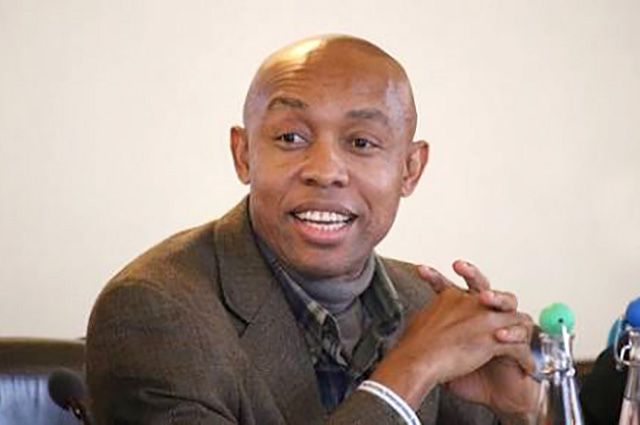
    Professor Chidi Anselm Odinkalu

    By Chidi Anselm Odinkalu

    On 29 May 1999, Olusegun Obasanjo, for the second time in two decades, took the oath to assume office as Nigeria’s head of state, this time with an electoral mandate. His predecessor was Abdulsalami Abubakar, another four-star General who had mid-wifed an 11-month long transition following the death of General Sani Abacha on 8 June, 1998.

    It was the second time in as many decades that that Abdulsalami and Obasanjo would be principal actors in the final hours of a generational transition. On 1 October 1979, Obasanjo, a four-star army General, stood down as head of state, handing over to an elected civilian successor, Shehu Aliyu Shagari. On the same day he also retired from the military. On that day in 1979, “Abdulsalami Abubakar, then a lieutenant colonel, was also there, as the commander of the inauguration parade”. In 1979, Abdulsalami pulled Obasanjo out of service. In 1999, he pulled him back into service.

    23 years after that repeat relay between Obasanjo and Abdulsalami (Generals both) returned to elective government, the country is again looking for a chief executive and party primaries designed to winnow the search are about to come to an end. So much has changed in the past quarter of a century in Nigeria’s politics yet so much remains the same.

    As the party primary season winds to a conclusion, the country has seen a growth industry in the vocation of fortune tellers seeking to outdo one another in predicting the destination of the presidential chalice when the elections come to take place in February 2023. Despite the best efforts of the fortune-telling industry, however, Nigeria’s rules of presidential succession are actually quite constant. They have not much changed since they were first deployed.

    Azubike Ishiekwene summarized the highlights of these rules in a much-underrated column on 28 April, 2022. The first – you can always take this to the bank – is that Nigeria’s presidency has never gone to the highest bidder for, as Azu points out, “there is something in the DNA of the power brokers that resents big political spenders.” In Nigeria, separation of powers means that in order to guarantee the spoils of power, big money and political power at the highest levels are never concentrated in the same person. When Moshood Abiola threatened this rule 30 years ago, Ibrahim Babangida nullified his election.

    There is another rule just as constant as the first and no less important. It is that in Nigeria, the presidency is not for trainees. Since after the first post-colonial leaders, the job of leading Nigeria has always gone to someone who knew his (they have all been men) way around the halls of power. Intimate propinquity to power in Nigeria has always been an essential requirement for attaining it.

    This cyclic, even circular passing of the baton has characterized presidential transitions in post-colonial Nigeria since its earliest days. Aguiyi-Ironsi, the first post-colonial ruler of Nigeria to unify the jobs of head of state and head of government was the General Officer Commanding (GOC) of the Nigerian Army, as the head of the army was then known. After he was killed around 29 July 1966, his position went to Yakubu Gowon, until then Aguiyi-Ironsi’s second-in-command as the Chief-of-Staff, Supreme Headquarters.

    The Principal of Barewa College, (the High School in Zaria, Kaduna State famous for producing Nigeria’s rulers), who had duty at the end of July 1975 of announcing to his students that one of their illustrious old boys had been ousted as Head of State, could blunt the solemnity of his message with the assurance that the successor was, like the ousted ruler, also a former Barewa Head Boy. Murtala Mohammed, whom Gowon had himself appointed as his Minister for Communications in 1974, was not just any old boy of Barewa College. Like Gowon who preceded him to the school, Murtala was also a Barewa Head Boy. Before becoming Head of State, he had also served as a member of Gowon’s Supreme Military Council and Aide-de-Camp to Moses Majekoudunmi, the presidency physician and Minister whom Prime Minister, Abubakar Tafawa Balewa, later appointed Administrator of the Western Region during the emergency.

    Following the assassination of Murtala Mohammed on the eve of Saint Valentine’s Day, 1976, Olusegun Obasanjo, his second-in-command, moved up to become head of state.

    The rule of succession by propinquity to power has held good for both military and civilian rule in Nigeria. Shehu Shagari, who took over from Obasanjo as elected civilian ruler in 1979, had served in every government (except Aguiyi-Ironsi’s) until then. When Obafemi Awolowo resigned as the finance minister and as the effective Vice-Chair of the Cabinet in 1971, Shagari replaced him in both roles. It meant that Obasanjo, whose destiny it was to manage that transition, knew Shagari well, having joined Gowon’s cabinet in 1974 as Minister for Public Works and worked with him as a colleague in the Cabinet after Awolowo left. Those who worked hard to install Shagari in 1979 as elected civilian president were confident not merely of his networks around power but also of his history of proximity to it.

    Muhammadu Buhari, whom the military power-brokers settled on to take over when they toppled Shagari on the last day of 1983, was no stranger to Nigeria’s power palaces. One of the leaders of the 1975 coup that usurped Yakubu Gowon, Buhari ran General Shehu Musa Yar’Adua close in February 1976 for the role of military second-in-command to Olusegun Obasanjo. Before becoming military head of state, he was military governor, member of the Supreme Military Council, Petroleum Minister, and General Officer Commanding (GOC) in the Nigerian Army.

    Buhari’s nemesis in August 1985 was his Chief of Army Staff and contemporary, Ibrahim Babangida, who, like Buhari, and as told by his biographer, Dan Agbese, had logged a long record of active service in government and in military coups.

    Ernest Shonekan, whom Ibrahim Babangida appointed to succeed him in leading the Interim National Government (ING), was no stranger himself to power. Unknown to most people, Shonekan had, from the beginning of the Babangida regime in August 1985, “also moonlighted as Chair of an informal, nine-person Advisory Council to the Babangida regime.” He knew the neighbourhood of power well and all who navigated within it.

    Sani Abacha, who retired Shonekan and his ING, had also announced the installation as well as the retirement of the two regimes before Shonekan. He was not just an active dealer in the enterprise of propinquity to power in Nigeria; he owned it. At his death in June 1998, Abacha had been at the centre of the rise and fall of every regime in the country for one decade and a half.

    Abdulsalami Abubakar, Abacha’s successor, was the officer in the senior-most professional role and a senior member in the ruling military council from the Babangida years.

    Obasanjo’s installation as elected ruler in 1999 crystallised a long history of dressing up a martial game of musical chairs in civilian lip-stick, from which both the soldiers and civilians involved (for themselves and for the benefit of their descendants) have always made good.

    Umaru Musa Yar’Adua, who succeeded Obasanjo, was the younger brother of Obasanjo’s military second-in-command and the son of the first Minister of Lagos Affairs in post-Independence Nigeria. When he died in May, 2010, his vice-resident, Goodluck Jonathan, took over the mantle.

    When he was elected in 2015 as Nigeria’s president, General Muhammadu Buhari, was the longest active politician alive in Nigeria. He had been active in military coups and government for an unbroken half century.

    It is not too difficult to hazard a stipulation as to who will not be Nigeria’s president in 2023. The person specification for the job says “trainees are not welcome.” Already, the opposition Peoples’ Democratic Party (PDP) have nominated former Vice-President, Atiku Abubakar, as their flag-bearer, who has been in active pursuit of the office for three decades. President Buhari has informed the ruling All Progressives Congress (APC) that he will be designating his own successor, making it all but certain that the convention for the APC presidential primary will be a ratification not an elective one.

    It may be up to the people of Nigeria to decide whom they wish to hire as their leader in 2023 but one thing is assured: the rule of intimate propinquity to power as a determinant of presidential succession will hold strong.

    A lawyer and a teacher, Odinkalu can be reached at chidi.odinkalu@tufts.edu 

    Editor
    • Website

    Related Posts

    Africa and the deadly dust from Iran by Azu Ishiekwene

    March 5, 2026

    Metabolism does not tolerate stagnation by Mukaila Kareem

    March 2, 2026

    From Tehran to Zamfara: The cost of abandoning diplomacy, by Cheta Nwanze 

    March 2, 2026
    Editors Picks

    Medical fellowship not equivalent to PhD, FG clarifies

    March 6, 2026

    IPAC threatens 2027 election boycott over electoral act

    March 6, 2026

    Africa and the deadly dust from Iran by Azu Ishiekwene

    March 5, 2026

    AE-FUNAI college of medicine inducts 42 pioneer doctors

    March 5, 2026
    Latest Posts
    National

    Medical fellowship not equivalent to PhD, FG clarifies

    News

    IPAC threatens 2027 election boycott over electoral act

    Azu Ishiekwene

    Africa and the deadly dust from Iran by Azu Ishiekwene

    Subscribe to Updates

    Get the latest news from Ikenga Online.

    Advertisement
    Demo

    IkengaOnline is a publication of the Ikenga Media & Cultural Awareness Initiative (IMCAI), a non-profit organisation with offices in Houston Texas and Abuja.

    We're social. Connect with us:

    Facebook X (Twitter) Instagram YouTube LinkedIn WhatsApp RSS
    • Home
      • Igboezue
      • Hall of Fame
      • Hall of Shame
    • News
      • Other States
      • National
      • International
      • Interviews
      • Personalities
    • Abia
    • Anambra
    • Ebonyi
    • Delta
    • Enugu
    • Imo
    • Rivers
    • Politics
    • Opinion & Editorial
      • Editorial
      • Columnists
        • Osmund Agbo
        • Chido Onumah
        • Uche Ugboajah
        • Hassan Gimba
        • Edwin Madunagu
        • Rudolf Okonkwo
        • Azu Ishiekwene
        • Osita Chidoka
        • Owei Lakemfa
        • Chidi Odinkalu
      • Opinion
    • Special Reports
    • Art & Entertainment
      • Nollywood
      • Music
      • Ikengaonline Literary Series (ILS)
      • Life
      • Travels
    • Sports

    Subscribe to Updates

    Get the latest news from Ikenga Online.

    Facebook X (Twitter) Instagram LinkedIn WhatsApp RSS
    © 2026 Ikenga Online. Ikenga.

    Type above and press Enter to search. Press Esc to cancel.