
Close Menu
Ikenga Online
    What's Hot

    FirstPower electricity announces planned outage in Anambra

    December 5, 2025

    GPSDC, WACOL train journalists on GBV reporting, seek stronger collaboration

    December 5, 2025

    Rewarding ex-INEC chairman with ambassadorial role morally indefensible – Atiku 

    December 4, 2025
    Facebook X (Twitter) Instagram
    Ikenga Online
    Facebook X (Twitter) Instagram YouTube
    Donate
    • Home
      • Igboezue
      • Hall of Fame
      • Hall of Shame
    • News
      1. Other States
      2. National
      3. International
      4. Interviews
      5. Personalities
      6. View All

      Bandits hit Kogi church, abduct pastor, wife, members

      November 30, 2025

      Kaduna Anglican priest dies in kidnappers’ den

      November 27, 2025

      Bandits mutilate one, abduct pregnant woman, 23 others in Niger communities

      November 27, 2025

      Freed abductees receive medical treatment in Kwara govt house

      November 24, 2025

      Rewarding ex-INEC chairman with ambassadorial role morally indefensible – Atiku 

      December 4, 2025

      Tinubu swears in Gen Musa as defence minister

      December 4, 2025

      Ex-CDS, Gen Musa confirmed as defence minister

      December 3, 2025

      Police to arrest personnel escorting VIPs, declare such duty Illegal

      December 3, 2025

      US issues visa ban on individuals behind Christian genocide in Nigeria

      December 4, 2025

      Tinubu approves Nigeria’s membership of US-Nigeria joint working group

      November 27, 2025

      Obi meets EU lawmakers, seeks stronger partnership to tackle Nigeria’s challenges

      November 26, 2025

      CPC: Nigeria engaging world diplomatically, will defeat terrorism – Tinubu 

      November 6, 2025

      Slash jumbo salaries to pay minimum wage, Bishop tells Tinubu

      June 19, 2024

      Nigeria remains a country in crisis that needs to heal – Chido Onumah

      January 24, 2024

      The Ekweremadus: Obasanjo writes UK court, seeks pardon for them

      April 5, 2023

      I’m coming with loads of experience to re-set Abia – Greg Ibe

      February 1, 2023

      Anambra-born Ugochi Nwizu shines as UNN best graduating doctor with multiple distinctions

      September 29, 2023

      Bulwark for women, girls: Meet Ikengaonline September town-hall guest speaker, Prof Joy Ezeilo

      September 27, 2023

      Rufai Oseni, the most dangerous man on Nigerian TV by Okey Ndibe

      February 13, 2023

      Stanley Macebuh: Unforgettable pathfinder of modern Nigerian journalism by Uzor Maxim Uzoatu

      February 7, 2023

      FirstPower electricity announces planned outage in Anambra

      December 5, 2025

      GPSDC, WACOL train journalists on GBV reporting, seek stronger collaboration

      December 5, 2025

      Rewarding ex-INEC chairman with ambassadorial role morally indefensible – Atiku 

      December 4, 2025

      Tinubu swears in Gen Musa as defence minister

      December 4, 2025
    • Abia

      Gunmen hijack Aba-bound bus, abduct 14 passengers in Imo

      December 3, 2025

      Removal of barriers against PWDs’ participation in society a must – Gov Otti

      December 3, 2025

      Abia set to unveil building material testing laboratory

      December 3, 2025

      Otti empowers 150 Abia Poly outstanding graduates with N1m each

      December 2, 2025

      Experts meet in Umuahia to tackle MSMEs challenges

      December 2, 2025
    • Anambra

      FirstPower electricity announces planned outage in Anambra

      December 5, 2025

      GPSDC, WACOL train journalists on GBV reporting, seek stronger collaboration

      December 5, 2025

      Police nab member of kidnap syndicate in Anambra

      December 4, 2025

      Tinubu empowers Anambra PWDs with N50m business grant

      December 3, 2025

      Commission to establish disability counselling centre in Anambra

      December 3, 2025
    • Ebonyi

      Ebonyi LG poll: Ezillo stakeholders adopt power shift to Ezzagu zone

      December 2, 2025

      Nwifuru moves to equip Ebonyi hospitals, sets up five-man equipment distribution committee

      November 28, 2025

      Court remands man for alleged cyberbullying of federal lawmaker

      November 26, 2025

      Nwifuru presents N884.8bn 2026 budget to Ebonyi assembly

      November 25, 2025

      Coalition groups condemn arrests, detention of critics, journalists in Ebonyi

      November 23, 2025
    • Delta
    • Enugu

      PRODA DG preaches peace, unity among staff as 2025 games festival kicks off

      December 4, 2025

      Abductors of Enugu deputy governor’s kinsmen demand N20m ransom

      December 4, 2025

      Road crash: FRSC confirms 2 dead, 9 injured in Enugu multiple accidents 

      December 4, 2025

      Enugu budgets N1.62 trillion for 2026

      December 2, 2025

      Gov Mbah launches hi-tech drones, equipment, patrol vans to boost security

      December 2, 2025
    • Imo

      Gunmen hijack Aba-bound bus, abduct 14 passengers in Imo

      December 3, 2025

      Catholic bishops condemn violence in Nigeria, call for govt action to restore peace

      November 26, 2025

      MASSOB blasts Ayodele over anti-Igbo comment

      November 26, 2025

      ASUU gives FG 8-day ultimatum over unmet demands, threatens full-blown strike

      November 13, 2025

      S’East now cocoa farm for security operatives — Nwanguma, RULAAC boss

      November 5, 2025
    • Rivers

      DSS quizzes social media user for allegedly advocating coup d’état

      October 29, 2025

      Rumuorlumeni community calls for halt on sale of waterfront lands

      October 20, 2025

      Ohanaeze presidents demand unconditional release of Kanu, others

      October 18, 2025

      Fubara gives reasons for not challenging emergency declaration in court

      September 19, 2025

      Tinubu lifts emergency rule in Rivers, asks Fubara, deputy, assembly to return to office Thursday 

      September 17, 2025
    • Politics

      2027: Atiku finally joins ADC

      November 24, 2025

      Abia patriots caution APC leaders against ‘destructive opposition’ politics

      November 21, 2025

      S’East stakeholders meet in Enugu, unveil 2027 political road map 

      November 20, 2025

      PDP chairman invites President Trump, international community to ‘save Nigerian Democracy’

      November 18, 2025

      PDP expels Wike, Anyanwu, factional chair, others over anti-party activities

      November 15, 2025
    • Opinion & Editorial
      • Editorial
      • Columnists
        • Osmund Agbo
        • Chido Onumah
        • Uche Ugboajah
        • Hassan Gimba
        • Edwin Madunagu
        • Rudolf Okonkwo
        • Azu Ishiekwene
        • Osita Chidoka
        • Owei Lakemfa
        • Chidi Odinkalu
      • Opinion
    • Special Reports
    • Art & Entertainment
      • Nollywood
      • Music
      • Ikengaonline Literary Series (ILS)
      • Life
      • Travels
    • Sports
    Ikenga Online
    Home » Judicial independence 62 years after Nigeria’s independence by Chidi Anselm Odinkalu
    Chidi Odinkalu

    Judicial independence 62 years after Nigeria’s independence by Chidi Anselm Odinkalu

    EditorBy EditorOctober 2, 2022No Comments9 Mins Read
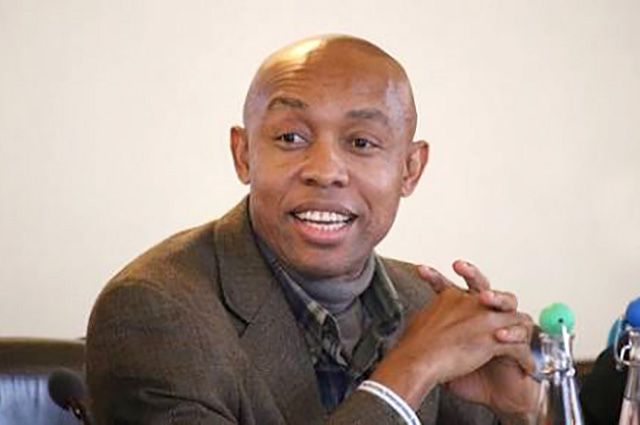
    Professor Chidi Anselm Odinkalu

    By Chidi Anselm Odinkalu

    For all the talk of judicial independence, the reality of colonial and post-colonial Nigeria has been one long story of judicial subordination into subservience. Seven years into his presidency, Muhammadu Buhari is on his fourth Chief Justice of Nigeria, with the last two having departed office in rapid succession under a cloud. The story of how judicial independence in post-colonial Nigeria got to its present pass goes back to the very idea of colonialism.

    Students and graduates of law faculties and law schools all over the Commonwealth, including Nigeria, sooner or later learn to swear by the rule of law and doctrine of independence of the judiciary. These principles, they are told, anchor the law in rationality, shielding it from descent into arbitrariness; ensuring that it applies equally to everyone, and that judges are blind in dispensing it fairly to all manner of persons irrespective of station, without fear or favour, affection or ill-will.

    One Rule for the White, Another for the “Natives”

    Anyone who thinks closely about this would realize quickly that it is in fact founded on fable. In a decision in 1918, the Judicial Committee of the Privy Council laid it down that African “natives” were “so low in the scale of social organization that their usages and conceptions of rights and duties are not to be reconciled with the institutions or legal ideas of civilized society… Such a gulf cannot be bridged.”

    Thus, colonial rule, which dispersed the Common Law traditions of the Commonwealth – including independence of the judiciary – across the British Empire and beyond, was a system of one rule for the white colonialists and another for the black and brown “natives”. This idea of inherent inequality of the “natives” was itself central to the conception of law and its administration. Far from a system of rule of law, colonial rule was a system of “rule by law” in which judges were anything but independent.

    This system of inequality relied for its enforcement in the colonies not on the independence of judges but on their subservience to the colonial will. To ensure this, colonial judges could be removed at will.

    On 19 June, 1953, the Queen’s Bench Division of Her Majesty’s High Court in London decided a very interesting case. In 1930, Mr. Terrell was appointed a Judge of the Supreme Court of (Colonial) Malaya, in the Straits Settlements. Prior to his appointment, he had exchanged correspondence with the Colonial Office, which informed him that he would be liable to retire compulsorily on attainment of the age of 62.

    In 1942, Japan overran and occupied the Straits Settlements and the Secretary of State for the Colonies informed Mr. Terrell that they could find no suitable post for him elsewhere in the colonial service. When Mr. Terrell declined leave to retire, the Secretary of State terminated his appointment forthwith on 7 July 1942. That was 17 months before he was due to retire in February 1944.

    Mr. Terrell took the case to an arbitrator and lost. So, he appealed to the High Court, arguing that under section 12 of the Supreme Court of Judicature (Consolidation) Act, 1925, which superseded the Act of Settlement (1701), judges in England held office during good behaviour and could only be removed on an address by both Houses of Parliament, none of which conditions had been fulfilled in this case.

    Upholding the award of the arbitrator, Lord Chief Justice Rayner Goddard decided that the enactment relied on was “wholly inapplicable to a colonial judge” and that Mr. Terrell held office at the pleasure of the Crown. Reminded that the Mr. Terrell’s contract appended the undertaking by the Colonial Office that he would not be required to retire before the age of 62, Lord Goddard decided that the undertakings did not constitute an agreement and, in any case, that even if they were, they could not take away the prerogative of the Crown to dismiss him at will or pleasure.

    When they appointed Africans as judges, the colonialists did it as an act of patronage conferred on natives about whose subservience they had no doubts. Kitoyi Ajasa, one of the earliest Nigerian judges, achieved that preferment largely because of his closeness to Frederick Lugard, his support for colonial subjugation of natives, and his role as the leading Freemason in the territory as seven-time Worshipful Master of Lagos Lodge No. 1171 between 1901 and 1928.

    Judicial Subservience as Virtue

    The politicians who led Nigeria to Independence clearly did their pupillage well in the intricacies of retrenching judicial independence. They did not have to wait long after Independence in 1960 before showing their mastery of the subject.

    In 1961 two unrelated things happened: Muhammadu Buhari was commissioned  as an officer into the Nigerian Army and the then ruling political coalition in Nigeria tried Joseph Tarka unsuccessfully for treasonable felony. That was largely the last time a ruling government failed to get in substance what it wanted from the courts.

    1n 1962, they would show in the treasonable felony trial of Obafemi Awolowo how well they had learnt their lessons. First, they denied him legal defence of his own choice as the constitution then allowed him. Then, they side-stepped the fiercely independent Daddy Onyeama to whom the case was to be assigned because they could not trust him to bring home a pre-determined outcome, instead ensuring that the case was assigned to Sodeinde Sowemimo, who wrote his own judicial epitaph with the words: “my hands are tied.”

    With Chief Awolowo out of the way, they moved to topple his Action Group from power in the then Western Region. However, his party fought the case to the Judicial Committee of the Privy Council in London, as the then highest court in the country was called, and won. In response, the ruling coalition amended the constitution to legislate the British Crown and the Privy Council out of existence in Nigeria, converting Nigeria into a Republic.

    In January 1966, the military overthrew the lot of the squabbling politicians. In 1969, the Supreme Court decided that what the military did in 1966 was not necessarily a coup for all seasons but rather a time-limited effort to save the country from collapse. The logic was that their hold on power was at sufferance of the civilians to whom they were liable to hand back power once the emergency necessitating the change of guards was over. So, the military legislated the judiciary into subservience with the Federal Military Government (Supremacy and Enforcement of Powers) Decree, No. 28 of 1970 of 9 May 1970.

    Two years later, in 1972, they summarily pensioned off then Chief Justice, Adetokunbo Ademola, replacing him with Taslim Elias, who had served as a comely Attorney-General to both civilian and military rulers of the country for a cumulative period of over one decade. Elias himself would last for barely three years in the seat, before being similarly fired by another military government after a coup in July 1975.

    This game of judicial musical chairs orchestrated by the military and the politicians left the judiciary bereft of confidence, all but institutionally lobotomizing it and rendering claims of judicial independence in post-colonial Nigeria rather ostentatious. Military rule more-or-less institutionalized this in three ways.

    First, following Decree No. 28 of 1970, they created a military culture of ousting the jurisdiction of the courts from all matters excluding essentially private disputes over land and inheritance. Ibrahim Babangida took this step one notch higher when in 1992, he enacted a decree that criminalized litigation.

    Second, by the time Ibrahim Babangida became military ruler, the military began a practice of appointing judges mostly from the civil service. They needed people on the bench whose habit of obedience to instructions they could trust.

    Third, they unitarized appointments to and benefits in the judiciary, creating the monstrosity that has now become known as the National Judicial Council (NJC).

    At page 174 of his 2006 autobiography Just as I am, pioneering estate management practitioner, Chief Simon Okeke recounts his membership of the Island Club in Lagos, saying: “stories had it that the verdicts of most court cases were decided upon within the club. At that time, all Ministers and Magistrates, High Court to Supreme Court judges and famous lawyers and other top government officials were members of the club.”

    SANs Are No Longer Enough

    As the work of judges has become overtaken by political disputes, politicians have decided that there is no virtue in judicial independence and made a virtue of judicial subservience. Like most other things in the country, judicial appointments now are for the most part allocated to system insiders.

    Around the country, therefore, politicians with any ambitions to high office are more likely than not to be armed with a judge in their back pocket or in their bedroom. It is no longer enough to have an army of Senior Advocates of Nigeria (SANs) on your side.

    The last President of the Court of Appeal had her husband awarded the senatorial ticket of the ruling party in Bauchi North just as she was about to begin presiding over the administration of disputes over the 2019 election. Once her tenure was over, and her husband had served the purpose, the ruling party quickly awarded the same ticket to a scion of the then serving Chief Justice.

    62 years after Independence, Nigeria’s law students are still wondering what judicial independence was supposed to mean to begin with. The lawyers appear to have given up on it. The politicians have taken care of it. And as for what most of the judges think, it’s best left unsaid.

    A lawyer and a teacher, Odinkalu can be reached at chidi.odinkalu@tufts.edu 

    Editor
    • Website

    Related Posts

    A troubling message from Guinea-Bissau, by Azu Ishiekwene

    December 4, 2025

    Jeunalists must have a uniform like policemen by Uzor Maxim Uzoatu 

    December 3, 2025

    An Open Letter to Ndigbo (2): What Must Change, by Osmund Agbo

    December 3, 2025
    Editors Picks

    FirstPower electricity announces planned outage in Anambra

    December 5, 2025

    GPSDC, WACOL train journalists on GBV reporting, seek stronger collaboration

    December 5, 2025

    Rewarding ex-INEC chairman with ambassadorial role morally indefensible – Atiku 

    December 4, 2025

    Tinubu swears in Gen Musa as defence minister

    December 4, 2025
    Latest Posts
    Anambra

    FirstPower electricity announces planned outage in Anambra

    Anambra

    GPSDC, WACOL train journalists on GBV reporting, seek stronger collaboration

    National

    Rewarding ex-INEC chairman with ambassadorial role morally indefensible – Atiku 

    Subscribe to Updates

    Get the latest news from Ikenga Online.

    Advertisement
    Demo

    IkengaOnline is a publication of the Ikenga Media & Cultural Awareness Initiative (IMCAI), a non-profit organisation with offices in Houston Texas and Abuja.

    We're social. Connect with us:

    Facebook X (Twitter) Instagram YouTube LinkedIn WhatsApp RSS
    • Home
      • Igboezue
      • Hall of Fame
      • Hall of Shame
    • News
      • Other States
      • National
      • International
      • Interviews
      • Personalities
    • Abia
    • Anambra
    • Ebonyi
    • Delta
    • Enugu
    • Imo
    • Rivers
    • Politics
    • Opinion & Editorial
      • Editorial
      • Columnists
        • Osmund Agbo
        • Chido Onumah
        • Uche Ugboajah
        • Hassan Gimba
        • Edwin Madunagu
        • Rudolf Okonkwo
        • Azu Ishiekwene
        • Osita Chidoka
        • Owei Lakemfa
        • Chidi Odinkalu
      • Opinion
    • Special Reports
    • Art & Entertainment
      • Nollywood
      • Music
      • Ikengaonline Literary Series (ILS)
      • Life
      • Travels
    • Sports

    Subscribe to Updates

    Get the latest news from Ikenga Online.

    Facebook X (Twitter) Instagram LinkedIn WhatsApp RSS
    © 2025 Ikenga Online. Ikenga.

    Type above and press Enter to search. Press Esc to cancel.