
Close Menu
Ikenga Online
    What's Hot

    Tinubu celebrates ‘shining star’ Wike at 58

    December 13, 2025

    Kanu’s royal father, cabinet write Tinubu, seek presidential pardon

    December 12, 2025

    Abia’s maternal mortality rate drops from 1,114 to 136 per 100,000 births

    December 12, 2025
    Facebook X (Twitter) Instagram
    Ikenga Online
    Facebook X (Twitter) Instagram YouTube
    Donate
    • Home
      • Igboezue
      • Hall of Fame
      • Hall of Shame
    • News
      1. Other States
      2. National
      3. International
      4. Interviews
      5. Personalities
      6. View All

      Bayelsa deputy governor dies after sudden collapse, PDP mourns

      December 11, 2025

      Gov Adeleke joins Accord Party, declares bid for second term

      December 9, 2025

      100 of remaining kidnapped Niger school children regain freedom

      December 8, 2025

      Bandits hit Kogi church, abduct pastor, wife, members

      November 30, 2025

      Kanu’s royal father, cabinet write Tinubu, seek presidential pardon

      December 12, 2025

      Ex-labour minister, Ngige docked, remanded in Kuje prison

      December 12, 2025

      Tinubu insists on immediate withdrawal of police orderlies from VIPs, directs strict enforcement

      December 10, 2025

      Senate approves Tinubu’s request to deploy troops to Benin Republic

      December 9, 2025

      Coups: ECOWAS declares state of emergency in West Africa

      December 9, 2025

      Senate approves Tinubu’s request to deploy troops to Benin Republic

      December 9, 2025

      Burkina Faso grounds Nigerian military aircraft over alleged airspace violation

      December 9, 2025

      Tinubu praises Nigerian troops for helping  to foil coup in Benin Republic

      December 8, 2025

      Slash jumbo salaries to pay minimum wage, Bishop tells Tinubu

      June 19, 2024

      Nigeria remains a country in crisis that needs to heal – Chido Onumah

      January 24, 2024

      The Ekweremadus: Obasanjo writes UK court, seeks pardon for them

      April 5, 2023

      I’m coming with loads of experience to re-set Abia – Greg Ibe

      February 1, 2023

      Anambra-born Ugochi Nwizu shines as UNN best graduating doctor with multiple distinctions

      September 29, 2023

      Bulwark for women, girls: Meet Ikengaonline September town-hall guest speaker, Prof Joy Ezeilo

      September 27, 2023

      Rufai Oseni, the most dangerous man on Nigerian TV by Okey Ndibe

      February 13, 2023

      Stanley Macebuh: Unforgettable pathfinder of modern Nigerian journalism by Uzor Maxim Uzoatu

      February 7, 2023

      Tinubu celebrates ‘shining star’ Wike at 58

      December 13, 2025

      Kanu’s royal father, cabinet write Tinubu, seek presidential pardon

      December 12, 2025

      Abia’s maternal mortality rate drops from 1,114 to 136 per 100,000 births

      December 12, 2025

      RULAAC condemns alleged police compromise in defilement case of 9-year-old in Imo

      December 12, 2025
    • Abia

      Kanu’s royal father, cabinet write Tinubu, seek presidential pardon

      December 12, 2025

      Abia’s maternal mortality rate drops from 1,114 to 136 per 100,000 births

      December 12, 2025

      MOUAU VC lauds varsity women for support, says unity remains his greatest legacy

      December 11, 2025

      We’ve restored Abia’s dignity – Gov Otti

      December 11, 2025

      Abia SSG, Prof Kalu, embarks on leave of absence — Otti

      December 10, 2025
    • Anambra

      Group vows to shame more sexual offenders in 2026

      December 9, 2025

      PWDs urge Soludo to strengthen disability commission, enforce rights law

      December 6, 2025

      LAP awards 36 Anambra students ₦1m annual full scholarship

      December 6, 2025

      FirstPower electricity announces planned outage in Anambra

      December 5, 2025

      GPSDC, WACOL train journalists on GBV reporting, seek stronger collaboration

      December 5, 2025
    • Ebonyi

      Ebonyi launches one health initiative to strengthen disease prevention

      December 11, 2025

      Ebonyi distributes relief materials to victims of varsity hostel collapse

      December 10, 2025

      Lawyer remanded for alleged cyberbullying of lawmaker

      December 9, 2025

      How Governor Nwifuru is transforming Ebonyi’s health sector

      December 9, 2025

      Ebonyi LG poll: Ezillo stakeholders adopt power shift to Ezzagu zone

      December 2, 2025
    • Delta
    • Enugu

      CAPPA bemoans deteriorating rights protection in Nigeria, calls for end to impunity

      December 11, 2025

      Group calls for unity in Enugu North senatorial zone

      December 10, 2025

      Enugu govt inaugurates task force on GBV

      December 9, 2025

      Retirement: Courier company trains 100 customs officers on export, solid minerals, agro-industrial businesses

      December 9, 2025

      Enugu assembly urges Mbah to constitute roads maintenance board

      December 8, 2025
    • Imo

      RULAAC condemns alleged police compromise in defilement case of 9-year-old in Imo

      December 12, 2025

      Pro-Biafra groups condemn Nnamdi Kanu’s sentence, vow to sustain agitation

      December 5, 2025

      Gunmen hijack Aba-bound bus, abduct 14 passengers in Imo

      December 3, 2025

      Catholic bishops condemn violence in Nigeria, call for govt action to restore peace

      November 26, 2025

      MASSOB blasts Ayodele over anti-Igbo comment

      November 26, 2025
    • Rivers

      Tinubu celebrates ‘shining star’ Wike at 58

      December 13, 2025

      Defection: PDP replies Fubara, says gov’s woes self inflicted 

      December 10, 2025

      BREAKING: Governor Fubara finally defects to APC

      December 9, 2025

      For the second time, Rivers speaker Amaewhule, 15 other lawmakers defect to APC

      December 5, 2025

      DSS quizzes social media user for allegedly advocating coup d’état

      October 29, 2025
    • Politics

      Bayelsa deputy governor dies after sudden collapse, PDP mourns

      December 11, 2025

      Defection: PDP replies Fubara, says gov’s woes self inflicted 

      December 10, 2025

      Gov Adeleke joins Accord Party, declares bid for second term

      December 9, 2025

      BREAKING: Governor Fubara finally defects to APC

      December 9, 2025

      Abia APC group endorses Tinubu for 2027, Ikoh for governorship

      December 8, 2025
    • Opinion & Editorial
      • Editorial
      • Columnists
        • Osmund Agbo
        • Chido Onumah
        • Uche Ugboajah
        • Hassan Gimba
        • Edwin Madunagu
        • Rudolf Okonkwo
        • Azu Ishiekwene
        • Osita Chidoka
        • Owei Lakemfa
        • Chidi Odinkalu
      • Opinion
    • Special Reports
    • Art & Entertainment
      • Nollywood
      • Music
      • Ikengaonline Literary Series (ILS)
      • Life
      • Travels
    • Sports
    Ikenga Online
    Home » How many voters are there in Nigeria? Chidi Anselm Odinkalu
    Chidi Odinkalu

    How many voters are there in Nigeria? Chidi Anselm Odinkalu

    EditorBy EditorJanuary 15, 2023No Comments7 Mins Read
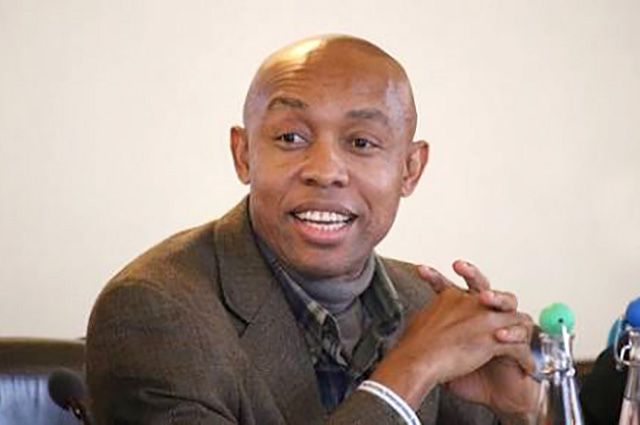
    Professor Chidi Anselm Odinkalu

    By Chidi Anselm Odinkalu

    Numeracy is a Nigerian problem but electoral democracy is about counting numbers. Nigerians will vote to elect a president and national legislators on 25 February, 2023. On 11 March, they will return to elect state legislators in 36 states and governors in 28. The numbers that will frame all these contests are now settled. They deserve close attention.

    In all, 18 political parties, will field a total of 15,307 candidates, including 1,553 women for 1,491 offices, including the presidency; 28 governorship offices; 109 Senators; 360 in the House of Representatives; and 993 seats in state houses of assembly.

    Voting will take place in 176,846 polling units nationwide located in 8,809 Wards or Registration Areas in 774 Local Government Areas. The Independent National Electoral Commission (INEC) says it has acquired at least 194,464 Bimodal Voter Accreditation System (BVAS) machines for the election to be managed by over 1.4 million ad-hoc officials. 

    By far the most important figure, however, is the number of registered voters. When Nigeria last voted in a general election in 2019, there were 84,004,084 voters on the electoral register. Through its Continuous Voter Registration (CVR), INEC says it captured another 12,298,944 since then. When it ran these entries through its Automatic Biometric Identification System, (ABIS), INEC discovered that 2,780,756 (22.6%) were ineligible or invalid. So, the register of voters in Nigeria has grown by 9,518,188 or 11.33% to 93,522,272 since 2019.

    The names on the register notionally represent the people to ultimately decide who becomes Nigeria’s next president. This is why the register deserves attention. There is another reason the number of voters matters. Complaints about “voter apathy” in Nigeria persist. The numbers and patterns seem to bear this out. In 1999, turnout was 52.3%. Officially, it grew to 69% in 2003; and has fallen since then to 57.5% in 2007; 53.7% in 2011; 43.7% in 2015; and a historic low of 34.8% in 2019.

    Nigeria has always had a problem with numbers, especially of people and of votes. To be fair, voting numbers can be problematic everywhere because they are ambulatory. People are not static: they die by the second, relocate, or migrate. The register of voters does not automatically change because a person whose name is on it has died or moved. So, every voters’ register, at best, represents a snapshot in time.

    However, there are many curious things about voting numbers in Nigeria. One, they are an island entirely unto themselves, with no rational relationship to wider trends in the population. Nigeria’s pattern of supposedly precipitous collapse in voter turnout, for instance, is inversely proportional to the growth in Nigeria’s baseline population.

    In 1999, Nigeria’s population was estimated to be 115,766,000. By the time the country voted in 2019, it had risen to 199,039,000, a growth of 83,273,000 or 71%. When INEC announced the number of voters on the register for the 2023 election on 11 January 2022, the population of Nigeria was estimated to be over 219,864,000. In other words, since 1999, Nigeria’s population has grown by over 104,098,000 or 89.92%.  

    By contrast, in 1999, Nigeria had 57 million registered voters. This rose by 5.26% or three million to 60 million in 2003 and then by 1.67% or one million to 61 million in 2007. By 2011, the number of registered voters had climbed by over 12 million to 73.53 million or 20.5%, representing an average yearly growth rate of nearly 5.12%, where previously it had grown by 1.31% in 1999-2003 and 0.42% between 2003-2007. By 2015, the population of registered voters had fallen to 68.83 million, a deficit of 4.7 million voters or 6.83%, representing an annualized rate of reversal of 1.71%. Yet, over the same period, Nigeria, a country with a median age of just under 18 years, had grown in population from an estimated 162.9 million to 181.2 million, an increase of 15.174 million or 11.23%, representing an annual growth rate of 2.8%.

    These numbers and the patterns they reveal do not lend themselves to easy explanation. However, as the Justice Uwais presidential committee on electoral reform pointed out in its 2008 report, much of what passed for electoral numbers in Nigeria before 2011 was voodoo. Just to illustrate this point, the INEC does not have a breakdown of official results for the 2007 presidential elections but there are turnout figures for that election.

    In 20 years from 1999 to 2019, Nigeria’s population rose by 71% but the population of voters rose by only 50%. With the latest numbers announced by INEC, Nigeria’s register of voters has grown by 36,522,272 since 1999 or 64.07%, a deficit of 25.83% when compared with the increase in Nigeria’s population over the same period.  It is possible to speculate about what may explain this significant deficit in growth patterns between the general population and register of voters. Rational factors such as internal migration; agency dysfunctions in INEC, civic inertia or failure to register, or high transaction costs may explain some of this. But there remain worrying patterns that are not easily accounted for by these factors.

    This leads to a second issue: Nigeria’s register of voters has always had invalid voters. The current register of voters in Nigeria dates back to November 2010 when the Attahiru Jega-led INEC set about establishing a credible register of voters for the country. The Commission had limited time to authenticate the raw data before the 2011 general election. When the Automatic Fingerprint Identification System (AFIS) finished its work on the 2011 register nearly four years later, INEC invalidated 4.7 million entries, which reduced the number of registered voters from 73.53 in 2011 to 68.83 in 2015 but not before these invalid 4.7 were eligible to vote in 2011.

    Perhaps the biggest worry of all is with dead voters. At the beginning of 2022, the INEC explained that it cannot expunge dead voters from the register because “the country does not have reliable data of births and deaths and the commission cannot engage in arbitrary removal of the names of individuals it suspects are deceased.”

    The third issue, therefore, is evidently that the number of voters on the register is grossly over-stated. In the explanation of the INEC, Nigeria’s register of voters is the classic Hotel California: it is “programmed to receive” and, for anyone with their name on it, the message is that “you can check out any time you like but you can never leave.” The implications of this for electoral integrity are staggering.

    Nigerian law only allows adults to vote. Over the decade between 2010 to 2020, Nigeria’s adult mortality rate has ranged between 389.09 and 357.9 per 1,000 for men; and 359.8 to 318 per 1,000 for women. In 2020, adult mortality rate in Nigeria was estimated at 34.25 per 100 of population yearly. Applied to the 2019 register and adjusted down to account for the fact that adult mortality rate is counted from 16 years, two less than the voting age, the number liable to be removed from the electoral roll would be well over six million in any election cycle.

    Over three election cycles since 2011, the number liable to be expunged from Nigeria’s electoral roll could be somewhere in the region of about 20 million. Separately, at the end of 2021, the Internal Displacement Monitoring Centre, (IDMC) reported that Nigeria had at least 3.2 million in internal displacement. The United Nations High Commissioner for Refugees adds that there are at least another 343,000 Nigerian refugees outside the country. Admittedly not all of these are adults of voting age.

    However, when you look at the numbers on Nigeria’s register of voters and account for the fact that the baseline data goes back to 2011, there is a high likelihood that up to about 25% of the register are dead, dud, or displaced. When folks complain about “voter apathy” they miss one important point: Nigeria guarantees the dead a right to vote. That is antecedent to any talk of “voter apathy.”

    A lawyer and a teacher, Odinkalu can be reached at chidi.odinkalu@tufts.edu 

    Editor
    • Website

    Related Posts

    Sam after five by Azu Ishiekwene 

    December 11, 2025

    Manufacturers of coups and bandits by Uzor Maxim Uzoatu  

    December 10, 2025

    IMILI and Nigeria’s global duty: Getting leadership right by Chido Onumah 

    December 10, 2025
    Editors Picks

    Tinubu celebrates ‘shining star’ Wike at 58

    December 13, 2025

    Kanu’s royal father, cabinet write Tinubu, seek presidential pardon

    December 12, 2025

    Abia’s maternal mortality rate drops from 1,114 to 136 per 100,000 births

    December 12, 2025

    RULAAC condemns alleged police compromise in defilement case of 9-year-old in Imo

    December 12, 2025
    Latest Posts
    Life

    Tinubu celebrates ‘shining star’ Wike at 58

    Abia

    Kanu’s royal father, cabinet write Tinubu, seek presidential pardon

    Abia

    Abia’s maternal mortality rate drops from 1,114 to 136 per 100,000 births

    Subscribe to Updates

    Get the latest news from Ikenga Online.

    Advertisement
    Demo

    IkengaOnline is a publication of the Ikenga Media & Cultural Awareness Initiative (IMCAI), a non-profit organisation with offices in Houston Texas and Abuja.

    We're social. Connect with us:

    Facebook X (Twitter) Instagram YouTube LinkedIn WhatsApp RSS
    • Home
      • Igboezue
      • Hall of Fame
      • Hall of Shame
    • News
      • Other States
      • National
      • International
      • Interviews
      • Personalities
    • Abia
    • Anambra
    • Ebonyi
    • Delta
    • Enugu
    • Imo
    • Rivers
    • Politics
    • Opinion & Editorial
      • Editorial
      • Columnists
        • Osmund Agbo
        • Chido Onumah
        • Uche Ugboajah
        • Hassan Gimba
        • Edwin Madunagu
        • Rudolf Okonkwo
        • Azu Ishiekwene
        • Osita Chidoka
        • Owei Lakemfa
        • Chidi Odinkalu
      • Opinion
    • Special Reports
    • Art & Entertainment
      • Nollywood
      • Music
      • Ikengaonline Literary Series (ILS)
      • Life
      • Travels
    • Sports

    Subscribe to Updates

    Get the latest news from Ikenga Online.

    Facebook X (Twitter) Instagram LinkedIn WhatsApp RSS
    © 2025 Ikenga Online. Ikenga.

    Type above and press Enter to search. Press Esc to cancel.