

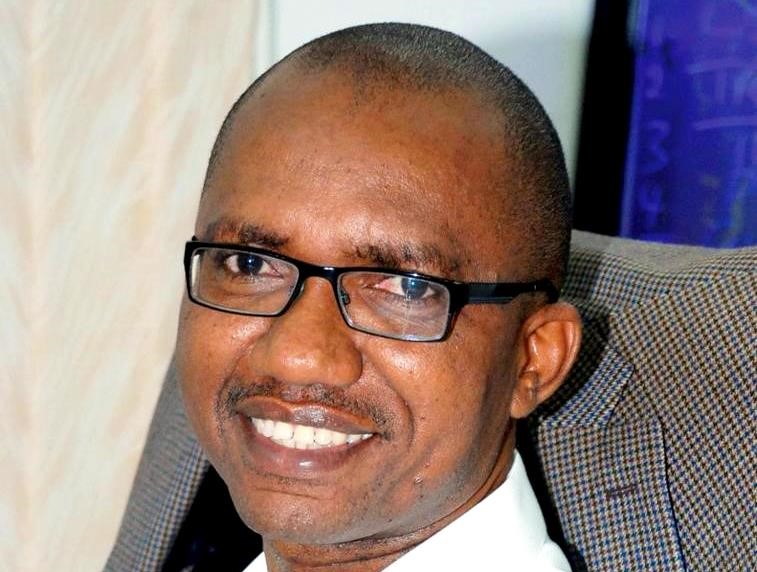
By Azu Ishiekwene
From Accra to Cape Town images of Nollywood, Nigeria’s popular movie footprint, are a common staple in homes across the continent as are the sights and sounds of its pop icons who are also amongst Africa’s biggest.
When politics is on the menu, however, it does not appear that the rest of the continent has the same appetite for what Nigeria has to offer as it does for the country’s jollof rice, its captivating movies or perhaps the Afrobeat of superstar, Burna Boy.
Between February and March 2023, Nigeria held its general elections; the seventh since 1999 when the country transitioned to constitutional democracy, after three decades of military rule briefly interrupted by a four-year spell of civilian rule.
I was curious to see how Africa’s media would cover Nigeria’s election for a number of reasons.
One, Nigeria is the continent’s largest democracy. It has nearly 20 percent of Africa’s population and is home to one of every four black persons in the world.
The country also has the most dispersed number of black persons, with the highest diaspora population in the US closely followed by Kenyans and Ghanaians. A common Nigerian joke is that if you arrive in any part of the world where there is no Nigerian, make your stay brief.
Two, the country is Africa’s biggest economy. With a portfolio of $6 billion, it is also the largest continental shareholder in the African Development Bank (AfDB), and very often its biggest cashier in times of crisis. This intervention goes back to the liberation struggle through apartheid to multiple regional wars.
Three, apart from the size of Nigeria’s economy and its population, it also makes multilateral sense to be interested in the outcome of the country’s general elections and to follow the story closely.
Perhaps one of the biggest issues on the continent today is the African Free Continental Trade Agreement (AfCTA), a protocol that is supposed to boost intra-African trade by up to $450 billion yearly and also create new opportunities.
In spite of the excitement in parts of the continent, Nigeria’s outgoing president, Muhammadu Buhari, has however treated the protocol with skepticism, if not disdain. It would be in the continent’s interest to know if the incoming president would be as lukewarm as Buhari has been.
Also, it was more than mere symbolism that the continent’s richest man and Nigerian, Aliko Dangote, after voting in the presidential and National Assembly elections on February 25, granted a press interview in which he said, “People who don’t come out to vote at elections have no reason to complain when things are not going well.” Nor should African journalists who ignore the continent’s biggest political story.
And if these reasons are insufficient, recent events on the continent, especially the rise in unconstitutional changes in government, have shown that general elections are quite often the trigger point.
At least 10 African countries have presidential and or national assembly elections this year; two of Nigeria’s neighbours – Sierra Leone and Liberia – have presidential elections later this year, while half a dozen others have local elections.
What happens in Nigeria could have a knock-on effect on its neighbours and maybe even beyond.
It’s common to hear of how poorly the Western press portrays Africa and how Western journalists report mostly stories about disease, death and destruction, judiciously sprinkled with prejudice about tribe, religion and poverty.
Yet, the paradox of this charge even in the run-up to Nigeria’s recent presidential election, is that politicians don’t seem to think they would have a good outing until they have paraded themselves before the foreign press in what appears to be a craven desire for validation. London’s Chatham House, a private think tank, for example, is the favourite staging post of Nigerian politicians.
But I digress. The point is, in a season when Nigeria’s new electoral law provided five months – the longest runway yet between the start of campaigns and elections – how did the media cover it?
Nigeria’s media, famous for vibrancy as it is for its fleetingness and partisan cacophony is not yet out of election mode, especially following the bitter post-election wrangling among the major parties – the ruling All Progressives Party (APC); the People’s Democratic Party (PDP); and the new table shaker, the Labour Party (LP). Anyone following the Nigerian media, especially social media, might be forgiven to think Armageddon is at hand.
CEO/Editor-In-Chief of Media Review and member of Nigeria’s National Ombudsman, Lanre Idowu, said coverage was not rigorous enough, especially because of the large number of political parties (18 in all) involved.
“That it was so easy for candidates to pick and choose who could interview them weakened the place and importance of the media as agenda-setters,” he said. “Sections of the media overreached themselves in the way they reported the elections, not showing sufficient conflict-sensitivity.”
Well, if charity failed at home, how much attention did the continent’s media pay, considering what was at stake both at the bilateral or multilateral levels?
The tragic, short answer is, not much. I wasn’t particularly surprised. Yet, for all the reasons I have given and perhaps more, I was hoping that improved inter-connectivity, if not increased commerce, travel, and self-interest, would spark a greater level of attention amongst the continent’s journalists in the coverage of Nigeria’s elections.
I took particular interest in four anglophone countries with a fairly vibrant and robust tradition of press freedom and randomly browsed coverage, just before, during and after the polls, to see if I would be disappointed. I wasn’t.
Not by Ghana, Nigeria’s western neighbour, which has its own district and local elections later this year. One or two TV stations, particularly, Joy FM, used feeds from a few Nigerian sources and conducted some live interviews. But the bulk of the Ghanaian press tucked the election stories inside, scrapping whatever little content they could find from online sources.
The Editor of a major Ghanaian newspaper, The Chronicle, Emmanuel Akli, explained why: “The Ghanaian economy is in a very bad shape,” he said. “The press is struggling. Readership is very low. Advertising is even worse. We are all struggling, and that includes Daily Graphic the biggest daily. We can’t even cover internal issues well, never mind sending reporters to cover elections in Nigeria!”
Sierra Leonean journalists didn’t fare better. They relied mostly on reports from the foreign press, mostly BBC, for their coverage. Abdul Rahman Kamara, Manager at Sierra Leone’s Star TV, said, “It is always the wish of journalists to cover stories beyond the shores of Sierra Leone, but financial limitations have been the challenge.”
The tragedy is not only the disservice the limitations do to historically close relations between both countries, but also, content from major foreign networks are often the echo chambers of their home governments.
Kamara agreed that African journalists need to do more about the African story otherwise the foreign media will hijack the narrative: “Doing so,” he said, “requires a consensus that we set our own agenda through media conglomerates sharing the ideas and putting Africa first.”
South Africa’s press tried to do a better job of it, with Mail & Guardian reporting the anxiety in Nigeria while voters waited for the results. Times Live covered the story of the main opposition Peoples Democratic Party (PDP) candidate, Atiku Abubakar, leading a protest against the results after they were released.
Yet, the coverage which was significantly slanted in favour of the LP candidate, Peter Obi, was nothing to be compared with the massive interest in the over one-year-old war between Russia and Ukraine, for example, or the Julius Malema protests.
A senior South African journalist, Ferial Haffajee, put it this way: “South African media is pretty myopic. There was some interest in Peter Obi’s chances as an outsider who resonated with young people. There was more coverage of the cash crisis (in Nigeria) and its possible impact on the election’s outcome. Burna Boy is bigger news here to be honest.”
Kenya did much better. Perhaps because of the country’s own recent history of electoral violence, journalists there were particularly sensitive to what was going on in Nigeria.
In an article in one of the East African country’s leading newspapers, Nation, for example, entitled, “Why Kenya should closely follow Nigeria elections”, the writer, Muliro Wilfred Nasongo, provided insights covering everything from what the elections mean to Nigeria to why Kenyans must follow the outcome.
Nasongo’s piece was a breath of fresh air in a moment of eccentricities when African journalists either unable or unwilling to tell an important continental story appeared to have outsourced responsibility, yet again, to foreign media networks.
It won’t be long before Nigerian journalists, and perhaps journalists in the sub-region, would face yet another test.
The Sierra Leonean general elections, which may well be one of the country’s most hotly contested in decades, come up in June. Only 32 years ago, that country was the theatre of a bloody four-year-long civil war. The war may have been caused by the scramble for bloody diamonds but it was sustained and prolonged by a weak and corrupt political system.
In light of reports of the desperation by the ruling Sierra Leone People’s Party (SLPP) of Julius Maada Bio to forestall peaceful transfer of power, a vigilant continental media could help ensure that Sierra Leone does not become the sixth African country in three years to slide into chaos over disputed elections.
While the continent rocks the Afrobeat of its music stars, Sierra Leone’s general elections in June shouldn’t be another outsourced African story.
Ishiekwene is Editor-In-Chief of LEADERSHIP
