
Close Menu
Ikenga Online
    What's Hot

    Mr Justice Steppin’ Razor by Chidi Anselm Odinkalu

    January 11, 2026

    Nigeria beat Algeria 2–0, to face Morocco in AFCON semifinals

    January 10, 2026

    ‘I will never survive the loss of my child’ – Chimamanda

    January 10, 2026
    Facebook X (Twitter) Instagram
    Ikenga Online
    Facebook X (Twitter) Instagram YouTube
    Donate
    • Home
      • Igboezue
      • Hall of Fame
      • Hall of Shame
    • News
      1. Other States
      2. National
      3. International
      4. Interviews
      5. Personalities
      6. View All

      Suspected bandits kill four security personnel in Oyo

      January 7, 2026

      Two foreign nationals killed in Anthony Joshua crash — Ogun govt

      December 29, 2025

      Bomb explosion kills several worshippers, others injured in Maiduguri

      December 25, 2025

      Ex-Sokoto gov denies link with bandits, blames political enemies

      December 15, 2025

      Nigeria beat Algeria 2–0, to face Morocco in AFCON semifinals

      January 10, 2026

      Nestlé Nigeria says local products unaffected by global infant formula recall as advisory list remains inexhaustive

      January 10, 2026

      FG moves to ease parents’ burden with reusable textbook policy

      January 9, 2026

      Dangote refinery begins direct sales to marketers as deal with depot owners collapses

      January 9, 2026

      Trump vows more strikes in Nigeria if attacks on Christians persist

      January 9, 2026

      Trump signs order withdrawing US from 66 global bodies

      January 8, 2026

      Presidency denies claims of AI-generated photo of Tinubu, Kagame

      January 5, 2026

      Trump says Venezuela’s Maduro captured after strikes

      January 3, 2026

      Slash jumbo salaries to pay minimum wage, Bishop tells Tinubu

      June 19, 2024

      Nigeria remains a country in crisis that needs to heal – Chido Onumah

      January 24, 2024

      The Ekweremadus: Obasanjo writes UK court, seeks pardon for them

      April 5, 2023

      I’m coming with loads of experience to re-set Abia – Greg Ibe

      February 1, 2023

      Anambra-born Ugochi Nwizu shines as UNN best graduating doctor with multiple distinctions

      September 29, 2023

      Bulwark for women, girls: Meet Ikengaonline September town-hall guest speaker, Prof Joy Ezeilo

      September 27, 2023

      Rufai Oseni, the most dangerous man on Nigerian TV by Okey Ndibe

      February 13, 2023

      Stanley Macebuh: Unforgettable pathfinder of modern Nigerian journalism by Uzor Maxim Uzoatu

      February 7, 2023

      Nigeria beat Algeria 2–0, to face Morocco in AFCON semifinals

      January 10, 2026

      ‘I will never survive the loss of my child’ – Chimamanda

      January 10, 2026

      We won’t miss you’: Abia North constituent says Kalu’s exit from senate will be celebrated in 2027

      January 10, 2026

      Nestlé Nigeria says local products unaffected by global infant formula recall as advisory list remains inexhaustive

      January 10, 2026
    • Abia

      We won’t miss you’: Abia North constituent says Kalu’s exit from senate will be celebrated in 2027

      January 10, 2026

      Abia 2027: Senator Kalu withdraws support for Gov Otti, vows to deliver Tinubu, APC

      January 8, 2026

      Otti inspects Umuahia central bus terminal as project nears completion 

      January 8, 2026

      Otti has cured Aba’s ‘stomach upset’ by fixing Port Harcourt road – Catholic Archbishop

      January 7, 2026

      Uzodimma visits Otti, says South-East governors determined to develop region

      January 3, 2026
    • Anambra

      Thunder in paradise: Barr Agbasiere hosts epic tennis championship in Awka 

      January 7, 2026

      Ex-Anambra lawmaker sues Oraifite PG over alleged suspension of development approvals

      December 24, 2025

      Odu of Onitsha, Arthur Mbanefo dies at 95

      December 23, 2025

      Yuletide: POCACOV, police declare zero tolerance for cultism, crime in Anambra

      December 20, 2025

      Anambra community suspends festival over insecurity

      December 19, 2025
    • Ebonyi

      Host communities reject Ebonyi govt’s plan for new Nigercem cement plant

      January 8, 2026

      MSL foundation awards scholarships to over 250 students from Ebonyi North

      January 5, 2026

      New year tragedy: Two brothers killed in Ebonyi

      January 1, 2026

      Breaking: Ebonyi PDP 2023 guber candidate resigns from party

      January 1, 2026

      Ebonyi procures three new aircraft 

      January 1, 2026
    • Delta
    • Enugu

      APC e-registration: Mbah targets 2m membership in Enugu

      January 9, 2026

      2027: Nwobodo backs Peter Obi for president 

      January 7, 2026

      Court jails ex-bankers for criminal diversion of pensioners’ N10.3m in Enugu

      December 24, 2025

      Chimamanda Adichie bags UNN appointment of visiting professor

      December 24, 2025

      Foundation partners UNTH to deepen mental healthcare access

      December 22, 2025
    • Imo

      Reporters’ diaries: S-East governors earn praise for rural road improvements

      January 6, 2026

      Rights advocates warn of threats over tiger base accountability campaign

      December 22, 2025

      Four cheat death as Port Harcourt-bound plane crashes at Owerri airport

      December 17, 2025

      RULAAC warns of renewed #EndSARS as police abuses persist, cites Imo ‘tiger base’

      December 16, 2025

      Sowore declares war on police impunity as report alleges 200 deaths at Imo ‘tiger base’

      December 15, 2025
    • Rivers

      APC rejects moves to impeach Gov Fubara

      January 8, 2026

      ‘Do not take our support for President Tinubu for granted’ — Wike warns APC scribe

      January 5, 2026

      Tinubu celebrates ‘shining star’ Wike at 58

      December 13, 2025

      Defection: PDP replies Fubara, says gov’s woes self inflicted 

      December 10, 2025

      BREAKING: Governor Fubara finally defects to APC

      December 9, 2025
    • Politics

      We won’t miss you’: Abia North constituent says Kalu’s exit from senate will be celebrated in 2027

      January 10, 2026

      APC e-registration: Mbah targets 2m membership in Enugu

      January 9, 2026

      APC rejects moves to impeach Gov Fubara

      January 8, 2026

      Abia 2027: Senator Kalu withdraws support for Gov Otti, vows to deliver Tinubu, APC

      January 8, 2026

      ADC presidential ticket: I’m not stepping down for anybody — Atiku

      January 7, 2026
    • Opinion & Editorial
      • Editorial
      • Columnists
        • Osmund Agbo
        • Chido Onumah
        • Uche Ugboajah
        • Hassan Gimba
        • Edwin Madunagu
        • Rudolf Okonkwo
        • Azu Ishiekwene
        • Osita Chidoka
        • Owei Lakemfa
        • Chidi Odinkalu
      • Opinion
    • Special Reports
    • Art & Entertainment
      • Nollywood
      • Music
      • Ikengaonline Literary Series (ILS)
      • Life
      • Travels
    • Sports
    Ikenga Online
    Home » A half century of banditry in Nigeria by Chidi Anselm Odinkalu 
    Chidi Odinkalu

    A half century of banditry in Nigeria by Chidi Anselm Odinkalu 

    EditorBy EditorJuly 2, 2023Updated:July 2, 2023No Comments8 Mins Read
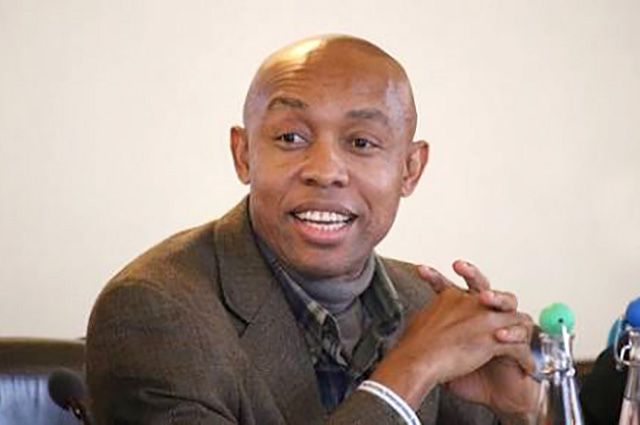
    Professor Chidi Anselm Odinkalu

    By Chidi Anselm Odinkalu

    Since well before Nigeria’s return to elective governance in 1999, the country has been overtaken by a progressive escalation of what Hannah Arendt in her classic, On Violence, called “a massive intrusion of criminal violence into politics.” In contemporary  Nigerianism, the word for this is “banditry.”

    “Bandits” is a conveniently capacious bogeyman for insecurity in Nigeria that precludes necessary questions as to the provenance of the descent into lawlessness. It captures diverse elements that may include terrorists, cultists, herdsmen, kidnappers, criminal gangs, and militants.

    Originally applied to the motorcycle gangs who perpetrate carnage in different parts of Nigeria’s north-west, bandits have now become the trope for an intolerable toll of destruction by mostly non-state entities as well as the inexplicable haplessness of Nigeria’s federal government that has never been known to cringe at the thought of exterminating significant numbers of its citizens. This lamentable situation compels a retrospective on how what the country now calls banditry evolved.

    Since Independence, successive governments in Nigeria have confronted variants of banditry. The evidence over time suggests a link between governance, its failures, and what is now called banditry. As a usage, it conflates two underlying crises – government without consequences and ungoverned spaces.

    In This Present Darkness, his history of organized crime in Nigeria, Stephen Ellis traces post-independence banditry in Nigeria to “shortly before the civil war, when government broke down in some parts of the Western Region and there was a blurred line between political violence, crime, and organized insurgency.” When the war ended in 1970, the military regime failed to manage demobilisation.

    In Southern Nigeria, which comprises a mere 29% of Nigeria’s nearly 924,000 km² of landmass, urban banditry ensued. Armed robbery in built-up areas of the country was an early manifestation. An early exponent of this was Ishola Oyenusi, a high-school dropout who chose to be called “the Doctor” and terrorised Lagos at the end of the Civil War. In response, the military government introduced mandatory death by firing squad for convicted armed robbers. The first public executions took place in front of Bar Beach, in Victoria Island, Lagos on 26 April 1971. Less than four and a half months later, on 8 September 1971, Oyenusi was executed at the same location.

    The pace of public executions quickly escalated. By 1979, Nigeria had publicly executed over 500 armed robbers by firing squad. In 1984 alone, the regime of Major-General Muhammadu Buhari, shot at least 355. In 1985, it killed another 301 by firing squad. In 12 years between 1984 and 1996, over 1,200 of such executions took place.

    In 1984, the response of General Muhammadu Buhari to the emergence of drug trafficking as a new dimension to outlawry in Nigeria was also the firing squad. Far from being mitigated, however, drug trafficking by Nigerians became more organized, more lucrative, and more violent.

    In a little-noticed release on 21 December 2018, Nigeria’s then Defence Minister, Mansur Dan-Ali, a retired one-Star General from Zamfara State, complained: “the issue of (sic) drug abuse, unemployment and governance amongst others contributes to the deplorable security situation in Zamfara State.” In the same month the Buhari administration launched a Presidential Advisory Committee on the Elimination of Drug Abuse chaired by retired Brigadier Buba Marwa. The membership included the wives of both the President and the Vice-President. In the four decades that separated the beginning and end of Buhari’s two tours of duty as head of state, Nigeria’s response to organized drug cartels had evolved from firing squad to pillow-talk.

    It appeared that each succeeding decade saw an intensification of urban outlawry in different parts of southern Nigeria. In the 1980s, the poster-boy was Lawrence Anini, another school drop-out who concatenated indiscriminate violence with a touch of Robin-Hood in a peculiar form of advocacy for the downtrodden.

    Anini’s reign of terror in the then Bendel and surrounding states was facilitated by the complicity of some senior police personnel who helped to provide his gang with intelligence and disappeared evidence against them. When two members of his gang were convicted in mid-1986 following effective police work, Anini turned his guns against the police in an intense rampage of mass killing, during which 10 police officers in Bendel State died between August and October 1986. That would prove to be his undoing.

    Military President, Ibrahim Babangida, turned up the heat on then Inspector-General of Police, Etim Inyang, famously asking him during a meeting of the then ruling military council in October 1986: “where is Anini?” Two months later, in December 1986, the police arrested Anini and dismantled his gang, which included George Iyamu, a Police Superintendent. In March 1987, they were executed.

    In the 1990s, Shina Rambo terrorised parts of south-west Nigeria with similar escapades. In South-East Nigeria, the Otokoto case in Owerri, Imo State, in 1996 revealed a netherworld of ritualised human sacrifice.

    By the 2000s, political violence and assassinations would emerge as dominant forms of outlawry. With the introduction of online banking to minimise cash-in-transit, armed robbers began stealing human beings in order to get their money. Commercial kidnapping boomed. In Osisikankwu (Obioma Nwankwo) in Abia State and resource militants in the Niger Delta traded in this. In parts of South-East Nigeria, politicians and these organised crime gangs made common cause leading government to break down. In response, a bandit, vigilante horde, known as Bakassi Boys took over the streets.

    Three additional factors collaborated in launching this new phase.

    First, public universities incredibly became fertile breeding grounds for outlaws. The story originated in competition among university-based confraternities, which forced the Pyrates Confraternity, the oldest of these confraternities in Nigeria, to leave the universities about 1986. The Supreme Eiye Confraternity (National Association of Airlords) emerged in Lagos around 1965 as rival to the Pyrates. In Ibadan, the National Association of Sealords, better known as the Buccaneers, followed by 1972. University of Calabar produced the Klansmen Confraternity and in University of Port Harcourt, the Vikings emerged. These university cults “pursue their cause with brazen audacity and outright disregard for the laws of the country.”

    The growth of these groups coincided with the emergence of articulate civic activism in the universities led by the National Union of Nigerian Students (NUNS), later known as the National Association of Nigerian students (NANS). Military rulers co-opted these cults to disrupt official student activism. Competing groups in the politics of university administration also found them useful. In the Niger Delta, Stephen Ellis recalls, they “became a factor in the region’s politics.”

    Second, mismanagement of natural resources exploitation in the country energized the transition from urban to rural banditry. Southern Kaduna, for instance, had always been rich in gemstones, including diamond, sapphire, quartz, ruby, temaline, and aquamarine. In the early-to-mid 1980s, this set off a mad rush of artisanal gemstone rustlers who invaded communities in Jema’a. The rustlers came from as far as Mali, Senegal and Sudan in search of shiny gemstones that the locals called “devil stones.”

    In 1986, Newswatch Magazine’s Aniete Usen reported “cases of eliminating by kidnapping, sudden disappearance of dealers and diggers and a whole range of other blood-chilling tales. The barons, agents and diggers became fanatically…. fully armed with automatic weapons.” The weapons they brought into Southern Kaduna would feature prominently in the first Kafanchan crisis in 1987. Their methods have been evident in the descent from artisanal mining to organized banditry in Birnin-Gwari and Zamfara three decades later.

    Third, Babangida’s transition to civil rule programme created a mutual support network between politicians, robbers and cults. In the Niger Delta, the military regime of General Abacha introduced guns to quell civic advocacy for resource justice. In 1994, they deployed the Joint (Military) Task Force. Three decades later, the guns are everywhere and the JTF is mired in an interminable mission.

    By 2008, Mujahid Asari Dokubo, asked how the armed youths in the Niger Delta who traded in violence acquired their weapons, answered the Rivers State Truth and Reconciliation Commission presided over by former Supreme Court Justice, Kayode Eso, that “the guns were purchased with money disbursed by politicians.”

    Quite clearly, successive regimes in Nigeria have found pockets of banditry useful in the enterprise of taking and keeping power. Unsurprisingly, politicians are mostly half-hearted in fighting it. During elections in 2023, for instance, banditry nearly vanished remarkably. Immediately after the vote, it resumed with full force. It seems rather evident that in Nigeria now, the bandits and the politicians are in bed with one another.

    A lawyer and a teacher, Odinkalu can be reached at chidi.odinkalu@tufts.edu. A version of this article first appeared in December 2018 as “Banditry in Nigeria: A Brief History of A Long War.”

    Editor
    • Website

    Related Posts

    Mr Justice Steppin’ Razor by Chidi Anselm Odinkalu

    January 11, 2026

    My New Year Resolution, By Osmund Agbo

    January 9, 2026

    Maduro: Why America’s new doctrine puts Nigeria and West Africa at risk by Cheta Nwanze 

    January 5, 2026
    Editors Picks

    Mr Justice Steppin’ Razor by Chidi Anselm Odinkalu

    January 11, 2026

    Nigeria beat Algeria 2–0, to face Morocco in AFCON semifinals

    January 10, 2026

    ‘I will never survive the loss of my child’ – Chimamanda

    January 10, 2026

    We won’t miss you’: Abia North constituent says Kalu’s exit from senate will be celebrated in 2027

    January 10, 2026
    Latest Posts
    Chidi Odinkalu

    Mr Justice Steppin’ Razor by Chidi Anselm Odinkalu

    Sports

    Nigeria beat Algeria 2–0, to face Morocco in AFCON semifinals

    Life

    ‘I will never survive the loss of my child’ – Chimamanda

    Subscribe to Updates

    Get the latest news from Ikenga Online.

    Advertisement
    Demo

    IkengaOnline is a publication of the Ikenga Media & Cultural Awareness Initiative (IMCAI), a non-profit organisation with offices in Houston Texas and Abuja.

    We're social. Connect with us:

    Facebook X (Twitter) Instagram YouTube LinkedIn WhatsApp RSS
    • Home
      • Igboezue
      • Hall of Fame
      • Hall of Shame
    • News
      • Other States
      • National
      • International
      • Interviews
      • Personalities
    • Abia
    • Anambra
    • Ebonyi
    • Delta
    • Enugu
    • Imo
    • Rivers
    • Politics
    • Opinion & Editorial
      • Editorial
      • Columnists
        • Osmund Agbo
        • Chido Onumah
        • Uche Ugboajah
        • Hassan Gimba
        • Edwin Madunagu
        • Rudolf Okonkwo
        • Azu Ishiekwene
        • Osita Chidoka
        • Owei Lakemfa
        • Chidi Odinkalu
      • Opinion
    • Special Reports
    • Art & Entertainment
      • Nollywood
      • Music
      • Ikengaonline Literary Series (ILS)
      • Life
      • Travels
    • Sports

    Subscribe to Updates

    Get the latest news from Ikenga Online.

    Facebook X (Twitter) Instagram LinkedIn WhatsApp RSS
    © 2026 Ikenga Online. Ikenga.

    Type above and press Enter to search. Press Esc to cancel.