

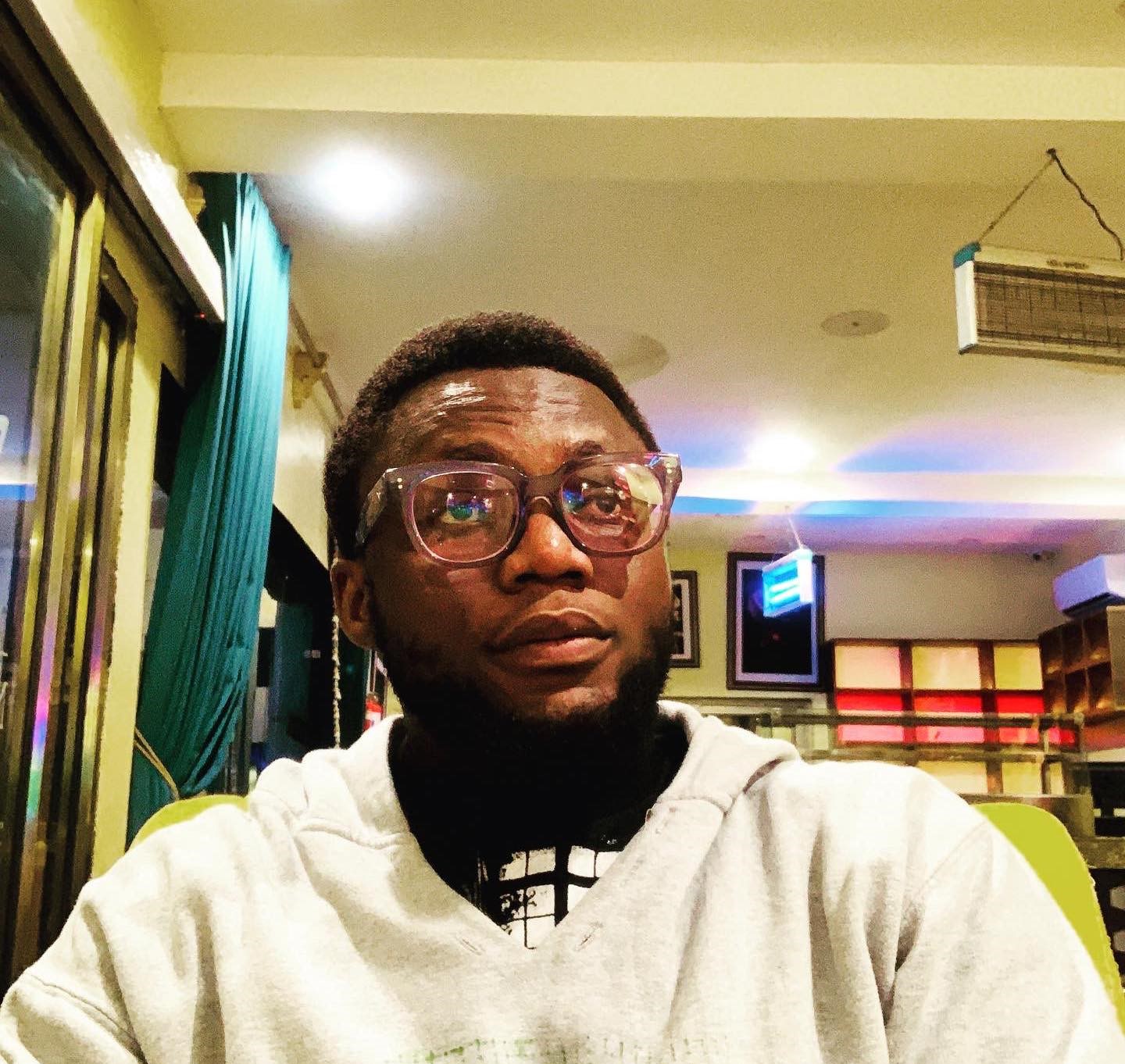
By Michael Chiedoziem Chukwudera
Between 1976 and 1996, successive Nigerian governments carved several states out of its various regions, totaling 36 as we have them today. Five of these —Imo, Anambra, Enugu, Abia and Ebonyi— are mainly occupied by Igbo-speaking people. The anthropologists who worked on the creation of states in Nigeria, it would seem in hindsight, had the intention of creating new geopolitical identities. It is from this geopolitical lens that Nigerians presently view their identities, as individual and collective. This gives rise to a topical issue: the question of the “Igbo Identity.”
According to the country’s current (geopolitical) arrangement, there are five southeastern states, which are home to the Igbo ethnic group. However, there are people who speak Igboid languages in at least five other states in Nigeria, including Delta, Rivers, Cross River, Edo, Benue, and Kogi. These places had the Aro Confederacy set foot in precolonial times, and are inhabited by people with whom the Igbo have had historic interactions.
Beyond speaking Igbo dialects, people from these places bear Igbo names and practise cultures that are similar (albeit with a little variance) to what obtains in Igboland. Yet there is a perennial argument surrounding the ethnic identity of the Igbo-speaking people in the geopolitical regions outside Southeastern Nigeria.
There are those, in arguing that those places should be regarded as part of the Igbo nation, who believe that the creation of states in Nigeria was an effort of the Nigerian state to continue the divide-and-conquer politics deployed by colonialists to subjugate Africans. On the other side of the divide, those who disagree hold out the argument that the Igbo people are guilty of foisting their ethnic identities on other people who are not of their region.
The deeper problem, however, lies in the knowledge gap that exists when it comes to cultural identities as defined by history, and to be specific, the paucity of historical perspective among the Igbo-speaking people. This has resulted in a shallow understanding of cultural identities, and in particular, how they are formed and influenced by history, in the course of migration and interactions of people from different parts.
The Igbo say “Igbo nile bu nwanne,” which literally translates to “all Igbo people are siblings.” This saying denotes that the Igbo all come from the same place and have spread to all other parts of the world where they live. This premise is however not sufficient in explaining how civilisations and ethnic identities, which can change over a long period of time, are formed.
The Igbo do not all come from one place, but they migrated from different places, at different timelines, to settle around the most tropical rain-forests of what is known today as Nigeria. Among the Igbo, there are different groups, marked by the different dialects which they speak: the Waawa, Owere, Abakeleke, Enuani, Ohafia, Abam etc.
The languages spoken by some of these people were influenced by neighbouring ethnicities, or the areas they migrated from. Also, the identity of each of these groups is often deeply influenced by oral tradition pertaining to migration routes, as well as geographical location. Thus, a proper definition of what the Igbo identity encompasses is elusive in mainstream historical and cultural discourse.
The Igbo, just like the Yorubas or even the Ijaws, aren’t necessarily homogeneous. Even across the South-East, there is a significant difference in dialects: a man from Ihiala will struggle to understand the Ekwuluobia dialect, and someone who hails from Owerri will not have any meaningful grasp of the dialect common to the people of Abakaliki. However, these groups, different as they are linguistically, all identify as Igbo people, and there is a central dialect in which most Igbo people can communicate.
Through the length and breadth of Igboland, the Igbo share ties with the Ibibio, Efik, Igalla and Edo people. Again, the influence of geography and migration on culture cannot be denied. What ties the Igbo together, as with other major African ethnicity, is not so much the similarity in language, but ideals and values unilaterally developed along the lines of a single civilisation, and that is how nations are formed.
The Igbo possess the characteristic of a nation, even if the complex system of pre-colonial Igbo society did not have that kind of political definition. It is a civilisation formed from the booming commerce which began from Arochukwu in present-day Abia State and the overarching spirituality of the Nri in present-day Anambra, both places 167 kilometres apart. It was around these booming centres of commerce and spirituality that people from different parts migrated and settled across the rest of the region to form the Igbo civilisation as the colonialists met it.
Colonialism grafted the Igbo into an ethnically heterogeneous country, and the serial process of state creation made the Igbo look more like one homogeneous ethnic group, rather than a cluster of ethnic groups united by an ideal. This new concept of the Igbo identity resulting from the Nigerian formation of states, which many Igbo people have bought into, is not fully inclusive for all Igbo-speaking people, especially those not in the Southeastern geopolitical zone. The resultant effect is that any Igbo-speaking people from outside the South-East often complain about “not being seen as Igbo enough” by their counterparts within the South-East.
Presently, there is the notion that Igbo identity is heavily tethered to geopolitics. Some of the alliances formed during the Nigerian Civil War created more cultural division, and the aftermath of the war gave rise to resentment, which led to more Igbo-speaking people outside the South-East geopolitical zone making the decision to no longer identify as Igbo people. These circumstances have served to create a sense of alienation between the Igbo of the South-East and (some of) those outside it. When some Igbo-speaking people from outside the South-East say, “I am not Igbo,” they are leaning towards an identity primarily influenced by geopolitics.
There are Igbo people who share boundaries with other ethnic groups like the Efok and Igalla, who bear names common to those neighbouring groups, yet identify as Igbo. In reality, the Igbo identity is not a homogeneous identity which belongs solely to select sub-groups among the Igbo-speaking people.
In 2019, I stumbled on a comprehensively written thread on Twitter (now X ) by a man named Edozie from Ubulubu in Delta state, who argued that the Igbo-speaking people of Delta state, collectively known as the Anioma people, are not Igbo. His post had been inspired by the writing of Professor Kunirum Osia, an Anioma scholar and part of the argument he made was that his part of Delta state speak in a dialect called Enuani – which is an Igbo dialect anyway – and so his people had their own language, too. He also opined that Anioma culture leans towards that of the Edo people who border them to the West.
Finding his argument interesting, I met up with him a few weeks ago and for about three hours, he lectured me on the reasons he did not identify as Igbo, even though he bore an Igbo name. According to him, his people have an original language called Olukunmi, and his town had been founded a little over two hundred years ago by a man called Osubor who came from Ugbodu, a neighbouring town in Ubulu-Ubu in present-day Delta State.
Interrogating his analysis of the Anioma people of Delta state, it became obvious to me that westwards, the language took on similarities with the language of the Edo people, and eastwards, it sounded more like the Igbo language as we know it. It was also from his analysis that I saw the Igbo-speaking part of Delta State for the confluence of cultures that it was, since it comprises people who migrated from Igbo land, Edo, Yorubaland and even from Igalla up north.
Yet the dialects spoken in these places –Enuani, Ukwuani, Ndokwa, etc.,– have all been classified by linguists as dialects of the Igbo language. However, some of these people, like my friend, claim to have an indigenous language, as in his case, Olukunmi. In one of those conversations, he expressed his fear that the Enuani dialect was threatening his original language, as people in his hometown now spoke more of Enuani than Olukunmi.
In more ways than one, this shows how today, there are people who speak a variation of the Igbo language, and who have their own indigenous language with which they came to their present dwelling area, but being surrounded by Igbo-speaking neighbours, have learned to speak Igbo while at the same time preserving memories of a distinct identity. These people could be seen as Igbo, by their own individual or collective choice, the way one can choose whether or not to identify with a nation.
The Igbo socio-political identity as currently constituted in Nigeria, it could be argued, is not inclusive enough to encompass all the Igbo-speaking people outside of the South-East. In Delta state, for example, where there are many Igbo-speaking communities and from where a number of Nigeria’s most prominent people have come from, there is an attempt by some of the Igbo-speaking people to distinguish the Anioma identity from the Igbo identity. It is not yet determined that this is the popular option, as many of them still identify as “Delta-Igbo.”
But the biggest driver of this wave is the centering of the current Igbo socio-political structure in the South-East, as well as the political affiliation of the Igbo-speaking people of Delta with the rest of the Mid-western region. It is for this reason that many Igbo people argue that the Nigerian political system is fostering division among the Igbo.
Identity politics is the right of every individual or group of people. It is heavily influenced by memory, history and migration, as these things combine to create the pattern by which people understand themselves.
Furthermore, there are many ways in which people relate to an identity: some wholly, and others partially. A friend from Ika who bears an Igbo name once told me that she has never for once seen herself as Igbo, but has been alive and conscious of her identity as an Ika person. I have friends too from other communities in Ika that unabashedly identify as Igbo. The Ika people being at the boundary between Edo and the Igbo-speaking part of Delta state, assume a confluential status between both identities.
Some Ika people claim to hail from Benin, but many of their neighbours are Igbo people who migrated westwards from the East. In Ika, as with some communities in Anioma, the variance in dialects tells the story that these people migrated from different parts of the East and Midwest.
In history, there were also some people who migrated from the western part of Igboland to the East. According to my family tree, my 15th ancestor, Diji, was from Aboh kingdom in Delta State, but today, his descendants (Umudiji) are resident in Egbuoma, a town which borders Mgbidi in Imo State and Uli in Anambra state. Our neighbours, the Oguta people, have close ties with Ndokwa and Edo, and the Onicha people are said to have come from Benin.
These aspects of Igbo history are in need of proper elucidation, the effect of migration and time on identity needs to be studied, and we need to come to an understanding that there are various stories behind the different Igbo-speaking people. The stereotypical Igbo identity only tells a single story, and almost erases some of the differences in history among the Igbo. There is more to the Igbo nation than what currently holds itself out as truth in today’s mainstream socio-political discourse.
Michael Chiedoziem Chukwudera is a writer and freelance journalist. Follow him on Twitter @Chukwuderaedozi.
