
Close Menu
Ikenga Online
    What's Hot

    Army dismisses report of mass casualty in Borno attacks, says troops repelled terrorists

    March 7, 2026

    Akpabio, constituents laud Sen Ngwu’s scholarship programme

    March 7, 2026

    Borno attack: FG deploys additional tactical assets, intelligence-driven reinforcements — Shettima

    March 7, 2026
    Facebook X (Twitter) Instagram
    Ikenga Online
    Facebook X (Twitter) Instagram YouTube
    Donate
    • Home
      • Igboezue
      • Hall of Fame
      • Hall of Shame
    • News
      1. Other States
      2. National
      3. International
      4. Interviews
      5. Personalities
      6. View All

      Coroner gives LASUTH 14 days to account for unidentified body in Pelumi Onifade death probe

      March 6, 2026

      Kaduna victims’ coalition demands probe of alleged abuses under El-Rufai

      February 16, 2026

      Dadiyata: Kperogi raises questions as El-Rufai, Ganduje trade allegations

      February 15, 2026

      Kole Shettima, others to be turbaned by Machina Emirate

      January 26, 2026

      Army dismisses report of mass casualty in Borno attacks, says troops repelled terrorists

      March 7, 2026

      Borno attack: FG deploys additional tactical assets, intelligence-driven reinforcements — Shettima

      March 7, 2026

      Igbo group demands return of regional police

      March 7, 2026

      APC can’t jail Kanu and expect S’East support in 2027 — PDP chieftain

      March 7, 2026

      Okonjo-Iweala canvasses fresh ideas to revitalise WTO ahead of MC14

      March 6, 2026

      A Critical review of Reparations: History, Struggle, Politics and Law, by Chido Onumah 

      March 4, 2026

      Iran strikes: US issues security alert to citizens in Nigeria, worldwide

      March 2, 2026

      Iran supreme leader, Ayatollah Ali Khamenei killed in US–Israel strikes

      March 1, 2026

      Slash jumbo salaries to pay minimum wage, Bishop tells Tinubu

      June 19, 2024

      Nigeria remains a country in crisis that needs to heal – Chido Onumah

      January 24, 2024

      The Ekweremadus: Obasanjo writes UK court, seeks pardon for them

      April 5, 2023

      I’m coming with loads of experience to re-set Abia – Greg Ibe

      February 1, 2023

      Anambra-born Ugochi Nwizu shines as UNN best graduating doctor with multiple distinctions

      September 29, 2023

      Bulwark for women, girls: Meet Ikengaonline September town-hall guest speaker, Prof Joy Ezeilo

      September 27, 2023

      Rufai Oseni, the most dangerous man on Nigerian TV by Okey Ndibe

      February 13, 2023

      Stanley Macebuh: Unforgettable pathfinder of modern Nigerian journalism by Uzor Maxim Uzoatu

      February 7, 2023

      Army dismisses report of mass casualty in Borno attacks, says troops repelled terrorists

      March 7, 2026

      Akpabio, constituents laud Sen Ngwu’s scholarship programme

      March 7, 2026

      Borno attack: FG deploys additional tactical assets, intelligence-driven reinforcements — Shettima

      March 7, 2026

      Igbo group demands return of regional police

      March 7, 2026
    • Abia

      Otti clears decade-long pension arrears for Abia ADP retirees

      March 6, 2026

      Rivers monarch to Otti: Your successor will have big shoes to fill

      March 6, 2026

      Abia tops climate change preparedness ranking, wins PACE commendation

      March 5, 2026

      Rights Abuse: Army warns soldiers, threatens sanctions over gambling, misconduct

      March 5, 2026

      Otti applauds Ohanaeze leadership, reaffirms support for Igbo unity, development

      March 4, 2026
    • Anambra

      ALGAF: JDPC tasks fellows on project monitoring for grassroots development

      March 2, 2026

      Thousands to benefit from IDEAS-TVET project in Anambra — Prof Onyeizugbe

      February 24, 2026

      Sit-at-home: Anambra govt urges transporters to resume full operations

      February 24, 2026

      Soludo shuts down Nnewi auto parts market over sit-at-home

      February 23, 2026

      IWA, Igbo stakeholders push for enforcement of laws to strengthen Igbo language

      February 22, 2026
    • Ebonyi

      Boundary crisis: Ebonyi orders destruction of shrines in Amasiri

      March 6, 2026

      Breaking: Kidnapped father of former Ebonyi deputy governor killed by abductors

      March 6, 2026

      AE-FUNAI college of medicine inducts 42 pioneer doctors

      March 5, 2026

      Varsity offers free respiratory treatment to Ebonyi rice mill workers

      March 5, 2026

      Former Ebonyi deputy governor’s father kidnapped

      March 1, 2026
    • Delta
    • Enugu

      Akpabio, constituents laud Sen Ngwu’s scholarship programme

      March 7, 2026

      Rev Father escapes death, two vigilantes killed, as gunmen invade Enugu community

      March 5, 2026

      Enugu govt takes over warehouse renovated by UNICEF, thanks donor

      March 5, 2026

      APC concludes congresses, elects new executives in Enugu

      March 4, 2026

      Enugu council boss inaugurates six solar-powered boreholes

      March 1, 2026
    • Imo

      Disband ‘Tiger Base’ now, Igbo group petitions Gov Uzodimma

      February 25, 2026

      RULAAC urges Imo CP to probe alleged atrocities by vigilante leader in Njaba

      February 13, 2026

      Akagburuonye @ 60: Ex-Eagles stars storm Mbaise to honour humanitarian

      February 13, 2026

      RULAAC petitions Imo attorney-general over alleged torture, sexual abuse of trainee nurse

      January 25, 2026

      Reporters’ diaries: S-East governors earn praise for rural road improvements

      January 6, 2026
    • Rivers

      Aba Power breaks new ground with electricity supply to Rivers

      February 22, 2026

      Investigate Asari Dokubo over anti-Igbo rants now, IIC tells security agencies

      February 20, 2026

      Ohanaeze inaugurates committee on Igbo strategic engagement

      February 2, 2026

      Rivers assembly vows to proceed with Gov Fubara, deputy’s impeachment process 

      January 16, 2026

      Financial disagreements fuel impeachment moves against Fubara — Aide alleges

      January 16, 2026
    • Politics

      APC can’t jail Kanu and expect S’East support in 2027 — PDP chieftain

      March 7, 2026

      IPAC threatens 2027 election boycott over electoral act

      March 6, 2026

      APC targets Abia in 2027 as Ikoh hails party unity, Tinubu’s reforms

      March 4, 2026

      APC concludes congresses, elects new executives in Enugu

      March 4, 2026

      Digital membership register, trap set for opposition parties — ADC

      March 3, 2026
    • Opinion & Editorial
      • Editorial
      • Columnists
        • Osmund Agbo
        • Chido Onumah
        • Uche Ugboajah
        • Hassan Gimba
        • Edwin Madunagu
        • Rudolf Okonkwo
        • Azu Ishiekwene
        • Osita Chidoka
        • Owei Lakemfa
        • Chidi Odinkalu
      • Opinion
    • Special Reports
    • Art & Entertainment
      • Nollywood
      • Music
      • Ikengaonline Literary Series (ILS)
      • Life
      • Travels
    • Sports
    Ikenga Online
    Home » Bedrooms, back-pockets and beck-and-call in Nigeria’s elections by Chidi Anselm Odinkalu 
    Chidi Odinkalu

    Bedrooms, back-pockets and beck-and-call in Nigeria’s elections by Chidi Anselm Odinkalu 

    EditorBy EditorOctober 1, 2023Updated:October 1, 2023No Comments8 Mins Read
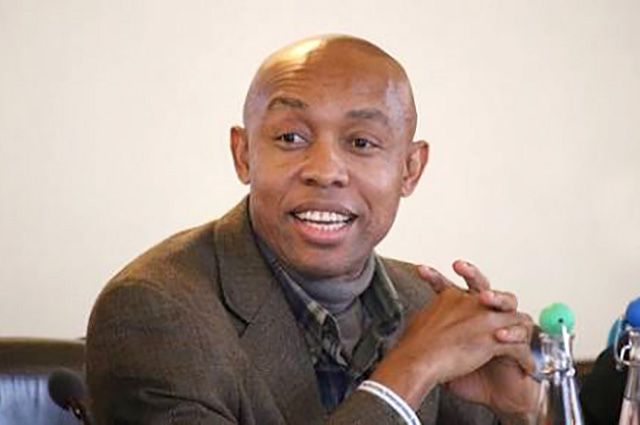
    Professor Chidi Anselm Odinkalu

    By Chidi Anselm Odinkalu

    On 3 April 2003, Nigeria’s Supreme Court decided a remarkable appeal. It began in September 1983 from the results declared in the ballot for the position of governor of Niger State, North-Central Nigeria. The principal candidates were Auwal Ibrahim, the then incumbent and candidate of the ruling National Party of Nigeria (NPN). His main opponent was Alhassan Abubakar Badakoshi, the candidate of the Nigeria Peoples’ party (NPP). At the end of the ballot, the Federal Electoral Commission (FEDECO, as the electoral empire was then known) announced Auwal Ibrahim as duly returned for another four years as Governor.

    A dissatisfied Alhassan Badakoshi proceeded to the election petition tribunal. On 31 December 1983, the military sacked all elected civilians from office. Alhassan Badakoshi died nearly 20 years later on 16 March 2003. 19 days after his death, on 3 April, the Supreme Court finally decided that he was in fact the rightful winner of the election for the governor of Niger State in 1983.

    This case illustrates in many ways the kind of fate that has befallen the courts under elective government in Nigeria. As this writer has pointed out elsewhere: “Every election cycle in Nigeria has three seasons. The campaign season belongs to the parties, the politicians and their godfathers. This is followed by the voting season, during which the security agencies and the Independent National Electoral Commission hold sway. Thereafter, matters shift to the courts for the dispute resolution season, which belongs to the lawyers (mostly Senior Advocates of Nigeria) and judges.”

    The result has been to unduly judicialise politics and politicize the judiciary, with at least three notable consequences.

    First, an exponential inflation in political cases has clogged up the courts retrenching them as legitimate arbiters on questions of justice and outsourcing that role, instead, to hucksters and vigilantes.

    Second, with politicians desperate to be anointed winners by judges, judicial corruption has become a norm not an exception. The Independent Corrupt Practices Commission (ICPC) affirmed as much in a 2020 report.

    Third, as a consequence of these two factors, the processes and quality of judicial preferments have become unduly co-opted and corrupted, eroding the judiciary of its constitutive claims to independence, integrity or trust. The consequence is that judicial tenure is no longer as secure as it used to be, evident in the enforced removal of the two most recent Chief Justices of Nigeria (CJN).

    To understand how this eventuated, it is necessary to look back a little.

    The role of the judiciary in determining winners and losers in elections has escalated beyond any reasonable prognostication since Nigeria’s return of civil rule in 1999. When it sacked the civilian government on the last day of 1983, the military regime of General Muhammadu Buhari launched a judicial commission of inquiry into the operations of the FEDECO, chaired by Bolarinwa Babalakin, a senior judge who later went on to serve on Nigeria’s Supreme Court. In its final report submitted in 1986, the Bolarinwa Babalakin Commission of Inquiry first called attention to the corruption of the judicial role in election dispute resolution, remarking that “the verdicts in a number of instances constituted a rape of democracy perpetrated through the law courts.”

    This trend would deepen with the return to elective government in 1999 after 15 years of continuous military rule. 20 years ago, in 2003, leading Nigerian public law scholar, Obi Nwabueze, a Senior Advocate of Nigeria (SAN), accused the Supreme Court and the judiciary of playing a “discreditable part” in the erosion of judicial credibility through questionable decisions conferring judicial legitimacy to manifestly rigged elections.

    The nadir was in 2007, when 1,282 offices out of a total of 1,496 or 85.7% of elective offices contested ended up in election petition tribunals, leading The Economist to describe Nigeria as a unique form of “democracy by court order”. Others have argued that elections in Nigeria are a systematic case of “rigging through the courts” and the most recent descriptions have accused the courts of undermining the faith of voters in democratic process.

    By contrast, 2015 was the first time that Nigeria’s Presidential elections did not end up in court, reflecting the consensus that the elections of that year were relatively well organized with results that largely reflected the will of the people. It was also the first time that the proportion of elections ending up in courts was less than 50% (663 petitions or 44.32%). The 2019 elections produced 766 petitions (51.2%), roughly the same number as the 769 (51.4%) seen in 2011. Just last week, the President of the Court of Appeal disclosed that the 2023 elections have produced 1,209 petitions. At 80.82% of the offices contested, this confirms that the 2022 elections rival the 2007 elections in infamy.

    The all-consuming process of election dispute resolution have cumulatively drained the judiciary in Nigeria of the intangible institutional assets of character, credibility, impartiality and independence. As the judicial role in elections has intensified, senior politicians and political parties began openly to vie for control in preferments to senior judicial office. In 2011, this crisis broke into the open with then Chief Justice and the President of the Court of Appeal trading mutual acrimony over grave allegations of influence peddling in the Sokoto State governorship election petition.

    Two years earlier, in April 2009, then Governor of Kwara State, Bukola Saraki, procured the removal of  the Chief Judge of the State, Raliat Elelu-Habeeb, by purporting to act on a summary resolution of the State House of Assembly, which he totally controlled. Her crime was that she was considered too independent. In proceedings that followed, the Supreme Court determined on 17 February 2012 that the removal was unconstitutional as it was not preceded by a disciplinary investigation by the National Judicial Council (NJC).

    Even as this judgment appeared to reassure about the independence of judicial tenure, contemporaneous developments were essentially to negate its effect, leading to an intensification of the politics of appointment to the headship of the judicial branch at both state and federal levels. The reason for this is evident: the presiding judicial officer is the conduit for control of appointments, capital projects and budgets, as well as influence in the court system over which he or she presides. That person also controls the assignment of cases or constitution of panels in the most sensitive cases. Together, the presiding judicial officers determine who gets to sit or be excluded from election petitions. Above all, presiding judicial officers are constitutionally required to constitute panels of investigation where the impeachment of a Governor or the President (or their deputies) arise. The politicians can’t afford to have in such positions persons whom they don’t control.

    For instance, when in 2004, Jacob Ugwu was due to retire as the Chief Judge of Enugu State, the NJC initially recommended Raphael Agbo, the most senior active judge in the state, to succeed him. The then state governor, Chimaraoke Nnamani, had other ideas and maneuvered to get Agbo elevated to the Court of Appeal, creating an opening for his preferred candidate – Innocent Umezulike, who, at that point, was only sixth in seniority among the judges on the High Court of Enugu State.

    When former Rivers State Governor, Rotimi Amaechi, could not get his preferred candidate in 2012-2013 to become Chief Judge of the State, the courts in the state were locked up for the last two years of his tenure over the disagreement.

    In Kano State, to avoid appointing as substantive Chief Judge, Patricia Mahmoud, a Christian from Benue who had been a judge with reputation for independence on the High Court of Kano State since 1991, an arrangement was reached to elevate her to the Court of Appeal. Justice Mahmoud had acted temporarily in 2015 in the office of Chief Judge of the State.

    Evidently, the norm of seniority which favours the most senior active judge for appointment to the position of the Chief at the point that a vacancy is declared has failed to hold up well. This has become grist for the political mill in a season of perpetual politics. Initially, politicians appeared to believe that they needed to have excellent lawyers on their side in the multi-dimensional contests for power. Increasingly, however, as the judicialisation of Nigeria’s electoral process has deepened, it is now clear this is not good enough. To stand any chance, they now must also have their own judges in their bedrooms where possible, in their back-pockets when necessary, and at their beck and call at all times.

    A lawyer and a teacher, Odinkalu can be reached at chidi.odinkalu@tufts.edu 

    Editor
    • Website

    Related Posts

    Donald Trump, like Adolf Hitler, walks on both legs by Owei Lakemfa 

    March 6, 2026

    Africa and the deadly dust from Iran by Azu Ishiekwene

    March 5, 2026

    Metabolism does not tolerate stagnation by Mukaila Kareem

    March 2, 2026
    Editors Picks

    Army dismisses report of mass casualty in Borno attacks, says troops repelled terrorists

    March 7, 2026

    Akpabio, constituents laud Sen Ngwu’s scholarship programme

    March 7, 2026

    Borno attack: FG deploys additional tactical assets, intelligence-driven reinforcements — Shettima

    March 7, 2026

    Igbo group demands return of regional police

    March 7, 2026
    Latest Posts
    National

    Army dismisses report of mass casualty in Borno attacks, says troops repelled terrorists

    Enugu

    Akpabio, constituents laud Sen Ngwu’s scholarship programme

    National

    Borno attack: FG deploys additional tactical assets, intelligence-driven reinforcements — Shettima

    Subscribe to Updates

    Get the latest news from Ikenga Online.

    Advertisement
    Demo

    IkengaOnline is a publication of the Ikenga Media & Cultural Awareness Initiative (IMCAI), a non-profit organisation with offices in Houston Texas and Abuja.

    We're social. Connect with us:

    Facebook X (Twitter) Instagram YouTube LinkedIn WhatsApp RSS
    • Home
      • Igboezue
      • Hall of Fame
      • Hall of Shame
    • News
      • Other States
      • National
      • International
      • Interviews
      • Personalities
    • Abia
    • Anambra
    • Ebonyi
    • Delta
    • Enugu
    • Imo
    • Rivers
    • Politics
    • Opinion & Editorial
      • Editorial
      • Columnists
        • Osmund Agbo
        • Chido Onumah
        • Uche Ugboajah
        • Hassan Gimba
        • Edwin Madunagu
        • Rudolf Okonkwo
        • Azu Ishiekwene
        • Osita Chidoka
        • Owei Lakemfa
        • Chidi Odinkalu
      • Opinion
    • Special Reports
    • Art & Entertainment
      • Nollywood
      • Music
      • Ikengaonline Literary Series (ILS)
      • Life
      • Travels
    • Sports

    Subscribe to Updates

    Get the latest news from Ikenga Online.

    Facebook X (Twitter) Instagram LinkedIn WhatsApp RSS
    © 2026 Ikenga Online. Ikenga.

    Type above and press Enter to search. Press Esc to cancel.