
Close Menu
Ikenga Online
    What's Hot

    For the second time, Rivers speaker Amaewhule, 15 other lawmakers defect to APC

    December 5, 2025

    SSDO partners Japan to expand healthcare support in Enugu

    December 5, 2025

    Enugu council boss pledges N5m for information on kidnappers’ hideouts

    December 5, 2025
    Facebook X (Twitter) Instagram
    Ikenga Online
    Facebook X (Twitter) Instagram YouTube
    Donate
    • Home
      • Igboezue
      • Hall of Fame
      • Hall of Shame
    • News
      1. Other States
      2. National
      3. International
      4. Interviews
      5. Personalities
      6. View All

      Bandits hit Kogi church, abduct pastor, wife, members

      November 30, 2025

      Kaduna Anglican priest dies in kidnappers’ den

      November 27, 2025

      Bandits mutilate one, abduct pregnant woman, 23 others in Niger communities

      November 27, 2025

      Freed abductees receive medical treatment in Kwara govt house

      November 24, 2025

      Rewarding ex-INEC chairman with ambassadorial role morally indefensible – Atiku 

      December 4, 2025

      Tinubu swears in Gen Musa as defence minister

      December 4, 2025

      Ex-CDS, Gen Musa confirmed as defence minister

      December 3, 2025

      Police to arrest personnel escorting VIPs, declare such duty Illegal

      December 3, 2025

      US issues visa ban on individuals behind Christian genocide in Nigeria

      December 4, 2025

      Tinubu approves Nigeria’s membership of US-Nigeria joint working group

      November 27, 2025

      Obi meets EU lawmakers, seeks stronger partnership to tackle Nigeria’s challenges

      November 26, 2025

      CPC: Nigeria engaging world diplomatically, will defeat terrorism – Tinubu 

      November 6, 2025

      Slash jumbo salaries to pay minimum wage, Bishop tells Tinubu

      June 19, 2024

      Nigeria remains a country in crisis that needs to heal – Chido Onumah

      January 24, 2024

      The Ekweremadus: Obasanjo writes UK court, seeks pardon for them

      April 5, 2023

      I’m coming with loads of experience to re-set Abia – Greg Ibe

      February 1, 2023

      Anambra-born Ugochi Nwizu shines as UNN best graduating doctor with multiple distinctions

      September 29, 2023

      Bulwark for women, girls: Meet Ikengaonline September town-hall guest speaker, Prof Joy Ezeilo

      September 27, 2023

      Rufai Oseni, the most dangerous man on Nigerian TV by Okey Ndibe

      February 13, 2023

      Stanley Macebuh: Unforgettable pathfinder of modern Nigerian journalism by Uzor Maxim Uzoatu

      February 7, 2023

      For the second time, Rivers speaker Amaewhule, 15 other lawmakers defect to APC

      December 5, 2025

      SSDO partners Japan to expand healthcare support in Enugu

      December 5, 2025

      Enugu council boss pledges N5m for information on kidnappers’ hideouts

      December 5, 2025

      FirstPower electricity announces planned outage in Anambra

      December 5, 2025
    • Abia

      Gunmen hijack Aba-bound bus, abduct 14 passengers in Imo

      December 3, 2025

      Removal of barriers against PWDs’ participation in society a must – Gov Otti

      December 3, 2025

      Abia set to unveil building material testing laboratory

      December 3, 2025

      Otti empowers 150 Abia Poly outstanding graduates with N1m each

      December 2, 2025

      Experts meet in Umuahia to tackle MSMEs challenges

      December 2, 2025
    • Anambra

      FirstPower electricity announces planned outage in Anambra

      December 5, 2025

      GPSDC, WACOL train journalists on GBV reporting, seek stronger collaboration

      December 5, 2025

      Police nab member of kidnap syndicate in Anambra

      December 4, 2025

      Tinubu empowers Anambra PWDs with N50m business grant

      December 3, 2025

      Commission to establish disability counselling centre in Anambra

      December 3, 2025
    • Ebonyi

      Ebonyi LG poll: Ezillo stakeholders adopt power shift to Ezzagu zone

      December 2, 2025

      Nwifuru moves to equip Ebonyi hospitals, sets up five-man equipment distribution committee

      November 28, 2025

      Court remands man for alleged cyberbullying of federal lawmaker

      November 26, 2025

      Nwifuru presents N884.8bn 2026 budget to Ebonyi assembly

      November 25, 2025

      Coalition groups condemn arrests, detention of critics, journalists in Ebonyi

      November 23, 2025
    • Delta
    • Enugu

      SSDO partners Japan to expand healthcare support in Enugu

      December 5, 2025

      Enugu council boss pledges N5m for information on kidnappers’ hideouts

      December 5, 2025

      PRODA DG preaches peace, unity among staff as 2025 games festival kicks off

      December 4, 2025

      Abductors of Enugu deputy governor’s kinsmen demand N20m ransom

      December 4, 2025

      Road crash: FRSC confirms 2 dead, 9 injured in Enugu multiple accidents 

      December 4, 2025
    • Imo

      Gunmen hijack Aba-bound bus, abduct 14 passengers in Imo

      December 3, 2025

      Catholic bishops condemn violence in Nigeria, call for govt action to restore peace

      November 26, 2025

      MASSOB blasts Ayodele over anti-Igbo comment

      November 26, 2025

      ASUU gives FG 8-day ultimatum over unmet demands, threatens full-blown strike

      November 13, 2025

      S’East now cocoa farm for security operatives — Nwanguma, RULAAC boss

      November 5, 2025
    • Rivers

      For the second time, Rivers speaker Amaewhule, 15 other lawmakers defect to APC

      December 5, 2025

      DSS quizzes social media user for allegedly advocating coup d’état

      October 29, 2025

      Rumuorlumeni community calls for halt on sale of waterfront lands

      October 20, 2025

      Ohanaeze presidents demand unconditional release of Kanu, others

      October 18, 2025

      Fubara gives reasons for not challenging emergency declaration in court

      September 19, 2025
    • Politics

      For the second time, Rivers speaker Amaewhule, 15 other lawmakers defect to APC

      December 5, 2025

      2027: Atiku finally joins ADC

      November 24, 2025

      Abia patriots caution APC leaders against ‘destructive opposition’ politics

      November 21, 2025

      S’East stakeholders meet in Enugu, unveil 2027 political road map 

      November 20, 2025

      PDP chairman invites President Trump, international community to ‘save Nigerian Democracy’

      November 18, 2025
    • Opinion & Editorial
      • Editorial
      • Columnists
        • Osmund Agbo
        • Chido Onumah
        • Uche Ugboajah
        • Hassan Gimba
        • Edwin Madunagu
        • Rudolf Okonkwo
        • Azu Ishiekwene
        • Osita Chidoka
        • Owei Lakemfa
        • Chidi Odinkalu
      • Opinion
    • Special Reports
    • Art & Entertainment
      • Nollywood
      • Music
      • Ikengaonline Literary Series (ILS)
      • Life
      • Travels
    • Sports
    Ikenga Online
    Home » 75 years of the universal declaration of human rights, by Chidi Anselm Odinkalu
    Chidi Odinkalu

    75 years of the universal declaration of human rights, by Chidi Anselm Odinkalu

    EditorBy EditorDecember 10, 2023No Comments7 Mins Read
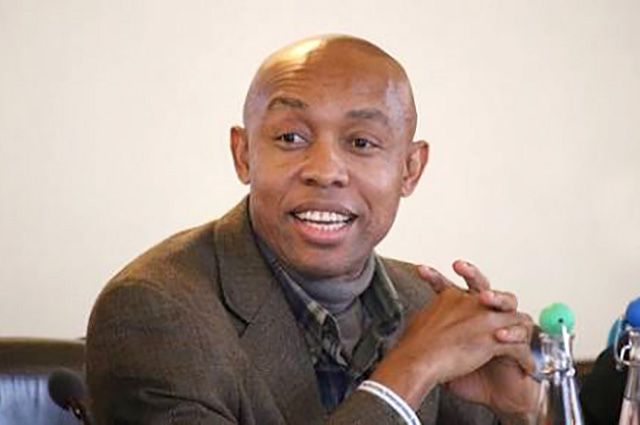
    Professor Chidi Anselm Odinkalu

    By Chidi Anselm Odinkalu

    On this day 75 years ago, on 10 December 1948, the General Assembly of the United Nations adopted the Universal Declaration of Human Rights “as a common standard of achievement for all peoples and all nations.” 48 of the 58 countries eligible voted to approve the Declaration. The Byelorussian Soviet Socialist Republic, Czechoslovakia, Poland, Saudi Arabia, Soviet Union, South Africa, Ukraine, and Yugoslavia abstained, while Honduras and Yemen absented themselves from the vote altogether. There were no votes against its adoption.

    The previous day, on 9 December 1948, they had adopted the Convention on the Prevention and Punishment of the Crime of Genocide and just three and a half years earlier, in June 1945, 50 countries had signed the Charter of the United Nations establishing the foundations for a new global order at the end of a profoundly ruinous war. In the three years separating the adoption of the UN Charter from the Universal Declaration, more countries emerged to independence, including Korea, India, Indonesia, Philippines, Myanmar, Pakistan, Syria, and Vietnam. In the decade that followed, the cascade of decolonisation arrived Africa.

    Two significant events in May 1948 preceded the adoption of the Universal Declaration. In Bogota, Colombia, the countries of the Organization of American States (OAS) proclaimed the American Declaration on the Rights and Duties of Man, according human rights salience on a regional scale that had until then been absent. In the same month, the National Party eked out a win in South Africa’s parliamentary elections, enabling them to take over power and launch a government founded on the idea of the inherent supremacy of one race over all others, which many around the world thought had been defeated with the Nazis in 1945. It was entirely consistent that a country led by such a party could not bring itself to vote for the Universal Declaration.

    Like the Genocide Convention, the Universal Declaration was inspired by Nazi atrocities which, in the explicit language of the text “outraged the conscience of the world.” It would have been preferable if that conscience could also have been bothered to notice the preceding atrocities of colonialism and slavery or the genocides at the beginning of the 20th century, including those perpetrated by Germany against the Herero and Namaqua of present day Namibia; King Leopold’s genocide in the Congo; and the Ottoman genocide against the Armenians. Those went un-noticed largely because the victims were – in the dominant wisdom of the day – from expendable races.

    Much of what the Declaration promised was aspirational then. Around the world, discrimination was the order of the day. Many of the leading countries at the adoption of the Declaration, notably France, Portugal, Spain and the United Kingdom, were still reluctant to give up their colonies. They could not be taken seriously when they promised not to discriminate because colonialism was founded on an inherent inferiority of colonized peoples. This inequality was racist. A mere quarter of a century earlier, these nations had described colonies in the Covenant of the League of Nations as “inhabited by peoples not yet able to stand by themselves under the strenuous conditions of the modern world.”  

    Despite the adoption of the Slavery Convention in 1926, slavery was also still alive at the time. Therefore, simple as it was, the proposition that “all human beings are born free and equal in dignity and rights” was quite radical in 1948. The original draft had confined that entitlement only to men. Hansa Mehta, the feminist educator and writer who was India’s first representative to the United Nations Human Rights Commission, ensured that the final language of the Declaration applied to everyone, not just men. Her imprint on the final text showed that decolonization would profoundly affect the manners and meanings of international law and relations.

    Four days after its adoption, the Guardian in London editorialised that the Declaration “is no smug statement of the Western way of life”, calling it “a bold step for the world to take when there is no government in existence which can guarantee, even to its more favourite citizens, all the rights laid down.” On the first proposal, the newspaper was far from accurate; on the second, its insight proved far more durable.

    With respect to the former, Kathryn Sikkink recalls that it was the Chilean jurist and diplomat, Álejandro Alvarez, who first proposed the idea of the “international rights of the individual” to the American Institute of International Law in 1917, which eventually evolved into the UDHR. The caricature of the Universal Declaration as some kind of donation by the West to the rest is, therefore, easily shown to be unfounded.

    As to the latter, its evident shortcomings notwithstanding, the influence of the Declaration has been seminal. Many of the ideas originally formulated as aspirations in the Declaration have been transformed into binding law domestically and internationally. All the current 193 member states of the United Nations profess fidelity to it with varying degrees of conviction and many have it enshrined by reference in their national constitutions. Its claims to being universal, somewhat ostentatious 75 years ago, are closer to reality today.

    The Declaration has inspired a complex of international treaties and mechanisms at global and regional levels patented for the protection of human rights. Courts of human rights exist in Africa, the Americas, and Europe. The 22 countries of the Arab League now have in place an agreement to create one. An active community of advocates around the world toils to ensure that the guarantees inspired by the Universal Declaration continue to prosper. It has spawned a grammar appealing to diplomacy, government at different levels and even to security and intelligence agencies as they seek to communicate or justify their actions.

    At the landmark of the 75th anniversary of the Universal Declaration of Human Rights, the evidence of progress is unmistakable, but so are the challenges. The rise of populist authoritarianism increasingly endangers the promise of the Declaration and those who work to defend or realise that promise as well as the integrity of institutions for its implementation nationally and internationally. In Europe, the United Kingdom is increasingly voluble with its sovereign skepticism about the European Convention on Human Rights. In many parts of the world, violent non-state actors such as insurgents, terror groups, or networks of organized crime now endanger the mission of the Universal Declaration.

    In a world of permanent crises, the political and diplomatic investments needed to advance human rights are increasingly in doubt, nowhere more so than in the West, as countries as well as multilateral institutions direct their attentions to a succession of pressing crises or foster the idea that the advancement of a more equal world in freedom and rights can suffer deferral to a convenient future time. Appealing as this may seem, it is evident on closer examination that nearly all of these crises are either caused by or the causes of deepening inequality.

    In different parts of the world, this inequality manifests itself in different ways between people and communities or between citizens and their governments. Across Africa, for instance, authoritarian government is on the rise; the right to vote is in danger from compromised electoral institutions and captured courts; a metastasis of sovereign debt overhang breeds rising immiseration; fragmentation and instability have increased conflict, atrocities, and associated displacement and rootlessness. Violence is a rising cause of death both directly and also in indirect forms which mostly destitute and endanger women.

    Yet exciting new opportunities exist on this anniversary for advancing the message of the Universal Declaration and the mission of a more equal world. The digital revolution, for instance, makes possible new frontiers of awareness, advocacy, and accountability. Even as authoritarianism waxes, concentrations of power are waning in their influence.

    75 years ago, the Guardian called the Universal Declaration “a stick with which governments and national consciences can be beaten.” The challenge of the next quarter century to the Centenary of the Universal Declaration will be to advance its realization in ways that do not necessitate anyone feeling clobbered.

    A lawyer and a teacher, Odinkalu can be reached at chidi.odinkalu@tufts.edu 

    Editor
    • Website

    Related Posts

    A troubling message from Guinea-Bissau, by Azu Ishiekwene

    December 4, 2025

    Jeunalists must have a uniform like policemen by Uzor Maxim Uzoatu 

    December 3, 2025

    An Open Letter to Ndigbo (2): What Must Change, by Osmund Agbo

    December 3, 2025
    Editors Picks

    For the second time, Rivers speaker Amaewhule, 15 other lawmakers defect to APC

    December 5, 2025

    SSDO partners Japan to expand healthcare support in Enugu

    December 5, 2025

    Enugu council boss pledges N5m for information on kidnappers’ hideouts

    December 5, 2025

    FirstPower electricity announces planned outage in Anambra

    December 5, 2025
    Latest Posts
    Rivers

    For the second time, Rivers speaker Amaewhule, 15 other lawmakers defect to APC

    Enugu

    SSDO partners Japan to expand healthcare support in Enugu

    Enugu

    Enugu council boss pledges N5m for information on kidnappers’ hideouts

    Subscribe to Updates

    Get the latest news from Ikenga Online.

    Advertisement
    Demo

    IkengaOnline is a publication of the Ikenga Media & Cultural Awareness Initiative (IMCAI), a non-profit organisation with offices in Houston Texas and Abuja.

    We're social. Connect with us:

    Facebook X (Twitter) Instagram YouTube LinkedIn WhatsApp RSS
    • Home
      • Igboezue
      • Hall of Fame
      • Hall of Shame
    • News
      • Other States
      • National
      • International
      • Interviews
      • Personalities
    • Abia
    • Anambra
    • Ebonyi
    • Delta
    • Enugu
    • Imo
    • Rivers
    • Politics
    • Opinion & Editorial
      • Editorial
      • Columnists
        • Osmund Agbo
        • Chido Onumah
        • Uche Ugboajah
        • Hassan Gimba
        • Edwin Madunagu
        • Rudolf Okonkwo
        • Azu Ishiekwene
        • Osita Chidoka
        • Owei Lakemfa
        • Chidi Odinkalu
      • Opinion
    • Special Reports
    • Art & Entertainment
      • Nollywood
      • Music
      • Ikengaonline Literary Series (ILS)
      • Life
      • Travels
    • Sports

    Subscribe to Updates

    Get the latest news from Ikenga Online.

    Facebook X (Twitter) Instagram LinkedIn WhatsApp RSS
    © 2025 Ikenga Online. Ikenga.

    Type above and press Enter to search. Press Esc to cancel.