
Close Menu
Ikenga Online
    What's Hot

    The accountability of thought: A debt I owe Chris Asoluka, by Max Amuchie

    March 8, 2026

    Of Christianity and the Concept of a Chosen People, by Osmund Agbo

    March 8, 2026

    Army dismisses report of mass casualty in Borno attacks, says troops repelled terrorists

    March 7, 2026
    Facebook X (Twitter) Instagram
    Ikenga Online
    Facebook X (Twitter) Instagram YouTube
    Donate
    • Home
      • Igboezue
      • Hall of Fame
      • Hall of Shame
    • News
      1. Other States
      2. National
      3. International
      4. Interviews
      5. Personalities
      6. View All

      Coroner gives LASUTH 14 days to account for unidentified body in Pelumi Onifade death probe

      March 6, 2026

      Kaduna victims’ coalition demands probe of alleged abuses under El-Rufai

      February 16, 2026

      Dadiyata: Kperogi raises questions as El-Rufai, Ganduje trade allegations

      February 15, 2026

      Kole Shettima, others to be turbaned by Machina Emirate

      January 26, 2026

      Army dismisses report of mass casualty in Borno attacks, says troops repelled terrorists

      March 7, 2026

      Borno attack: FG deploys additional tactical assets, intelligence-driven reinforcements — Shettima

      March 7, 2026

      Igbo group demands return of regional police

      March 7, 2026

      APC can’t jail Kanu and expect S’East support in 2027 — PDP chieftain

      March 7, 2026

      Okonjo-Iweala canvasses fresh ideas to revitalise WTO ahead of MC14

      March 6, 2026

      A Critical review of Reparations: History, Struggle, Politics and Law, by Chido Onumah 

      March 4, 2026

      Iran strikes: US issues security alert to citizens in Nigeria, worldwide

      March 2, 2026

      Iran supreme leader, Ayatollah Ali Khamenei killed in US–Israel strikes

      March 1, 2026

      Slash jumbo salaries to pay minimum wage, Bishop tells Tinubu

      June 19, 2024

      Nigeria remains a country in crisis that needs to heal – Chido Onumah

      January 24, 2024

      The Ekweremadus: Obasanjo writes UK court, seeks pardon for them

      April 5, 2023

      I’m coming with loads of experience to re-set Abia – Greg Ibe

      February 1, 2023

      Anambra-born Ugochi Nwizu shines as UNN best graduating doctor with multiple distinctions

      September 29, 2023

      Bulwark for women, girls: Meet Ikengaonline September town-hall guest speaker, Prof Joy Ezeilo

      September 27, 2023

      Rufai Oseni, the most dangerous man on Nigerian TV by Okey Ndibe

      February 13, 2023

      Stanley Macebuh: Unforgettable pathfinder of modern Nigerian journalism by Uzor Maxim Uzoatu

      February 7, 2023

      Of Christianity and the Concept of a Chosen People, by Osmund Agbo

      March 8, 2026

      Army dismisses report of mass casualty in Borno attacks, says troops repelled terrorists

      March 7, 2026

      Akpabio, constituents laud Sen Ngwu’s scholarship programme

      March 7, 2026

      Borno attack: FG deploys additional tactical assets, intelligence-driven reinforcements — Shettima

      March 7, 2026
    • Abia

      Otti clears decade-long pension arrears for Abia ADP retirees

      March 6, 2026

      Rivers monarch to Otti: Your successor will have big shoes to fill

      March 6, 2026

      Abia tops climate change preparedness ranking, wins PACE commendation

      March 5, 2026

      Rights Abuse: Army warns soldiers, threatens sanctions over gambling, misconduct

      March 5, 2026

      Otti applauds Ohanaeze leadership, reaffirms support for Igbo unity, development

      March 4, 2026
    • Anambra

      ALGAF: JDPC tasks fellows on project monitoring for grassroots development

      March 2, 2026

      Thousands to benefit from IDEAS-TVET project in Anambra — Prof Onyeizugbe

      February 24, 2026

      Sit-at-home: Anambra govt urges transporters to resume full operations

      February 24, 2026

      Soludo shuts down Nnewi auto parts market over sit-at-home

      February 23, 2026

      IWA, Igbo stakeholders push for enforcement of laws to strengthen Igbo language

      February 22, 2026
    • Ebonyi

      Boundary crisis: Ebonyi orders destruction of shrines in Amasiri

      March 6, 2026

      Breaking: Kidnapped father of former Ebonyi deputy governor killed by abductors

      March 6, 2026

      AE-FUNAI college of medicine inducts 42 pioneer doctors

      March 5, 2026

      Varsity offers free respiratory treatment to Ebonyi rice mill workers

      March 5, 2026

      Former Ebonyi deputy governor’s father kidnapped

      March 1, 2026
    • Delta
    • Enugu

      Akpabio, constituents laud Sen Ngwu’s scholarship programme

      March 7, 2026

      Rev Father escapes death, two vigilantes killed, as gunmen invade Enugu community

      March 5, 2026

      Enugu govt takes over warehouse renovated by UNICEF, thanks donor

      March 5, 2026

      APC concludes congresses, elects new executives in Enugu

      March 4, 2026

      Enugu council boss inaugurates six solar-powered boreholes

      March 1, 2026
    • Imo

      Disband ‘Tiger Base’ now, Igbo group petitions Gov Uzodimma

      February 25, 2026

      RULAAC urges Imo CP to probe alleged atrocities by vigilante leader in Njaba

      February 13, 2026

      Akagburuonye @ 60: Ex-Eagles stars storm Mbaise to honour humanitarian

      February 13, 2026

      RULAAC petitions Imo attorney-general over alleged torture, sexual abuse of trainee nurse

      January 25, 2026

      Reporters’ diaries: S-East governors earn praise for rural road improvements

      January 6, 2026
    • Rivers

      Aba Power breaks new ground with electricity supply to Rivers

      February 22, 2026

      Investigate Asari Dokubo over anti-Igbo rants now, IIC tells security agencies

      February 20, 2026

      Ohanaeze inaugurates committee on Igbo strategic engagement

      February 2, 2026

      Rivers assembly vows to proceed with Gov Fubara, deputy’s impeachment process 

      January 16, 2026

      Financial disagreements fuel impeachment moves against Fubara — Aide alleges

      January 16, 2026
    • Politics

      APC can’t jail Kanu and expect S’East support in 2027 — PDP chieftain

      March 7, 2026

      IPAC threatens 2027 election boycott over electoral act

      March 6, 2026

      APC targets Abia in 2027 as Ikoh hails party unity, Tinubu’s reforms

      March 4, 2026

      APC concludes congresses, elects new executives in Enugu

      March 4, 2026

      Digital membership register, trap set for opposition parties — ADC

      March 3, 2026
    • Opinion & Editorial
      • Editorial
      • Columnists
        • Osmund Agbo
        • Chido Onumah
        • Uche Ugboajah
        • Hassan Gimba
        • Edwin Madunagu
        • Rudolf Okonkwo
        • Azu Ishiekwene
        • Osita Chidoka
        • Owei Lakemfa
        • Chidi Odinkalu
      • Opinion
    • Special Reports
    • Art & Entertainment
      • Nollywood
      • Music
      • Ikengaonline Literary Series (ILS)
      • Life
      • Travels
    • Sports
    Ikenga Online
    Home » The making of supreme confusion, by Chidi Anselm Odinkalu
    Chidi Odinkalu

    The making of supreme confusion, by Chidi Anselm Odinkalu

    EditorBy EditorJanuary 21, 2024No Comments7 Mins Read
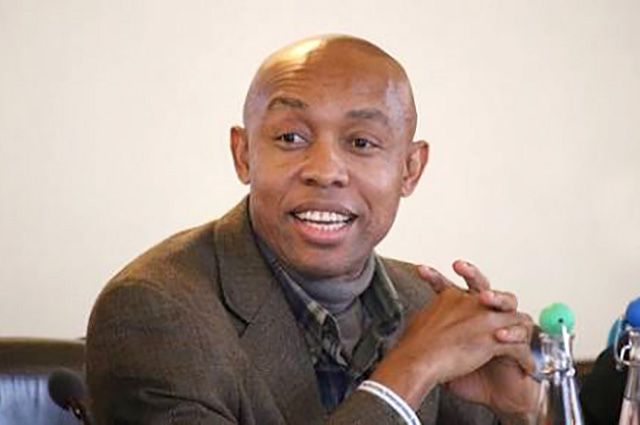
    Professor Chidi Anselm Odinkalu

    By Chidi Anselm Odinkalu

    Most people do not know or remember that, strictly speaking, there were and remain no official results for Nigeria’s 2007 presidential election. Organised by the Independent National Electoral Commission, (INEC), the vote itself occurred on 21 April 2007 under Maurice Iwu, a professor whose academic discipline coincidentally was alchemy. His main qualification for the position of Chairman of the INEC was that he was close to President Obasanjo’s fixer, Andy Uba.

    The results began trickling in the following day. Under Nigeria’s Constitution, a winner of a presidential election must secure the highest number of votes in addition to winning a minimum of 25% of the votes in at least 24 of the thirty-six states of the federation. What this means is that it is impossible to declare a lawful result in a presidential election until the results in at least 24 states have been computed.

    The recently departed legal scholar Professor Obi Nwabueze, SAN, recalls in his 2009 book on Judicialism and Good Governance in Africa, that two days after the vote, on 23 April 2007, INEC Chairman, Maurice Iwu “excusing himself from the collation of results exercise in which he and the party agents were engaged at the INEC headquarters, left the room and announced the Peoples Democratic Party (PDP) candidate the winner on the basis of results electronically transmitted to him from thirteen States while the results from 23 States were still being awaited.” Ondo was the thirteenth state whose result computation Iwu abandoned to announce the fictional outcome.

    In announcing the results, Professor Iwu “neither gave the figure of the total votes cast nationwide nor the percentage scored by each of the candidates. There was also no state by state breakdown of the result announced.”

    On the face of the record, the results declared by Maurice Iwu’s INEC failed to comply with the minimal requirements for certification of results in a presidential election. Even today, 17 years later, no one knows or can give the state-by-state breakdown of the results in the 2007 presidential election.

    This was only one of the many problems with that vote, which occurred in the aftermath of the rejection by the National Assembly of President Obasanjo’s effort to grant himself a prohibited third presidential term. Following that event, Obasanjo appeared desperate to ensure that the election returned his hand-picked successor, Umaru Yar’Adua.

    The ballot papers used in the election were not serialised, which made it impossible to control for ballot contamination. Following the vote, INEC indulged in what judges subsequently described as “abracadabra,” in many places producing entirely fictional results for what an election tribunal described as “elections that did not hold.”

    This set the stage for the election petition by the leading opposition candidate in the 2007 election, Muhammadu Buhari of the All Nigerian Peoples’ Party (ANPP), against the man whom Maurice Iwu had announced as winner, Umaru Musa Yar’Adua. In his petition, Muhammadu Buhari asked the presidential election petition tribunal to find that the election and results announced by Maurice Iwu had failed to comply substantially with the constitution and the Electoral Act. Central to Buhari’s case was the absence of serialised ballot papers which, he argued, enabled ballot stuffing and ballot contamination on an unprecedented level.

    According to section 146 (1) of the Electoral Act of 2006, “an election shall not be liable to be invalidated by reason of non-compliance with the provisions of this Act if it appears to the Election Tribunal or court that the election was conducted substantially in accordance with the principles of this Act and that non-compliance did not affect substantially the result of the elections.” Having lost on a split decision at the election petition tribunal, Muhammadu Buhari’s appeal to the Supreme Court turned on the question of what “the principles of this Act” meant.

    In deciding the controversial contest for the Anambra South senatorial district in 1983 between Chukwuemeka Odumegwu-Ojukwu v Dr. Edwin Onwudiwe, the Supreme Court had considered the meaning of a similar provision in the Electoral Act of 1983 and explained that “the essence of democratic elections is that they be free and fair and that in that atmosphere of freedom, fairness and impartiality, citizens will exercise their freedom of choice of who their representatives shall be by casting their votes in favour of those candidates who, in their deliberate judgment, they consider possess the qualities which mark them out as preferable candidates to those others who are contesting with them.”

    In 2007, however, Justice Niki Tobi writing for the majority of the Supreme Court walked back these principles, complaining instead the notion of “principles” governing elections was “vague, nebulous and large” as well as confusing. Reducing the entire exercise to a farce, Justice Niki Tobi, himself a former law professor and dean of a leading law faculty, blamed his inability to offer clarity in the principles governing democratic elections on “my lack of adequate knowledge.”

    Making no pretence to anchor its holding in the Electoral Act, the Supreme Court held that a petitioner in a Presidential election petition bears the burden to show “not only substantial non-compliance but also the figures, i.e. votes that the compliance (sic) attracted or omitted.” Put another way, the petitioner in an election petition has the burden of proving not just a negative but also of assigning a numerical value to its consequences.

    On the question of non-serialisation of ballot papers, therefore, the court disingenuously claimed that it had no proof that the non-serialisation favoured one side or disfavoured the other.

    A minority of the court, comprising George Oguntade, Aloma Mukhtar, and Walter Onnoghen, dissented, taking the view that “it is important that at the conclusion of an election, an unbiased observer should be able to see that the election was free, fair, transparent, and that no room had been left open for malpractices to occur. If deliberately or through inadvertence, those in charge of the elections had left room for anyone to doubt the integrity of the process in the election, then it is my view that the fundamental principles of the election have been compromised.”

    In the end, however, the majority view prevailed and the Supreme Court validated the 2007 election structured to enable ballot stuffing and which announced a winner without a lawful result. The refusal of the Supreme Court to affirm any principles applicable to elections effectively reduced Nigeria’s elections to a demolition derby of illegality. In validating that result the way it did in 2008, the Supreme Court empowered judges to re-write election laws into meaningless pieces of artifice.

    Invited shortly after the decision in this case of Buhari vs. Yar’Adua to deliver the distinguished lecture at the Nigerian Institute of Advanced Legal Studies (NIALS) in front of an audience including the then Chief Justice of Nigeria, Professor Obi Nwabueze SAN, accused the Supreme Court of indulging in “perverse and narrow legalism” and of abdicating its responsibility of judicial decision making to a tyranny of “considerations of political expediency.”

    This was a major landmark in the evolution of the supreme confusion that saddled the country with the judicial debacle in the most recent cases concerning Plateau and Kano States. The resort by the Supreme Court to publicly slapping down the Court of Appeal in these cases cannot be seen as progress as long as it fails to acknowledge its role in condemning Nigerians habitually since 2007 – in the words of Professor Nwabueze – “to be ruled by a government that has no claim to legitimacy.”

    A lawyer & a teacher, Odinkalu can be reached at chidi.odinkalu@tufts.edu 

    Editor
    • Website

    Related Posts

    The accountability of thought: A debt I owe Chris Asoluka, by Max Amuchie

    March 8, 2026

    Of Christianity and the Concept of a Chosen People, by Osmund Agbo

    March 8, 2026

    Donald Trump, like Adolf Hitler, walks on both legs by Owei Lakemfa 

    March 6, 2026
    Editors Picks

    The accountability of thought: A debt I owe Chris Asoluka, by Max Amuchie

    March 8, 2026

    Of Christianity and the Concept of a Chosen People, by Osmund Agbo

    March 8, 2026

    Army dismisses report of mass casualty in Borno attacks, says troops repelled terrorists

    March 7, 2026

    Akpabio, constituents laud Sen Ngwu’s scholarship programme

    March 7, 2026
    Latest Posts
    Columnists

    The accountability of thought: A debt I owe Chris Asoluka, by Max Amuchie

    Columnists

    Of Christianity and the Concept of a Chosen People, by Osmund Agbo

    National

    Army dismisses report of mass casualty in Borno attacks, says troops repelled terrorists

    Subscribe to Updates

    Get the latest news from Ikenga Online.

    Advertisement
    Demo

    IkengaOnline is a publication of the Ikenga Media & Cultural Awareness Initiative (IMCAI), a non-profit organisation with offices in Houston Texas and Abuja.

    We're social. Connect with us:

    Facebook X (Twitter) Instagram YouTube LinkedIn WhatsApp RSS
    • Home
      • Igboezue
      • Hall of Fame
      • Hall of Shame
    • News
      • Other States
      • National
      • International
      • Interviews
      • Personalities
    • Abia
    • Anambra
    • Ebonyi
    • Delta
    • Enugu
    • Imo
    • Rivers
    • Politics
    • Opinion & Editorial
      • Editorial
      • Columnists
        • Osmund Agbo
        • Chido Onumah
        • Uche Ugboajah
        • Hassan Gimba
        • Edwin Madunagu
        • Rudolf Okonkwo
        • Azu Ishiekwene
        • Osita Chidoka
        • Owei Lakemfa
        • Chidi Odinkalu
      • Opinion
    • Special Reports
    • Art & Entertainment
      • Nollywood
      • Music
      • Ikengaonline Literary Series (ILS)
      • Life
      • Travels
    • Sports

    Subscribe to Updates

    Get the latest news from Ikenga Online.

    Facebook X (Twitter) Instagram LinkedIn WhatsApp RSS
    © 2026 Ikenga Online. Ikenga.

    Type above and press Enter to search. Press Esc to cancel.