
Close Menu
Ikenga Online
    What's Hot

    FirstPower electricity announces planned outage in Anambra

    December 5, 2025

    GPSDC, WACOL train journalists on GBV reporting, seek stronger collaboration

    December 5, 2025

    Rewarding ex-INEC chairman with ambassadorial role morally indefensible – Atiku 

    December 4, 2025
    Facebook X (Twitter) Instagram
    Ikenga Online
    Facebook X (Twitter) Instagram YouTube
    Donate
    • Home
      • Igboezue
      • Hall of Fame
      • Hall of Shame
    • News
      1. Other States
      2. National
      3. International
      4. Interviews
      5. Personalities
      6. View All

      Bandits hit Kogi church, abduct pastor, wife, members

      November 30, 2025

      Kaduna Anglican priest dies in kidnappers’ den

      November 27, 2025

      Bandits mutilate one, abduct pregnant woman, 23 others in Niger communities

      November 27, 2025

      Freed abductees receive medical treatment in Kwara govt house

      November 24, 2025

      Rewarding ex-INEC chairman with ambassadorial role morally indefensible – Atiku 

      December 4, 2025

      Tinubu swears in Gen Musa as defence minister

      December 4, 2025

      Ex-CDS, Gen Musa confirmed as defence minister

      December 3, 2025

      Police to arrest personnel escorting VIPs, declare such duty Illegal

      December 3, 2025

      US issues visa ban on individuals behind Christian genocide in Nigeria

      December 4, 2025

      Tinubu approves Nigeria’s membership of US-Nigeria joint working group

      November 27, 2025

      Obi meets EU lawmakers, seeks stronger partnership to tackle Nigeria’s challenges

      November 26, 2025

      CPC: Nigeria engaging world diplomatically, will defeat terrorism – Tinubu 

      November 6, 2025

      Slash jumbo salaries to pay minimum wage, Bishop tells Tinubu

      June 19, 2024

      Nigeria remains a country in crisis that needs to heal – Chido Onumah

      January 24, 2024

      The Ekweremadus: Obasanjo writes UK court, seeks pardon for them

      April 5, 2023

      I’m coming with loads of experience to re-set Abia – Greg Ibe

      February 1, 2023

      Anambra-born Ugochi Nwizu shines as UNN best graduating doctor with multiple distinctions

      September 29, 2023

      Bulwark for women, girls: Meet Ikengaonline September town-hall guest speaker, Prof Joy Ezeilo

      September 27, 2023

      Rufai Oseni, the most dangerous man on Nigerian TV by Okey Ndibe

      February 13, 2023

      Stanley Macebuh: Unforgettable pathfinder of modern Nigerian journalism by Uzor Maxim Uzoatu

      February 7, 2023

      FirstPower electricity announces planned outage in Anambra

      December 5, 2025

      GPSDC, WACOL train journalists on GBV reporting, seek stronger collaboration

      December 5, 2025

      Rewarding ex-INEC chairman with ambassadorial role morally indefensible – Atiku 

      December 4, 2025

      Tinubu swears in Gen Musa as defence minister

      December 4, 2025
    • Abia

      Gunmen hijack Aba-bound bus, abduct 14 passengers in Imo

      December 3, 2025

      Removal of barriers against PWDs’ participation in society a must – Gov Otti

      December 3, 2025

      Abia set to unveil building material testing laboratory

      December 3, 2025

      Otti empowers 150 Abia Poly outstanding graduates with N1m each

      December 2, 2025

      Experts meet in Umuahia to tackle MSMEs challenges

      December 2, 2025
    • Anambra

      FirstPower electricity announces planned outage in Anambra

      December 5, 2025

      GPSDC, WACOL train journalists on GBV reporting, seek stronger collaboration

      December 5, 2025

      Police nab member of kidnap syndicate in Anambra

      December 4, 2025

      Tinubu empowers Anambra PWDs with N50m business grant

      December 3, 2025

      Commission to establish disability counselling centre in Anambra

      December 3, 2025
    • Ebonyi

      Ebonyi LG poll: Ezillo stakeholders adopt power shift to Ezzagu zone

      December 2, 2025

      Nwifuru moves to equip Ebonyi hospitals, sets up five-man equipment distribution committee

      November 28, 2025

      Court remands man for alleged cyberbullying of federal lawmaker

      November 26, 2025

      Nwifuru presents N884.8bn 2026 budget to Ebonyi assembly

      November 25, 2025

      Coalition groups condemn arrests, detention of critics, journalists in Ebonyi

      November 23, 2025
    • Delta
    • Enugu

      PRODA DG preaches peace, unity among staff as 2025 games festival kicks off

      December 4, 2025

      Abductors of Enugu deputy governor’s kinsmen demand N20m ransom

      December 4, 2025

      Road crash: FRSC confirms 2 dead, 9 injured in Enugu multiple accidents 

      December 4, 2025

      Enugu budgets N1.62 trillion for 2026

      December 2, 2025

      Gov Mbah launches hi-tech drones, equipment, patrol vans to boost security

      December 2, 2025
    • Imo

      Gunmen hijack Aba-bound bus, abduct 14 passengers in Imo

      December 3, 2025

      Catholic bishops condemn violence in Nigeria, call for govt action to restore peace

      November 26, 2025

      MASSOB blasts Ayodele over anti-Igbo comment

      November 26, 2025

      ASUU gives FG 8-day ultimatum over unmet demands, threatens full-blown strike

      November 13, 2025

      S’East now cocoa farm for security operatives — Nwanguma, RULAAC boss

      November 5, 2025
    • Rivers

      DSS quizzes social media user for allegedly advocating coup d’état

      October 29, 2025

      Rumuorlumeni community calls for halt on sale of waterfront lands

      October 20, 2025

      Ohanaeze presidents demand unconditional release of Kanu, others

      October 18, 2025

      Fubara gives reasons for not challenging emergency declaration in court

      September 19, 2025

      Tinubu lifts emergency rule in Rivers, asks Fubara, deputy, assembly to return to office Thursday 

      September 17, 2025
    • Politics

      2027: Atiku finally joins ADC

      November 24, 2025

      Abia patriots caution APC leaders against ‘destructive opposition’ politics

      November 21, 2025

      S’East stakeholders meet in Enugu, unveil 2027 political road map 

      November 20, 2025

      PDP chairman invites President Trump, international community to ‘save Nigerian Democracy’

      November 18, 2025

      PDP expels Wike, Anyanwu, factional chair, others over anti-party activities

      November 15, 2025
    • Opinion & Editorial
      • Editorial
      • Columnists
        • Osmund Agbo
        • Chido Onumah
        • Uche Ugboajah
        • Hassan Gimba
        • Edwin Madunagu
        • Rudolf Okonkwo
        • Azu Ishiekwene
        • Osita Chidoka
        • Owei Lakemfa
        • Chidi Odinkalu
      • Opinion
    • Special Reports
    • Art & Entertainment
      • Nollywood
      • Music
      • Ikengaonline Literary Series (ILS)
      • Life
      • Travels
    • Sports
    Ikenga Online
    Home » 140 years after the Berlin West Africa conference by Chidi Anselm Odinkalu & Chepkorir Sambu
    Chidi Odinkalu

    140 years after the Berlin West Africa conference by Chidi Anselm Odinkalu & Chepkorir Sambu

    EditorBy EditorNovember 24, 2024No Comments7 Mins Read
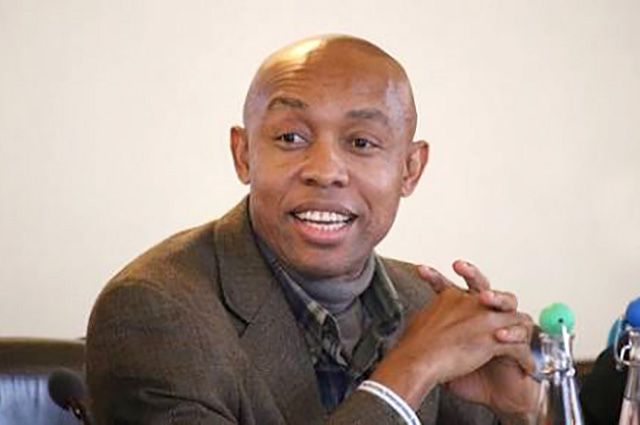
    Professor Chidi Anselm Odinkalu

    By Chidi Anselm Odinkalu & Chepkorir Sambu

    Described by one scholar on its centenary as “perhaps the greatest historical movement of modern times,” the Berlin Conference West Africa Conference began shortly after noon on 15 November 1884. Interrupted only by a short break at the end of the year and the beginning of the next, historian, Adu Boahen, records that the conference ended on 31 January 1884.

    On 26 February 1885, the powers gathered at the conference ratified the General Act of the Berlin Conference, which embodied their agreements. The week before the ratification of the General Act, according to historian, Godfrey Uzoigwe, the Lagos Observer newspaper lamented that “the world had, perhaps, never witnessed a robbery on so large a scale.”

    Among the six goals identified by the General Act, the over-arching provisions set out “rules for future occupation of the coast of the African continent.”

    Of the 15 countries that attended the conference, 14 were European: United Kingdom, France, Germany, Austria-Hungary, Belgium, Denmark, Spain, Italy, the Netherlands, Portugal, Russia, Sweden-Norway, and the Ottoman Empire (Turkey). All the European powers signed on to the General Act. The United States of America was the only non-European country at the table and also the only participating country that did not officially ratify the resulting treaty.

    From Africa, the Sultan of Zanzibar had equally sought representation at the conference but had his ambition derisorily blocked by the United Kingdom.

    Otto von Bismark, Chancellor of Germany which attained unification only 13 years earlier in 1871, hosted the Berlin Conference. Six years earlier, he had similarly played host to the Congress of Berlin called to stabilize the Balkan Peninsula at the end of the Russo-Turkish War in 1878. There was an irony to the fact that the same venue was to serve as the site of a conference to Balkanise a distant continent of about 30,302,861 square kilometres. For context, this is territory big enough to contain all of the U.S.A., India, Europe, Argentina and New Zealand combined with some room to spare.

    The Scramble for Africa preceded the Berlin Conference but the conference crystallised rules and doctrines that would govern the colonial occupation of Africa in its wake. In opening the conference, Bismark hoped that it would agree rules to regulate “the terms for the development of trade and civilisation in certain regions of Africa;” assure free navigation of the Rivers Congo and the Niger; anticipate and avoid disputes as to new acts of territorial occupation in Africa and “further the moral and material wellbeing of the native population.”

    The aftermath is controversial for predictable reasons. The continent lives with the consequences of decisions in which it did not participate and whose records are also outside its control. While the lingering consequences of Berlin continue to be debated, a few deserve to be highlighted.

    First, as is evident from Bismark’s stipulations, the conference objectives and outcomes infantilised Africa and its peoples and habituated the world to the continent as lacking in agency and its territories as lacking in history or civilization prior to the occupation that followed in the wake of Berlin. These ideas were to be subsequently embodied in doctrine, jurisprudence and treaty law. The Judicial Committee of the Privy Council ruled in 1918 that African territories were “so low in the scale of social organization that their usages and conceptions of rights and duties are not to be reconciled with the institutions or the legal ideas of civilized society.” The court offered no authority or support for this decision; there was none. This jurisprudence made its way into the provisions of Article 22 of the League of Nations Covenant which referred to these territories as being “inhabited by peoples not yet able to stand by themselves under the strenuous conditions of the modern world.”

    Second, the logic of colonial occupation made atrocity inevitable and the traumas from that has assumed an inter-generational dimensions. Looking back at the period preceding the conference, however, Adu Boahen recalls that Africa “was far from being primitive, static, and asleep or in a Hobbesian state of nature.” The rules of the conference precluded any items on sovereignty whether of the European states or of the African territories. Yet the outcome created a logic that encouraged adverse assertions of sovereignty over African lands and peoples. John Kasson, the lead US delegate to the conference had argued that the establishment of “productive labour” in African territories “can only be arrived at through the permanent establishment of a peaceful regime.” The idea of permanent establishment of a peaceful regime over other peoples’ lands could only occur through occupation and rapine.

    This is exactly what ensued in the aftermath of the doctrine of effective occupation consecrated by the General Act of the Berlin Conference embodied in the obligation assumed by the parties in Article 35 of the General Act “to insure the establishment of authority in the regions occupied by them on the coasts of the African continent sufficient to protect existing rights, and, as the case may be, freedom of trade and of transit.” Seven of the 14 countries present at the Berlin Conference went on to become occupying powers in Africa, namely: France, Britain, Germany, Portugal, Belgium, Italy and Spain. Their campaigns of occupation were accompanied by violence which has been described as “brutal and deadly.”

    In the quarter century from the end of the conference to 1910 when the period of active territorial occupation occurred, nearly every affected African country experienced a fall in population. The signal case was King Leopold’s Congo Free State about whom it has been said that the population crashed from “20 million in 1891 to only 8,500,000 in 1911. In other words, the King’s system resulted in the death of between 10 and 11.5 million Congolese as ‘a very conservative estimate.’” Contemporary movements for acknowledgement and reparations barely scratch the surface.

    Third, as Ali Mazrui points out, the Berlin Conference ultimately saddled Africa with twin crises of both state legitimacy and governmental legitimacy. Governed as they were by logics of arbitrary and convenient externalities, colonial territorialization made no effort to foster legitimate political communities. The methods of divide and rule and of Indirect Rule which defined colonial administration, instead encouraged adversiarialism instead of coexistence within countries. As colony yielded to post-colony, these left legacies of political unrest, regime instability, and conflict.

    Fourth, the boundaries created in Berlin have proved durable but not necessarily stable. To head off this problem, the Organisation of African Unity (OAU) at its second Summit in Cairo, Egypt, in 1964, pronounced the continent’s borders at independence as a “tangible reality” to be respected by all member states. The reality has been a lot less sanguine. The continent’s borders are notoriously arbitrary and porous and many are disputed. One scholar has counted over 100 border disputes in the continent as well as “approximately 58 potential secessionist territories in 29” African countries championed by “at least 83 political associations and pressure groups.” A cottage industry in territorial dispute resolution exists, with 13 of 18 contentious cases submitted to the International Court of Justice from Africa being about inter-state boundaries.

    The legacies of the Berlin Conference in and on Africa endure. The response of the continent’s leadership has until recently been lacking in coherence and urgency. The deepening of regional integration in the African Union which was supposed to address the colonial atomization of the continent has stalled. In parts of the continent, it is experiencing reversal or now confined only to trade in goods. Similarly efforts to address atrocity violence through transitional justice around Africa confine themselves to post-colonial violence, without recognizing or addressing the lingering traumas from colonial era violence. While the movement for reparations for colonial atrocities, including the repatriation of pillaged African arts gathers pace, it faces renewed resistance from the emergence of illiberal governments in the capitals of perpetrator states who were at the Berlin Conference. On the 140th anniversary of the Berlin Conference, these trends underscore the need for renewed attention to an event that whose consequences for both Africa and international law were seminal but not always constructive.

    Chidi Anselm Odinkalu teaches at the Fletcher School of Law and Diplomacy at Tufts University, Medford, MA

    Chepkorir Sambu is a lawyer is a lawyer and researcher focusing on conflicts and peace processes in Eastern Africa. 

    Editor
    • Website

    Related Posts

    A troubling message from Guinea-Bissau, by Azu Ishiekwene

    December 4, 2025

    Jeunalists must have a uniform like policemen by Uzor Maxim Uzoatu 

    December 3, 2025

    An Open Letter to Ndigbo (2): What Must Change, by Osmund Agbo

    December 3, 2025
    Editors Picks

    FirstPower electricity announces planned outage in Anambra

    December 5, 2025

    GPSDC, WACOL train journalists on GBV reporting, seek stronger collaboration

    December 5, 2025

    Rewarding ex-INEC chairman with ambassadorial role morally indefensible – Atiku 

    December 4, 2025

    Tinubu swears in Gen Musa as defence minister

    December 4, 2025
    Latest Posts
    Anambra

    FirstPower electricity announces planned outage in Anambra

    Anambra

    GPSDC, WACOL train journalists on GBV reporting, seek stronger collaboration

    National

    Rewarding ex-INEC chairman with ambassadorial role morally indefensible – Atiku 

    Subscribe to Updates

    Get the latest news from Ikenga Online.

    Advertisement
    Demo

    IkengaOnline is a publication of the Ikenga Media & Cultural Awareness Initiative (IMCAI), a non-profit organisation with offices in Houston Texas and Abuja.

    We're social. Connect with us:

    Facebook X (Twitter) Instagram YouTube LinkedIn WhatsApp RSS
    • Home
      • Igboezue
      • Hall of Fame
      • Hall of Shame
    • News
      • Other States
      • National
      • International
      • Interviews
      • Personalities
    • Abia
    • Anambra
    • Ebonyi
    • Delta
    • Enugu
    • Imo
    • Rivers
    • Politics
    • Opinion & Editorial
      • Editorial
      • Columnists
        • Osmund Agbo
        • Chido Onumah
        • Uche Ugboajah
        • Hassan Gimba
        • Edwin Madunagu
        • Rudolf Okonkwo
        • Azu Ishiekwene
        • Osita Chidoka
        • Owei Lakemfa
        • Chidi Odinkalu
      • Opinion
    • Special Reports
    • Art & Entertainment
      • Nollywood
      • Music
      • Ikengaonline Literary Series (ILS)
      • Life
      • Travels
    • Sports

    Subscribe to Updates

    Get the latest news from Ikenga Online.

    Facebook X (Twitter) Instagram LinkedIn WhatsApp RSS
    © 2025 Ikenga Online. Ikenga.

    Type above and press Enter to search. Press Esc to cancel.