
Close Menu
Ikenga Online
    What's Hot

    2027 Election timetable: Clarify result transmission plans – ADC urges INEC 

    February 13, 2026

    Otti unveils iconic Omenuko Bridge, vows to resist attempts to return Abia to ‘era of deceit’

    February 13, 2026

    US-Nigeria relations: The partnership of the hawk and the hen by Owei Lakemfa 

    February 13, 2026
    Facebook X (Twitter) Instagram
    Ikenga Online
    Facebook X (Twitter) Instagram YouTube
    Donate
    • Home
      • Igboezue
      • Hall of Fame
      • Hall of Shame
    • News
      1. Other States
      2. National
      3. International
      4. Interviews
      5. Personalities
      6. View All

      Kole Shettima, others to be turbaned by Machina Emirate

      January 26, 2026

      APC makes it 29 governors as Yusuf defects with 22 Kano lawmakers

      January 26, 2026

      Abduction of 172: Soldiers blocking access to Kaduna community, rights group alleges

      January 20, 2026

      RULAAC petitions Lagos CP over alleged unlawful detention, abuse of police powers

      January 18, 2026

      2027 Election timetable: Clarify result transmission plans – ADC urges INEC 

      February 13, 2026

      2027 general election: INEC fixes presidential polls on Feb 20, governorship on March 6 

      February 13, 2026

      2027 polls: INEC seeks N873bn, proposes N171bn 2026 budget

      February 12, 2026

      RULAAC petitions PSC over alleged extortion, retaliatory prosecution by Ogun DPO

      February 12, 2026

      US lawmakers propose visa ban, asset freeze on Kwankwaso, Miyetti Allah over alleged Christian genocide

      February 11, 2026

      Banditry: US finally deploys troops to Nigeria

      February 4, 2026

      Nnamdi Kanu conferred honorary citizenship of Georgia, USA

      January 24, 2026

      US delivers military supplies to Nigeria

      January 13, 2026

      Slash jumbo salaries to pay minimum wage, Bishop tells Tinubu

      June 19, 2024

      Nigeria remains a country in crisis that needs to heal – Chido Onumah

      January 24, 2024

      The Ekweremadus: Obasanjo writes UK court, seeks pardon for them

      April 5, 2023

      I’m coming with loads of experience to re-set Abia – Greg Ibe

      February 1, 2023

      Anambra-born Ugochi Nwizu shines as UNN best graduating doctor with multiple distinctions

      September 29, 2023

      Bulwark for women, girls: Meet Ikengaonline September town-hall guest speaker, Prof Joy Ezeilo

      September 27, 2023

      Rufai Oseni, the most dangerous man on Nigerian TV by Okey Ndibe

      February 13, 2023

      Stanley Macebuh: Unforgettable pathfinder of modern Nigerian journalism by Uzor Maxim Uzoatu

      February 7, 2023

      2027 Election timetable: Clarify result transmission plans – ADC urges INEC 

      February 13, 2026

      Otti unveils iconic Omenuko Bridge, vows to resist attempts to return Abia to ‘era of deceit’

      February 13, 2026

      2027 general election: INEC fixes presidential polls on Feb 20, governorship on March 6 

      February 13, 2026

      RULAAC urges Imo CP to probe alleged atrocities by vigilante leader in Njaba

      February 13, 2026
    • Abia

      Otti unveils iconic Omenuko Bridge, vows to resist attempts to return Abia to ‘era of deceit’

      February 13, 2026

      Michael Okpara’s kinsmen endorse Otti for second term

      February 13, 2026

      Remodelling: No trader will lose shop, Otti assures Aba traders

      February 13, 2026

      Otti receives NDDC torch of unity, reaffirms commitment to sports excellence

      February 12, 2026

      Globacom offices in Abia sealed over alleged ₦4bn tax default

      February 12, 2026
    • Anambra

      FG committed to building transformative infrastructure – Umahi

      February 12, 2026

      80 Anambra students receive full scholarships for JAMB, WAEC registrations

      February 6, 2026

      CVR: INEC registers 4,423 in Anambra, calls for increased participation

      February 4, 2026

      SWAN praises Soludo’s sports investment, calls for sector reforms

      February 4, 2026

      Onitsha main market reopens after one-week shutdown by Soludo

      February 2, 2026
    • Ebonyi

      Killings: Nwifuru orders Amasiri to return severed heads or face stiffer sanctions

      February 10, 2026

      Three children stolen in Abakaliki by unidentified women

      February 8, 2026

      S’East receiving unprecedented federal attention under Tinubu – Umahi

      February 8, 2026

      Nwifuru sets three-month deadline for projects, orders rural electrification — Omebe

      February 5, 2026

      Army debunks alleged killing of two soldiers in Amasiri/Oso Edda crisis

      February 4, 2026
    • Delta
    • Enugu

      1.5m children receive measles, rubella vaccines in one week — Report

      February 12, 2026

      Encomiums at Sen Okey Ezea’s night of tribute in Enugu

      February 11, 2026

      Ohanaeze: Igbo youths condemn fake news, demand investigation into threat statement

      February 8, 2026

      NBA president decries high-level of corruption among judicial officers

      February 7, 2026

      1,500 persons benefit from NAS medical outreach in Enugu community

      February 7, 2026
    • Imo

      RULAAC urges Imo CP to probe alleged atrocities by vigilante leader in Njaba

      February 13, 2026

      Akagburuonye @ 60: Ex-Eagles stars storm Mbaise to honour humanitarian

      February 13, 2026

      RULAAC petitions Imo attorney-general over alleged torture, sexual abuse of trainee nurse

      January 25, 2026

      Reporters’ diaries: S-East governors earn praise for rural road improvements

      January 6, 2026

      Rights advocates warn of threats over tiger base accountability campaign

      December 22, 2025
    • Rivers

      Ohanaeze inaugurates committee on Igbo strategic engagement

      February 2, 2026

      Rivers assembly vows to proceed with Gov Fubara, deputy’s impeachment process 

      January 16, 2026

      Financial disagreements fuel impeachment moves against Fubara — Aide alleges

      January 16, 2026

      The Tinubu I know will not discard Wike for Fubara — Fayose

      January 13, 2026

      APC rejects moves to impeach Gov Fubara

      January 8, 2026
    • Politics

      2027 Election timetable: Clarify result transmission plans – ADC urges INEC 

      February 13, 2026

      2027 general election: INEC fixes presidential polls on Feb 20, governorship on March 6 

      February 13, 2026

      Michael Okpara’s kinsmen endorse Otti for second term

      February 13, 2026

      2027 polls: INEC seeks N873bn, proposes N171bn 2026 budget

      February 12, 2026

      Atiku camp dismisses Fayose’s claims as ‘fabricated beer parlour tales’

      February 12, 2026
    • Opinion & Editorial
      • Editorial
      • Columnists
        • Osmund Agbo
        • Chido Onumah
        • Uche Ugboajah
        • Hassan Gimba
        • Edwin Madunagu
        • Rudolf Okonkwo
        • Azu Ishiekwene
        • Osita Chidoka
        • Owei Lakemfa
        • Chidi Odinkalu
      • Opinion
    • Special Reports
    • Art & Entertainment
      • Nollywood
      • Music
      • Ikengaonline Literary Series (ILS)
      • Life
      • Travels
    • Sports
    Ikenga Online
    Home » Tinubu’s taxing times by Chidi Anselm Odinkalu
    Chidi Odinkalu

    Tinubu’s taxing times by Chidi Anselm Odinkalu

    EditorBy EditorDecember 15, 2024No Comments7 Mins Read
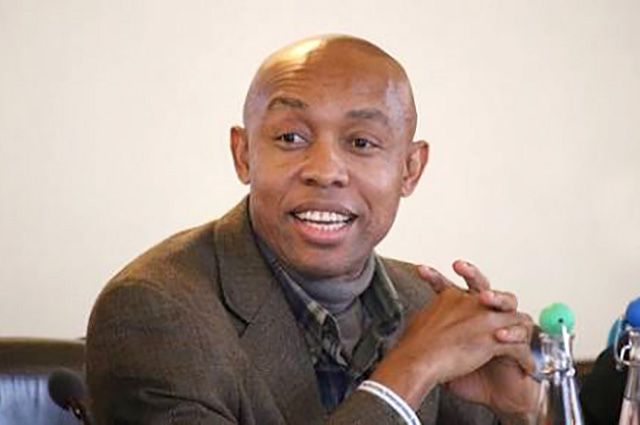
    Professor Chidi Anselm Odinkalu

    By Chidi Anselm Odinkalu

    A mere four years after emerging from a civil war, in 1974, Nigeria was at the beginning of an oil boom. Then, as today, the country was in the middle of a debate about fiscal federalism and revenue allocation. Unlike today, however, there were significant differences: the country was under military rule and the men leading the debate were all soldiers. In the fifty years since then, the structure of this debate and the geo-political symmetries that define it have evolved only a little.

    The immediate spark for the debate fifty years ago was the publication of the statutory allocations to the twelve states of the federation then for the fiscal year 1974-75. With a population of 2.5 million, Mid-West State received 139.9 million Naira or 23.7% of the allocation. Rivers State, whose population was 1.5 million, received 101.1 million Naira.

    Isawa Elaigwu, semi-official biographer of Yakubu Gowon, the army general who was Nigeria’s military head of state at the time observed about this that “while both Rivers and Midwestern States, comprising 7.3% (4 million) of the country’s total population, shared between themselves 40.83% (N241.00 million) of the total allocation to the states, the ten other states which accounted for 92.7% (51.6 million) of the country’s population, shared among themselves 59.17% (349.2m) of the statutory allocation.”

    Usman Faruk, the Commissioner of Police who governed the North-Western State was unhappy with the dissension over the sharing of the allocation because, he said, all of them in the Supreme Military Council then agreed it. Joseph Gomwalk, another Commissioner of Police and then military governor of Gowon’s own Benue-Plateau State; and Jacob Esuene, who governed the South-Eastern State called for a more objective system of revenue allocation. If they knew what such a system looked like, they didn’t say. Kwara’s military governor, David Bamigboye as well as General Abba Kyari of the North-East went on record to call for a review of the allocation formula. For their part, Oluwole Rotimi and Mobolaji Johnson, military governors respectively of the Western and Lagos States advocated for “a revenue allocation formula that would guarantee responsible and stable government for Nigeria.”

    Nigeria’s search for a workable federalism in many ways can be reduced to the search for precisely such a formula. It has proved elusive. If anything, it may have got even more so. In the 36 years between 1946 and 1980, spanning the colonial and post-colonial periods and including  military as well as elected civilian regimes, the country burnt through the reports of at least eight blue ribbon panels on the question of fiscal federalism.

    On the eve of independence in 1958, the report of Raisman Commission recommended the creation of a Distributable Pool Account (DPA) into which was to be paid 30% of revenue from mineral rents and royalties and from import duties. The regions retained 50% of the revenue from mineral rents and royalties from their region while the central government took 20%. 70% of the revenue from import duties went to the central government.

    Six years later and four years after independence, the Binns Fiscal Commission increased the DPA share of the income from import duties from 30 to 35% at the expense of the share of the central government. Importantly, the report set its face against the principle of derivation, replacing it with that it called the principle of “financial comparability.” On this basis, it recommended the sharing of the DPA receipts as follows: Northern Region 42%; Eastern Region 30%; Western Region 20%; and Mid-Western Region 8%. Lagos was then the federal capital. Up to this point, the fiscal balance largely favoured the regions who contributed resources to the central government.

    In 1968, Nigeria’s post-colonial crisis of state legitimacy had already exploded into a year-old civil war. Under pressure from both the economic costs of the war as well as its structural antecedents, Yakubu Gowon, the war-time Supreme Commander (as he was then known), called upon Chief I.O Dina, a former history lecturer at the University College Ibadan, to lead what the regime called an Interim Revenue Allocation Review Committee.

    The legacy of the Dina Committee recommendations was very far reaching and suited the regimental mood of the military. The Committee addressed frontally the issue of taxation and public goods. It recommended a centralization of taxation as well as the harmonization of the produce marketing boards which were until then mostly regional. The Dina Committee also recommended a centralization of the funding of higher education and the replacement of the DPA with what it called a State Joint Account. Additionally, the committee recommended that states should retain 100% of rent from onshore extractive operations on the basis of derivation and also receive another 10% of royalties revenue as derivation.

    Even in the midst of an existential conflict at the time, the fuss that followed in the wake of the Dina Committee report was deafening. Officially, the Federal Military Government rejected the Dina Committee Report. In reality, Isawa Elaigwu recalls that “….Gowon did not raise dust over the issue but quietly implemented most aspect of this report through the back door at the appropriate time.” The result is that the Dina Committee Report has been quite influential in shaping Nigeria’s version of federalism.

    Gowon enjoyed three advantages at the time in his handling of the unitarising tendencies that underpinned the recommendations of the Dina Committee. First, the civil war was an extenuating circumstance. Second, the regimental traditions of military government limited the degree of elite dissension. Third, as a military ruler, he ultimately did not have to suffer any institutional constraints similar to those imposed by a parliament or its equivalent under elected civil rule.

    For the current incumbent fifty years later, a civilian seeking to accomplish what would be the most far-reaching restructuring of Nigeria’s fiscal fundamentals in 110 years, none of these advantages exists and he suffers many more debilitations besides.

    By some coincidence, in the year that Gowon constituted the Dina Committee, the celebrated Kenya political scientist, Ali Mazrui, explained the challenges of structural stability in post-colonial African states in terms of two underlying crises of state legitimacy and of regime legitimacy.

    Fiscal reform on the ambition evinced by the proposals now under consideration in Nigeria assumes the existence of a capable state which enjoys affinity among citizens, an overwhelming percentage of whom should be documented. None of these can be taken for granted in Nigeria. The evidence from across the fields of financial inclusion, electoral participation, and taxation suggests that the proportion of documented Nigerians does not exceed 40%. It will take more than a few convenient ebullitions to address this.

    Any government will be challenged in addressing it. An administration that suffers from manifest issues of legitimacy lacks the currency to trade with in this situation. The crisis that afflicts the current proposals is that of a government unwilling to put in the work required to redress deficits of state and governmental legitimacy around the country. To address what is evidently a political problem, the government has chosen instead to escape into self-inflicted technocratic gobbledygook.

    Fiscal governance and reform is not as complex as the administration and its mouthpieces would like to suggest. Taxation is more than mechanical computation. It is the centrepiece of the social compact between a state and its citizens. With considered inadvertence, the administration of Bola Ahmed Tinubu has done itself a world of good by inspiring these increasingly raucous debates about the state of that compact in Nigeria or the lack of it. It will be best served by listening to the debate in humility while it learns.

    A lawyer and a teacher, Odinkalu can be reached at chidi.odinkalu@tufts.edu 

    Editor
    • Website

    Related Posts

    US-Nigeria relations: The partnership of the hawk and the hen by Owei Lakemfa 

    February 13, 2026

    FGM, culture and a dangerous lie, by Cheta Nwanze

    February 11, 2026

    Democracy in Name Only: Why Bother?, by Osmund Agbo

    February 11, 2026
    Editors Picks

    2027 Election timetable: Clarify result transmission plans – ADC urges INEC 

    February 13, 2026

    Otti unveils iconic Omenuko Bridge, vows to resist attempts to return Abia to ‘era of deceit’

    February 13, 2026

    US-Nigeria relations: The partnership of the hawk and the hen by Owei Lakemfa 

    February 13, 2026

    2027 general election: INEC fixes presidential polls on Feb 20, governorship on March 6 

    February 13, 2026
    Latest Posts
    Politics

    2027 Election timetable: Clarify result transmission plans – ADC urges INEC 

    Abia

    Otti unveils iconic Omenuko Bridge, vows to resist attempts to return Abia to ‘era of deceit’

    Owei Lakemfa

    US-Nigeria relations: The partnership of the hawk and the hen by Owei Lakemfa 

    Subscribe to Updates

    Get the latest news from Ikenga Online.

    Advertisement
    Demo

    IkengaOnline is a publication of the Ikenga Media & Cultural Awareness Initiative (IMCAI), a non-profit organisation with offices in Houston Texas and Abuja.

    We're social. Connect with us:

    Facebook X (Twitter) Instagram YouTube LinkedIn WhatsApp RSS
    • Home
      • Igboezue
      • Hall of Fame
      • Hall of Shame
    • News
      • Other States
      • National
      • International
      • Interviews
      • Personalities
    • Abia
    • Anambra
    • Ebonyi
    • Delta
    • Enugu
    • Imo
    • Rivers
    • Politics
    • Opinion & Editorial
      • Editorial
      • Columnists
        • Osmund Agbo
        • Chido Onumah
        • Uche Ugboajah
        • Hassan Gimba
        • Edwin Madunagu
        • Rudolf Okonkwo
        • Azu Ishiekwene
        • Osita Chidoka
        • Owei Lakemfa
        • Chidi Odinkalu
      • Opinion
    • Special Reports
    • Art & Entertainment
      • Nollywood
      • Music
      • Ikengaonline Literary Series (ILS)
      • Life
      • Travels
    • Sports

    Subscribe to Updates

    Get the latest news from Ikenga Online.

    Facebook X (Twitter) Instagram LinkedIn WhatsApp RSS
    © 2026 Ikenga Online. Ikenga.

    Type above and press Enter to search. Press Esc to cancel.