

Lawrence Nwimo, Awka
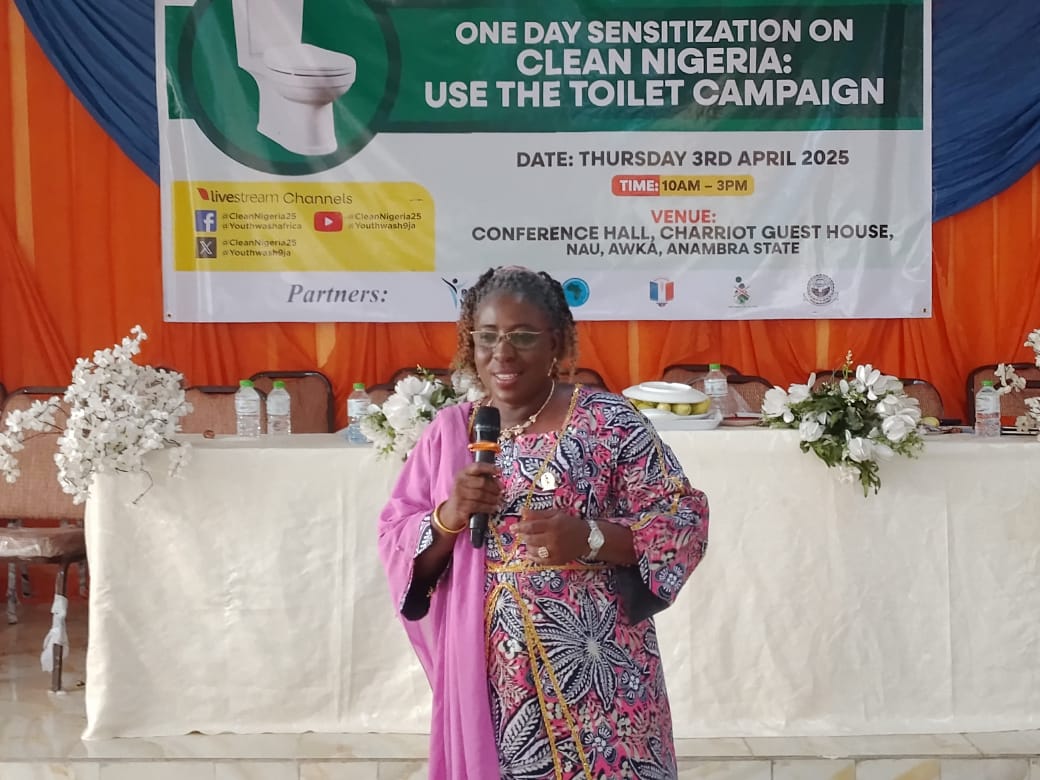
The National Coordinator of the Clean Nigeria, Use the Toilet Campaign, Mrs. Chizoba Opara, has called on governments in the South-East region to show political will in tackling the menace of open defecation.
Opara made the call in Awka, during a one-day CLEAN Nigeria sensitization, held in partnership with the National Water Resources Capacity Building Network (SE) Centre, Nnamdi Azikiwe University Awka, and Environment Development Initiative for Africa (EDIA).
Speaking at the event, she said political will and collective action have become necessary to accelerate the fight to eradicate open defecation in the region.
The coordinator, in statistics she released, said out of the 774 Local Government Areas in Nigeria, only 142 council areas have been certified defecation-free.
She also stated that out of the five states of the South-East, only four LGAs are confirmed free, with Anambra State alone producing three, while Imo has one.
Opara said states like Jigawa, Benue, Kaduna and Bauchi have recorded major progress in the fight against open defecation, urging states in the South-East to wake from their slumber for a livable and healthier region.
“The South-East region has the potential to become open-defecation-free, but we need the political will to drive the process. We need our leaders to prioritize sanitation and hygiene, and allocate the necessary resources to support the efforts,” she said.
Describing the Clean Nigeria Campaign as a clarion call to action, Opara urged all political and private stakeholders to actively participate in the shared mission of achieving a cleaner and healthier society.
While commending the progress so far made, she stressed the need for State Governments to accelerate efforts, as they are the key drivers of the Campaign, urging them to demonstrate greater commitment by investing financial and human resources necessary to meet the Campaign’s ambitious targets.
She urged states, local governments and development partners to take collective action to address the issue and emphasized the urgent need for renewed commitment to achieving an open defecation-free Nigeria by 2030.
Also speaking, Director-General National Water Resources Institute, Kaduna, Professor Emmanuel Ada Adanu, represented by Engr Michael Nwude, reported that over 48 million people in Nigeria still practice open defecation, a situation he said has caused the country to lose 1.3 percent of its annual GDP.
Adanu further said over 100,000 children aged below five die annually due to diarrhea caused directly by water and sanitation. He called for increased private sector engagement and citizens participation to improve sanitation in the country.
Contributing, the Managing Director/Chief Executive Officer of the Anambra State Water Resources Management Agency – Urban Water Asset Holdings Corporation (ASUWAHC), Hon. Ikeobi Ejiofor, who chaired the occasion, described the statistics as embarrassing, noting that issues of open defecation should not be what the states of the country should be associated with particularly in this 21st century.
“We need to drive this scheme down to the communities and even families proper. The households and families must be open defecation free. We are progressing but almost dragging. Advocacy is key because it drives behavioral change. We need to get the people to understand that this is not part of our lives.
“In Anambra, the government is intentional about eradicating open defecation in its entirety. The revival of water corporations in the state is a major boost in the fight. It is a progress in the South-East and by the time we collaborate more, the entire people of Igboland will have access to water for better sanitation.”
On his part, the Director, National Water Resources Capacity Building Network (NWRCBNet SE), Professor Emma Ezenwaji, said the sensitization was long overdue considering the height of open defecation in the region, and country at large.
He called for the sustainability of the status of areas already validated defecation-free, calling for authorities to intensify efforts towards ensuring that more LGAs are triggered into the fight to stop the trend.
Commissioner for Power and Water Resources, Mr. Julius Chukwuemeka represented by Mr Ezekwe Victor, said provision and unlimited access to water has been one of the key priorities of the Anambra State Government, emphasizing its critical importance to sanitation and clean society.
He maintained that the state government in its promise of transforming the state into a livable homeland is committed to ensuring it gets rid of open defecation in the entire 21 local government areas.
He however went further to call for the establishment of WASH departments in LGAs, noting its critical importance to improving sanitation, and hygiene services in Nigeria.
Coordinator, Youths WASH Initiative Africa, Mr Nature Uchenna Obiakor, during his lecture on “Role of Young People in the Clean Nigeria Campaign,” said youths have a critical role to play in the clean Nigeria project, but urged that right policies and enabling environment be created for them to exploit the entrepreneurial opportunities that abound in the project.
He also called on the young people to shun reliance and dependence on government, but think internally and creatively to start contributing to the society.
Earlier, the Vice Chancellor of Nnamdi Azikiwe University, Prof Joseph Ikechebelu, represented by Prof Ada Sam Omenyi, said the campaign is timely, adding that the university has already taken up initiative to ensure its environment is clean and livable.
He also commended the state governor for reviving the state’s water scheme, noting that alone has given the people of the state water to ensure a clean and healthy state.
