
Close Menu
Ikenga Online
    What's Hot

    Pro-Biafra groups condemn Nnamdi Kanu’s sentence, vow to sustain agitation

    December 5, 2025

    For the second time, Rivers speaker Amaewhule, 15 other lawmakers defect to APC

    December 5, 2025

    SSDO partners Japan to expand healthcare support in Enugu

    December 5, 2025
    Facebook X (Twitter) Instagram
    Ikenga Online
    Facebook X (Twitter) Instagram YouTube
    Donate
    • Home
      • Igboezue
      • Hall of Fame
      • Hall of Shame
    • News
      1. Other States
      2. National
      3. International
      4. Interviews
      5. Personalities
      6. View All

      Bandits hit Kogi church, abduct pastor, wife, members

      November 30, 2025

      Kaduna Anglican priest dies in kidnappers’ den

      November 27, 2025

      Bandits mutilate one, abduct pregnant woman, 23 others in Niger communities

      November 27, 2025

      Freed abductees receive medical treatment in Kwara govt house

      November 24, 2025

      Rewarding ex-INEC chairman with ambassadorial role morally indefensible – Atiku 

      December 4, 2025

      Tinubu swears in Gen Musa as defence minister

      December 4, 2025

      Ex-CDS, Gen Musa confirmed as defence minister

      December 3, 2025

      Police to arrest personnel escorting VIPs, declare such duty Illegal

      December 3, 2025

      US issues visa ban on individuals behind Christian genocide in Nigeria

      December 4, 2025

      Tinubu approves Nigeria’s membership of US-Nigeria joint working group

      November 27, 2025

      Obi meets EU lawmakers, seeks stronger partnership to tackle Nigeria’s challenges

      November 26, 2025

      CPC: Nigeria engaging world diplomatically, will defeat terrorism – Tinubu 

      November 6, 2025

      Slash jumbo salaries to pay minimum wage, Bishop tells Tinubu

      June 19, 2024

      Nigeria remains a country in crisis that needs to heal – Chido Onumah

      January 24, 2024

      The Ekweremadus: Obasanjo writes UK court, seeks pardon for them

      April 5, 2023

      I’m coming with loads of experience to re-set Abia – Greg Ibe

      February 1, 2023

      Anambra-born Ugochi Nwizu shines as UNN best graduating doctor with multiple distinctions

      September 29, 2023

      Bulwark for women, girls: Meet Ikengaonline September town-hall guest speaker, Prof Joy Ezeilo

      September 27, 2023

      Rufai Oseni, the most dangerous man on Nigerian TV by Okey Ndibe

      February 13, 2023

      Stanley Macebuh: Unforgettable pathfinder of modern Nigerian journalism by Uzor Maxim Uzoatu

      February 7, 2023

      Pro-Biafra groups condemn Nnamdi Kanu’s sentence, vow to sustain agitation

      December 5, 2025

      For the second time, Rivers speaker Amaewhule, 15 other lawmakers defect to APC

      December 5, 2025

      SSDO partners Japan to expand healthcare support in Enugu

      December 5, 2025

      Enugu council boss pledges N5m for information on kidnappers’ hideouts

      December 5, 2025
    • Abia

      Gunmen hijack Aba-bound bus, abduct 14 passengers in Imo

      December 3, 2025

      Removal of barriers against PWDs’ participation in society a must – Gov Otti

      December 3, 2025

      Abia set to unveil building material testing laboratory

      December 3, 2025

      Otti empowers 150 Abia Poly outstanding graduates with N1m each

      December 2, 2025

      Experts meet in Umuahia to tackle MSMEs challenges

      December 2, 2025
    • Anambra

      FirstPower electricity announces planned outage in Anambra

      December 5, 2025

      GPSDC, WACOL train journalists on GBV reporting, seek stronger collaboration

      December 5, 2025

      Police nab member of kidnap syndicate in Anambra

      December 4, 2025

      Tinubu empowers Anambra PWDs with N50m business grant

      December 3, 2025

      Commission to establish disability counselling centre in Anambra

      December 3, 2025
    • Ebonyi

      Ebonyi LG poll: Ezillo stakeholders adopt power shift to Ezzagu zone

      December 2, 2025

      Nwifuru moves to equip Ebonyi hospitals, sets up five-man equipment distribution committee

      November 28, 2025

      Court remands man for alleged cyberbullying of federal lawmaker

      November 26, 2025

      Nwifuru presents N884.8bn 2026 budget to Ebonyi assembly

      November 25, 2025

      Coalition groups condemn arrests, detention of critics, journalists in Ebonyi

      November 23, 2025
    • Delta
    • Enugu

      SSDO partners Japan to expand healthcare support in Enugu

      December 5, 2025

      Enugu council boss pledges N5m for information on kidnappers’ hideouts

      December 5, 2025

      PRODA DG preaches peace, unity among staff as 2025 games festival kicks off

      December 4, 2025

      Abductors of Enugu deputy governor’s kinsmen demand N20m ransom

      December 4, 2025

      Road crash: FRSC confirms 2 dead, 9 injured in Enugu multiple accidents 

      December 4, 2025
    • Imo

      Pro-Biafra groups condemn Nnamdi Kanu’s sentence, vow to sustain agitation

      December 5, 2025

      Gunmen hijack Aba-bound bus, abduct 14 passengers in Imo

      December 3, 2025

      Catholic bishops condemn violence in Nigeria, call for govt action to restore peace

      November 26, 2025

      MASSOB blasts Ayodele over anti-Igbo comment

      November 26, 2025

      ASUU gives FG 8-day ultimatum over unmet demands, threatens full-blown strike

      November 13, 2025
    • Rivers

      For the second time, Rivers speaker Amaewhule, 15 other lawmakers defect to APC

      December 5, 2025

      DSS quizzes social media user for allegedly advocating coup d’état

      October 29, 2025

      Rumuorlumeni community calls for halt on sale of waterfront lands

      October 20, 2025

      Ohanaeze presidents demand unconditional release of Kanu, others

      October 18, 2025

      Fubara gives reasons for not challenging emergency declaration in court

      September 19, 2025
    • Politics

      For the second time, Rivers speaker Amaewhule, 15 other lawmakers defect to APC

      December 5, 2025

      2027: Atiku finally joins ADC

      November 24, 2025

      Abia patriots caution APC leaders against ‘destructive opposition’ politics

      November 21, 2025

      S’East stakeholders meet in Enugu, unveil 2027 political road map 

      November 20, 2025

      PDP chairman invites President Trump, international community to ‘save Nigerian Democracy’

      November 18, 2025
    • Opinion & Editorial
      • Editorial
      • Columnists
        • Osmund Agbo
        • Chido Onumah
        • Uche Ugboajah
        • Hassan Gimba
        • Edwin Madunagu
        • Rudolf Okonkwo
        • Azu Ishiekwene
        • Osita Chidoka
        • Owei Lakemfa
        • Chidi Odinkalu
      • Opinion
    • Special Reports
    • Art & Entertainment
      • Nollywood
      • Music
      • Ikengaonline Literary Series (ILS)
      • Life
      • Travels
    • Sports
    Ikenga Online
    Home » Revisiting geographical determinism and governance system in Africa by Cheta Nwanze
    Columnists

    Revisiting geographical determinism and governance system in Africa by Cheta Nwanze

    EditorBy EditorApril 6, 2025No Comments7 Mins Read
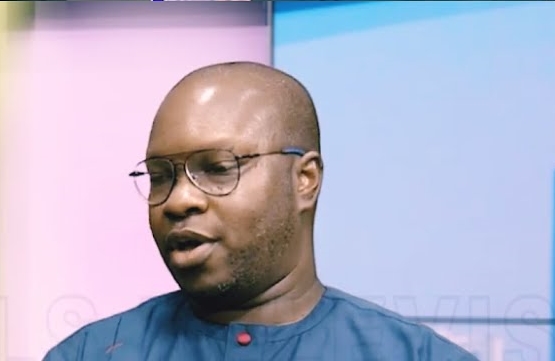
    Cheta Nwanze

    By Cheta Nwanze

    Geographical determinism, the theory that physical environments significantly influence social and political development, offers a lens through which to understand the unique trajectory of African state formation. Unlike Europe, where dense populations and interstate warfare fostered centralised states, Africa’s vast, sparsely populated terrain presented distinct challenges. This geographical reality has profoundly shaped pre-colonial and post-colonial African states, often overlooked in comparative historical analyses.

    By the 16th century, Europe presented a stark contrast to Africa’s vast, sparsely populated expanses. Its geographical attributes, a confluence of compact territories, navigable waterways, and a rapidly growing population created fertile ground for developing robust, centralised nation-states. By 1500, the continent had achieved population densities that Africa would not replicate until the latter part of the 20th century; England, for example, boasted 40 inhabitants per square kilometre, while many African regions averaged fewer than five people per square kilometre.

    The relative compactness of European nations, such as France’s 543,000 square kilometres or Germany’s 357,000, allowed for comparatively straightforward territorial control, a stark contrast to the challenges faced by African rulers navigating vast, often disparate landscapes. The network of navigable rivers, including the Rhine, Danube, and Thames, further facilitated trade and communication, knitting together disparate regions and fostering economic integration.

    Moreover, the scarcity of fertile land, particularly evident in regions like Italy, where only 23% of the terrain was arable, fuelled intense competition amongst emerging states. This scarcity drove rulers like those in Prussia to develop sophisticated tax systems to fund standing armies essential for territorial defence in a continent marked by near-constant conflict.

    As historian Charles Tilly observed, these factors coalesced to form a “European state-building machine.” The incessant warfare between neighbours like France and England compelled rulers to innovate and refine their administrative structures. France, by 1700, maintained a standing army of 150,000 troops, a testament to the scale of military organisation. England, as early as 1086, had implemented the Domesday Book, a comprehensive survey for taxation purposes, laying the groundwork for a centralised fiscal system. Prussia, meanwhile, cultivated a highly efficient civil service, a bureaucratic apparatus designed to manage the complexities of a burgeoning state. These developments, driven by geographical constraints and the exigencies of conflict, forged the template for the modern European nation-state.

    In stark contrast to Europe, Africa presented a landscape defined by its sheer scale and ecological diversity, posing unique challenges to forming centralised states. Vast, sparsely populated territories stretched across the continent. In 1900, Mali, encompassing 1.2 million square kilometres, held a mere two million people, translating to a population density of just 1.6 inhabitants per square kilometre. Similarly, the Democratic Republic of Congo, with its 2.3 million square kilometres, housed only ten million individuals, resulting in a density of 4.3 per square kilometre.

    Ecological barriers further fragmented the continent. The formidable Sahara Desert, spanning 9.2 million square kilometres, effectively divided North and Sub-Saharan Africa, hindering cultural and political exchange. Navigable rivers, vital for trade and communication in Europe, were scarce, with the Niger River representing a notable exception. Moreover, tsetse fly belts, prevalent in forested zones, precluded the development of cavalry-based empires, limiting the expansion of centralised power.

    The abundance of land in Africa fostered a high degree of population mobility. Subjects, faced with oppressive rulers, could readily relocate, a phenomenon exemplified by the Fulani migrations across West Africa. This fluidity undermined rulers’ ability to establish firm territorial control.

    These geographical constraints favoured the emergence of distinct political models. The “galactic polity” of Great Zimbabwe, flourishing between 1100 and 1450, exemplified a system where control was concentrated in core areas, with peripheral regions left largely autonomous. The Igbo village republics, characterised by loose confederacies, reflected a decentralised approach to governance. Nomadic empires of the Sahel, such as the Sokoto Caliphate, adapted to the region’s arid conditions and mobile populations. These diverse political structures, shaped by Africa’s unique geographical realities, stand in stark contrast to the centralised nation-states that arose in Europe.

    However, exceptions existed in regions where geography supported denser populations, leading to the emergence of centralised empires in West Africa. These empires were further bolstered by trade routes and, later, the transatlantic slave trade, which they adapted to quickly due to pre-existing war practices.

    The imposition of European colonialism on Africa further distorted the continent’s political landscape, exacerbating the inherent geographical challenges. With little regard for pre-existing socio-political structures, colonists carved out arbitrary state boundaries. Nigeria, a territory spanning 923,000 square kilometres, forcibly amalgamated over 250 distinct ethnic groups, creating a complex and often volatile political entity. The Congo Free State, encompassing 2.3 million square kilometres, was an entirely artificial construct lacking historical precedent.

    Furthermore, colonial powers exhibited a pronounced coastal bias, relocating administrative capitals from established inland centres like Ibadan and Kumasi to coastal enclaves. This shift prioritised resource extraction and export rather than fostering internal development and integration. Railway infrastructure, exemplified by the Lagos-Kano line, was designed to facilitate the transport of raw materials, such as groundnuts, to ports rather than promoting the movement of people and the interconnection of regions.

    Underinvestment in infrastructure further hampered development. French West Africa, a vast territory of 4.7 million square kilometres, possessed a mere 18,000 kilometres of roads by 1960, highlighting the neglect of internal connectivity.

    The contemporary challenges African nations face reflect these enduring geographical and colonial legacies. The Democratic Republic of Congo, with its 105 million inhabitants spread across a territory two-thirds the size of Western Europe, grapples with immense logistical and administrative difficulties. Chad, a nation of 17 million people, struggles to govern a landmass of 1.2 million square kilometres, much of which is desert. With its 220 million population, Nigeria faces the challenge of uneven population distribution, with the majority concentrated in the southern third of the country. These realities underscore the persistent impact of geographical constraints and the distorted legacy of colonialism on Africa’s state-building trajectory.

    The path to effective governance in Africa necessitates a departure from traditional European models and an embrace of innovative solutions tailored to the continent’s unique geographical realities. The sheer scale and diversity of African territories demand a reimagining of state structures, moving away from centralised models that have proven ill-suited.

    One potential avenue lies in creating smaller, more manageable political units. With its 26,000 square kilometres, Rwanda demonstrates that effective governance is achievable at a smaller scale, allowing for more direct engagement with citizens and a greater capacity to address local needs. Similarly, Mauritius, a nation of just 2,000 square kilometres, showcases the potential for high state capacity and efficient service delivery within a compact territory.

    Another promising approach is asymmetric federalism, a system that acknowledges regional differences and allows for varying degrees of autonomy. Botswana’s tribal lands system, for example, preserves local governance structures, empowering communities while maintaining national unity. Ethiopia’s experiment with ethnic federalism, though complex, attempts to accommodate the nation’s diverse ethnic composition, offering a framework for managing diversity within a federal structure.

    Spatial development strategies focusing on infrastructure and economic integration are also crucial. South Africa’s industrial corridors, linking mines to ports, have fostered economic growth and regional connectivity. Kenya’s Northern Corridor, designed to integrate East Africa, highlights the potential for regional cooperation and infrastructure development to drive economic development and build stronger states.

    The fundamental lesson is clear: Africa’s geographical constraints require a bespoke approach to governance. While Europe’s geography fostered the development of classical nation-states, Africa must forge its own path. The future lies not in replicating European templates but in developing distinctly African solutions to African circumstances that acknowledge and leverage the continent’s unique spatial realities.

    Nwanze is a partner at SBM Intelligence

    Editor
    • Website

    Related Posts

    A troubling message from Guinea-Bissau, by Azu Ishiekwene

    December 4, 2025

    Jeunalists must have a uniform like policemen by Uzor Maxim Uzoatu 

    December 3, 2025

    An Open Letter to Ndigbo (2): What Must Change, by Osmund Agbo

    December 3, 2025
    Editors Picks

    Pro-Biafra groups condemn Nnamdi Kanu’s sentence, vow to sustain agitation

    December 5, 2025

    For the second time, Rivers speaker Amaewhule, 15 other lawmakers defect to APC

    December 5, 2025

    SSDO partners Japan to expand healthcare support in Enugu

    December 5, 2025

    Enugu council boss pledges N5m for information on kidnappers’ hideouts

    December 5, 2025
    Latest Posts
    Imo

    Pro-Biafra groups condemn Nnamdi Kanu’s sentence, vow to sustain agitation

    Rivers

    For the second time, Rivers speaker Amaewhule, 15 other lawmakers defect to APC

    Enugu

    SSDO partners Japan to expand healthcare support in Enugu

    Subscribe to Updates

    Get the latest news from Ikenga Online.

    Advertisement
    Demo

    IkengaOnline is a publication of the Ikenga Media & Cultural Awareness Initiative (IMCAI), a non-profit organisation with offices in Houston Texas and Abuja.

    We're social. Connect with us:

    Facebook X (Twitter) Instagram YouTube LinkedIn WhatsApp RSS
    • Home
      • Igboezue
      • Hall of Fame
      • Hall of Shame
    • News
      • Other States
      • National
      • International
      • Interviews
      • Personalities
    • Abia
    • Anambra
    • Ebonyi
    • Delta
    • Enugu
    • Imo
    • Rivers
    • Politics
    • Opinion & Editorial
      • Editorial
      • Columnists
        • Osmund Agbo
        • Chido Onumah
        • Uche Ugboajah
        • Hassan Gimba
        • Edwin Madunagu
        • Rudolf Okonkwo
        • Azu Ishiekwene
        • Osita Chidoka
        • Owei Lakemfa
        • Chidi Odinkalu
      • Opinion
    • Special Reports
    • Art & Entertainment
      • Nollywood
      • Music
      • Ikengaonline Literary Series (ILS)
      • Life
      • Travels
    • Sports

    Subscribe to Updates

    Get the latest news from Ikenga Online.

    Facebook X (Twitter) Instagram LinkedIn WhatsApp RSS
    © 2025 Ikenga Online. Ikenga.

    Type above and press Enter to search. Press Esc to cancel.