

Ben Ezechime, Enugu
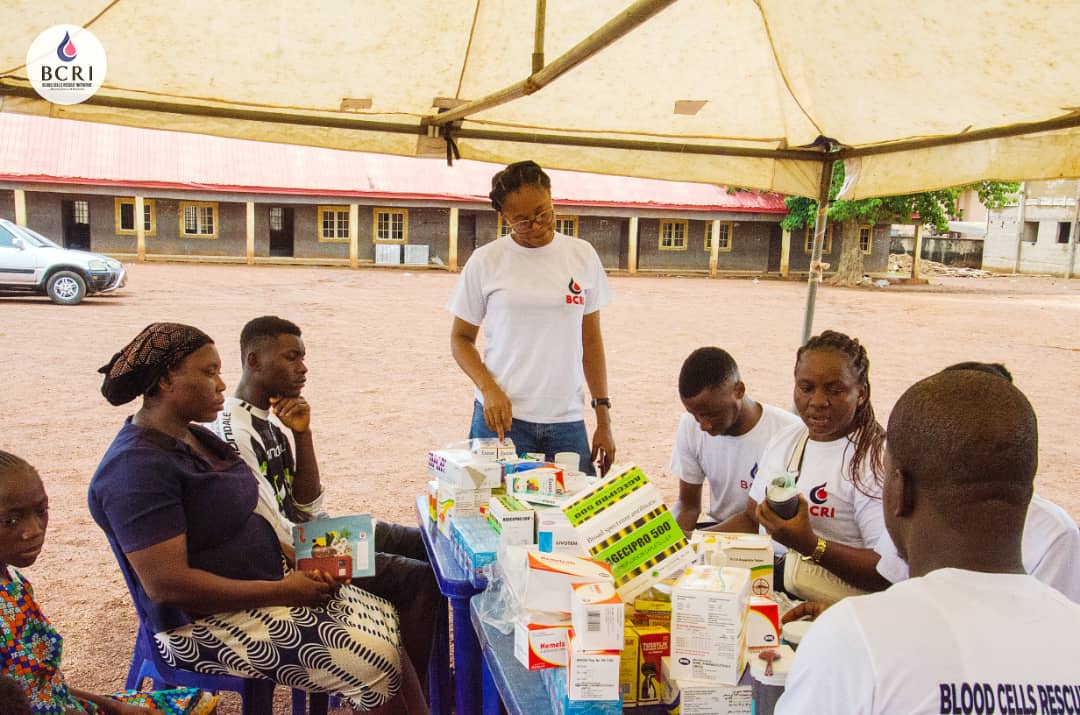
The Blood Cells Rescue Initiative (BCRI), a Non Governmental organization (NGO) based in Enugu, South-East Nigeria, has carried out free consultation, screening, and medication to sickle cell patients to more than 300 sickle cell patients in Enugu Urban.
Speaking on the medical outreach Programme, the Co-Founder of the BCRI, Dr Onyinye Eze, said that the initiative was aimed at identifying and supporting people living with sickle cell disease in Enugu Urban.
She explained that the sickle cell disease was prevalent in Nigeria, Sub-Saharan Africa, and globally, with Nigeria having the highest prevalence worldwide.
Eze, a Consultant Haematologist at Enugu State University Teaching Hospital and Parklane Teaching Hospital, Enugu, said the outreach provided free screening, and routine medications to patients.
“I was surprised by the number of people we saw today. We are providing antibiotics, anti-malarials, and disease-modifying drugs like hydroxyurea to those who qualify,” she said.
She also revealed that many children with sickle cell disease had never been seen by a doctor but were instead managed by community health workers and chemists.
Eze called on the government and well-meaning Nigerians to invest more in sickle cell care, noting that while the disease was curable, the cost of treatment was often beyond the reach of many sufferers.
She urged Nigerians to support the organisation, which was funded through her efforts and support from friends and family.
Dr Angela Ugwu, a Consultant Haematologist at the University of Nigeria Teaching Hospital, Ituku Ozalla, highlighted the problem of misdiagnosis contributing to the increasing number of sickle cell patients.
She noted that many individuals received incorrect laboratory results, leading to confusion.
“Many parents were told their genotype was AA and later married someone with AS, but then had children with sickle cell disease. Upon retesting, it was discovered that the initial results were wrong,” she explained.
Ugwu advised intending couples to get tested multiple times at government hospitals to ensure accurate genotype results.
She emphasised that sickle cell anemia was a genetic disease and warned carriers not to underestimate the risk.
“When both partners are carriers, each pregnancy has a 25 per cent chance of resulting in a child with sickle cell anemia.
“Couples should get tested to know their status,” she advised.
She also encouraged carriers to consider in vitro fertilisation (IVF) or adoption if they wished to have healthy children.
A father of one of the patients, who preferred to remain anonymous, shared his experience.
His adopted child was diagnosed with sickle cell disease at a young age.
“He started having crises early on and was diagnosed with the disease. I advise anyone adopting children to conduct necessary tests to avoid this situation.
”I am very happy about the outreach; it has been a once-in-a-lifetime opportunity. Meeting doctors and receiving medication means a lot to us,” he said.
