

Lawrence Nwimo, Awka
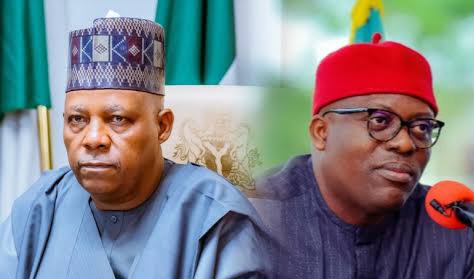
Human rights lawyer and legal counsel to the Indigenous People of Biafra (IPOB), Sir Ifeanyi Ejiofor, has criticized recent comments by Vice President Senator Kashim Shettima, describing them as both a “true confession” and a stark reflection of the double standards that characterize Nigerian politics.
Ejiofor was reacting to Shettima’s revelation that he was once shielded from removal as Governor of Borno State by the then Attorney-General of the Federation, Mohammed Bello Adoke (SAN). According to the lawyer, this admission highlights the selective and politically expedient application of constitutional principles in Nigeria.
Shettima also recalled a moment during President Goodluck Jonathan’s administration when the then Speaker of the House of Representatives, Rt. Hon. Aminu Tambuwal, firmly told the President that he lacked the constitutional authority to remove even an elected councillor, let alone a sitting governor.
Ejiofor described this stance as a commendable example of constitutional propriety and respect for the rule of law—principles he believes are now being disregarded.
In a statement titled “Reflections on Power, Principle, and the Irony of Time: Shettima’s Remark and the Contradictions of Today,” Ejiofor noted the glaring irony: the same Vice President who once benefited from constitutional protection now serves in an administration accused of undermining the same legal safeguards.
He particularly faulted Shettima for allegedly failing to intervene in what many see as attempts by the Federal Government to remove Rivers State Governor Siminalayi Fubara through the controversial declaration of a state of emergency—a move widely viewed as a political strategy to seize control of the state.
“The very constitutional safeguards that once protected Shettima in his hour of political vulnerability are now being tested, if not outrightly disregarded, under the same government he helps to lead,” Ejiofor stated.
He argued that the inconsistency in applying constitutional norms sets a dangerous precedent that threatens the foundations of democratic governance in Nigeria.
Ejiofor’s full statement reads: “In a moment of rare candour, the Vice President of the Federal Republic of Nigeria, Senator Kashim Shettima, recently acknowledged that former Attorney-General of the Federation, Mohammed Bello Adoke (SAN), played a pivotal role in shielding him from an unlawful attempt to remove him as Governor of Borno State. He further recalled how the then Speaker of the House of Representatives, Rt. Hon. Aminu Tambuwal, unequivocally informed former President Goodluck Jonathan that not even the President had the constitutional authority to remove an elected councillor, let alone a sitting governor.
These recollections hark back to a time when constitutionalism—though imperfect—had valiant defenders within the corridors of power. Individuals who, despite immense political pressure, upheld the sanctity of democratic institutions and due process.
But the irony today is glaring. Vice President Shettima now serves in an administration widely accused of undermining the very rule of law he once benefited from. A telling case in point is the recent imposition of a state of emergency in Rivers State by the Tinubu-led Federal Government—under which Shettima is Vice President—a move widely condemned as a thinly veiled ploy to unseat a democratically elected governor through executive fiat.
Not only was the Governor of Rivers State unlawfully targeted, but the entire democratic institutions in the state, including duly elected councillors, were effectively dismantled. The very constitutional safeguard that once protected Shettima in his hour of need is today being tested, if not altogether disregarded, under the administration he now helps to steer.
In today’s political climate, one must ask: would a similarly principled stand be possible now? Would voices like Adoke’s and Tambuwal’s still echo in the chambers of power, resisting unlawful and anti-democratic pressures? Many Nigerians believe the outcome would be tragically different.
Can Vice President Shettima, in good conscience, point to instances under the present administration where power has been restrained for the sake of democratic integrity? Can he truly claim the same fidelity to constitutionalism he once praised?
Nigeria’s democracy is still young, but its guardians must not apply its tenets selectively. The legacy of defending constitutional order must not be romanticised as a thing of the past—it must be preserved and practiced now. Senator Shettima’s words serve both as a powerful reminder of what was once possible and a sobering reflection of what is at risk of being lost.”
