

Lawrence Nwimo, Awka
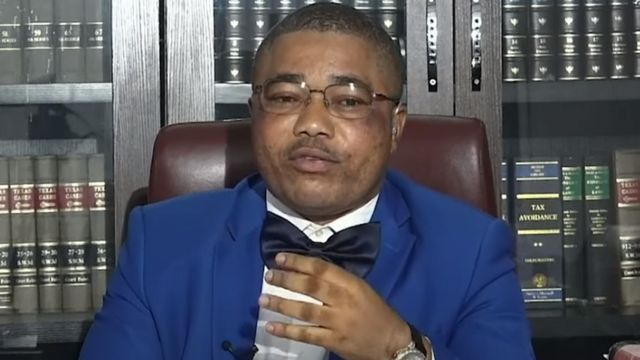
Human rights lawyer and lead counsel to the Indigenous People of Biafra (IPOB), Sir Ifeanyi Ejiofor, has decried the ongoing violence in the South East, describing it as a dark and tragic chapter that has left an indelible scar on the soul of Alaigbo.
In a statement titled “Saturday Musing: The Death of Humanity in Alaigbo – A People on the Brink,” released at the weekend, Ejiofor lamented the spate of killings in the region, blaming the crisis on leadership failure at all levels of government.
He cited recent brutal attacks in Obinetiti, Ndiejezie, Umualaoma, and Ndiakwuwata—communities in Arondizuogu, Ideato North Local Government Area of Imo State—where gunmen reportedly murdered several residents in cold blood.
Ejiofor said the persistent violence reflects a total collapse of state authority and a disturbing erosion of societal values.
“The value of life in Alaigbo has plummeted to chilling lows,” he said. “A society where human life holds no worth is no longer a society—it is a jungle.”
He painted a grim picture of the region’s condition: “Today, our beloved Alaigbo stands as a wasteland of shattered dreams, unburied corpses, and questions that echo with no answers. What hope can we speak of when the present is soaked in innocent blood?”
Ejiofor held the political class responsible for the worsening crisis, accusing leaders of abandoning their constitutional duty to safeguard the lives and dignity of the people.
Warning of an impending collapse if urgent measures are not taken, he called for immediate action to restore peace, justice, and responsible governance in the region.
Below is the full text of the statement:
“This morning, I write with a heart heavy, shattered by grief, burning with rage, and aching with disbelief. As a son of Alaigbo and a custodian of our collective conscience, I can no longer watch in silence as our homeland descends into the abyss of horror and moral collapse.
“Yesterday morning, in Obinetiti, Ndiejezie, Umualaoma, and Ndiakwuwata—all in Arondizuogu, Imo State—something utterly horrifying occurred. What unfolded in these peaceful communities was not just another act of violence; it was a brutal reminder of our crumbling humanity, a dark chapter carved into the soul of our people.
“A video emerged. It was not just another footage of violence. It was a chilling documentary of state failure, the erosion of our values, and the slow, painful death of our shared humanity. That footage, too gruesome to share but forever etched in the minds of all who saw it, showed lifeless bodies strewn across the land: our brothers, sisters, elders, and youths—mowed down in cold blood.
“They were not armed. They were not criminals. They were not combatants. They were Igbos. They were human beings. Yet in one savage sweep, they were reduced to statistics. To silence. To corpses.
“This was no random act of violence. This was genocide unfolding in real time. The screams were real. The blood was real. The deaths were real. And just as real—the deafening indifference of those in power.
“So I ask again, with searing urgency: Is there still a government in Imo State? Does governance still exist, or has it been replaced by brute force, impunity, and the silent complicity of those who once swore to protect?”
“Alaigbo is bleeding. Alaigbo is burning. Alaigbo is dying. And those who should act have either turned away in silence or, worse, joined in the desecration.
“The last time we witnessed this scale of targeted extermination was during the Biafran War. But that was a declared war. What we are seeing today is an undeclared one—a silent, systematic war against a people rendered vulnerable simply because of who they are.
“The value of life in Alaigbo has sunk to chilling lows. A society where human life holds no worth is no longer a society—it is a jungle.
“This is a call to conscience, a call to leadership, a call to urgent action. Those entrusted with power—at local, state, and federal levels—must rise above partisanship, fear, and self-interest. They must act swiftly to institute a security framework that protects rather than exterminates; that heals rather than harms.
“We demand answers. We demand accountability. We demand justice. This is not just a political failure; it is a moral collapse—a spiritual betrayal—the slow murder of a people’s soul.
“Let Alaigbo rise. Let the truth be spoken, free from fear. Let those in power act—before our silence becomes complicity.
“Let the killings stop. Let the mourning end. Let healing begin.
“We unequivocally condemn this barbaric and dastardly act, and we demand immediate and decisive action from the government—if indeed any semblance of governance still exists in Imo State. Enough is enough. May the souls of the innocent rest in peace. And may our land find redemption, before it is too late.”
