

Our Reporter, Abuja
The Federal Government has placed a seven-year moratorium on the creation of new federal universities, polytechnics, and colleges of education, in a bid to tackle falling standards and overstretched infrastructure in the nation’s tertiary education system.
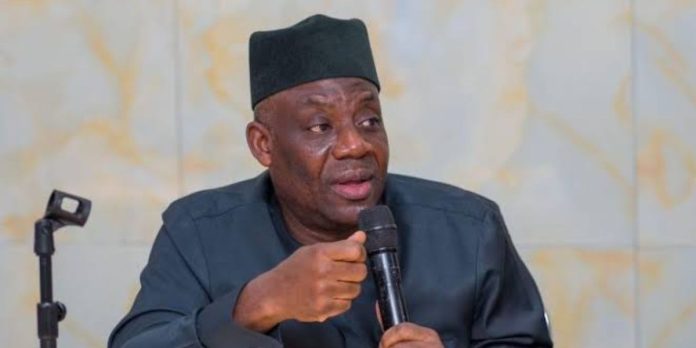
Minister of Education, Dr. Tunji Alausa, announced the decision on Wednesday while briefing State House correspondents after the Federal Executive Council (FEC) meeting presided over by President Bola Tinubu at the Presidential Villa, Abuja.
Alausa said the suspension covers all categories of federal tertiary institutions and is intended to curb duplication, reduce waste, and channel resources toward upgrading existing facilities and strengthening manpower.
According to him, Nigeria’s challenge is no longer access to tertiary education but the proliferation of poorly equipped institutions, which has led to crumbling infrastructure and declining graduate quality.
He warned that unless urgent reforms are implemented, graduate unemployment will worsen as many leave school without employable skills.
“Today we have 72 federal universities, 42 federal polytechnics, and 28 federal colleges of education, alongside hundreds of state and private institutions. Yet in the 2024/2025 academic session, 199 universities recorded fewer than 100 JAMB applicants, while 34 had no applicants at all,” the minister said.
He added that 295 polytechnics—public and private—had fewer than 100 applicants, while 64 colleges of education received zero applications. Citing an example, Alausa noted a federal university with fewer than 800 students but employing 1,200 staff, describing it as a glaring inefficiency.
The minister stressed that the pause will allow government to rehabilitate infrastructure, recruit and train academic staff, and increase the carrying capacity of existing schools. Some federal universities in the North, he noted, currently have fewer than 2,000 students.
Alausa said the measure is designed to keep Nigerian graduates competitive globally and in line with President Tinubu’s directive for top-quality education that meets international standards. He commended the President for his “political will and commitment” to education reform.
Meanwhile, FEC approved the establishment of nine new private universities. Addressing concerns over the seeming contradiction, Alausa explained that the approvals were for long-standing applications—some dating back more than six years—delayed by inefficiencies at the National Universities Commission (NUC).
He revealed that upon assuming office, he and the Minister of State for Education met 551 pending private university applications. Many were inactive, and new NUC guidelines pruned the number to 79 active cases, out of which nine met all requirements and were approved.
Alausa also disclosed that similar restrictions will soon apply to the establishment of new private universities, polytechnics, and colleges of education, to ensure quality is not sacrificed for expansion.
