

Stephen Ukandu, Umuahia
The Rule of Law and Anti-Corruption (RoLAC) has said that anti-corruption strategies are critical for advancing good governance, transparency, and accountability in the country.
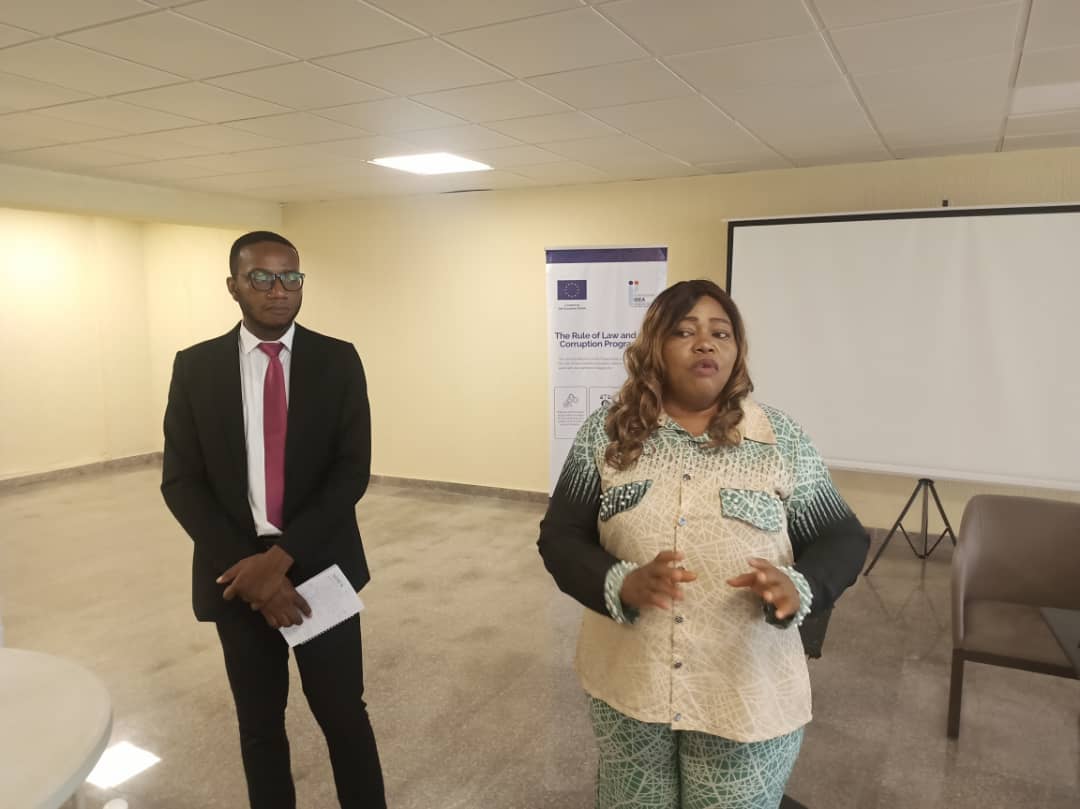
RoLAC Project Coordinator for Abia State, Mr. Peter Omenka, stated this at a three-day workshop organised for Civil Society Organisations (CSOs) and relevant Government Ministries, Departments, and Agencies (MDAs) in Umuahia, Abia State. He explained that without the necessary anti-corruption framework in place, accountability would remain a mirage.
The workshop, held in collaboration with CSOs and MDAs, was aimed at developing strategies to improve accountability, transparency, and anti-corruption in Abia State.
RoLAC Programme Phase II is funded by the European Union and implemented by the International Institute for Democracy and Electoral Assistance (I-IDEA) in Nigeria.
Omenka said the overall goal of the programme is to contribute to consolidating the rule of law and anti-corruption reforms in Nigeria.
“This workshop is designed to support Abia State to develop its own integrity and accountability strategy, which will serve as a vehicle to drive good governance, integrity, and accountability,” he said.
According to him, the draft framework will be presented to the heads of MDAs for their inputs before it becomes a working document.
“We want the Abia State Government to take ownership of this process and demonstrate commitment,” he added.
Omenka further explained that an anti-corruption strategy in Abia is essential for advancing good governance, strengthening public institutions, fostering a culture of ethics among public officials, and reducing corruption and its negative impact on society.
With support from the RoLAC Programme, he said, the Abia State Integrity and Anti-Corruption Strategy (ABSIAS), when established, will focus on policy reforms, institutional strengthening, and public engagement.
“By supporting this initiative, the RoLAC Programme reaffirms its commitment to fostering a culture of integrity and transparency in governance, paving the way for long-term reforms that empower institutions and citizens alike in the fight against corruption,” Omenka said.
He commended the Alex Otti-led administration for signing up to RoLAC, describing it as a demonstration of genuine commitment to accountability.
“I think Abia State is a good example in terms of governance, accountability, and integrity as far as Nigeria is concerned. The government is really touching lives by providing good governance and managing limited resources in the best possible way.
“It is hoped that other states will borrow a leaf from this so that the lives of ordinary citizens will be improved. Nigeria should embrace the rule of law and accountability in its reform processes, because these are key to citizens enjoying the dividends of democracy,” he added.
In his remarks, the Commissioner for Justice and Attorney General of Abia State, Mr. Ikechukwu Uwanna, acknowledged gaps in the anti-corruption crusade but noted that the programme was designed to collectively develop strategies to tackle corruption.
Represented by the Deputy Director of Civil Litigation, Becky Ikechi, Uwanna assured that the State Government was ready to adopt and implement the final draft of the strategies to enhance good governance in the state.
Also speaking, a consultant with RoLAC, Professor Ada Chidi Igbokwe, described the strategies being developed as a roadmap for the fight against corruption. She explained that the document, already in use in some states, would help curb corruption not just in the public sector but also in the private sector and society at large.
In a separate interview, the Executive Director of the African Centre for Human Advancement and Resource Support (CHARS-Africa), one of the participants, expressed hope that the framework developed by stakeholders would strengthen accountability in the state.
“I am expecting a very robust document, which will serve as a strategy. As CSOs, we will then have a basis for engaging the process to improve integrity and accountability in Abia.
“Mechanisms have been put in place, but it is still a process. We need to do more in terms of implementation, domesticating certain laws like the Fiscal Responsibility Act, and reforming others such as the Public Procurement Law, to ensure effective transparency and accountability in the state,” he said.
