

Hotel Presidential: Building legacies out of neglect —Ikenga Editorial
This is more than renovation, it is the reclamation of history, pride, and deferred vision. For Enugu and Ndigbo, it is proof that the past can be redeemed, and that ambition, coupled with accountability, can flourish again.”
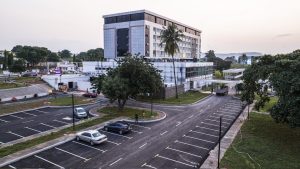
Hotel Presidential in Enugu is far more than concrete and steel. It is memory, identity, and ambition etched indelibly into the heart of the South-East. Built in 1963 under the Premiership of Dr. M. I. Okpara, at a time when Ndigbo walked tall with the optimism of a newly independent nation, it stood as a luminous testament to what we could achieve.
With 100 elegant rooms, a grand ballroom, a swimming pool, tennis courts, and a buzzing nightclub, the hotel was not merely a place to stay, it was the pulsating epicentre of modernity in the East. Monarchs, presidents, international dignitaries, and Nigeria’s intellectual and economic elites graced its halls. It was our pride, our showcase, our audacious proclamation that the South-East could dream boldly and deliver.
Yet, as the years passed, pride turned to neglect. Successive governments allowed this beacon of excellence to decay. By the 2000s, the hotel had become a moribund relic. Its broken windows, weed-choked gardens, and encroaching structures told a story of squandered potential. The Guardian aptly described it as “overrun by weeds, prone to criminal activity, and partially sold off to raise funds.” The hotel that once hosted kings and leaders was left to reptiles and ruin, a tragic emblem of abandonment.
Attempts at revival faltered. In 2013, the Sullivan Chime administration sought a 35-year concession with Primeview Hotels for a ₦4 billion redevelopment, yet legal wrangling and bureaucratic inertia buried the plan. For another decade, this once-proud monument languished, a silent witness to squandered opportunity.
Tragically, Hotel Presidential’s fate is far from unique. The Enyimba International Hotel in Aba, Abia State, suffered a parallel demise. Conceived in 1979 under Governor Sam Mbakwe of then-Imo State as a seven-story, 125-room emblem of regional pride and economic aspiration, it fell victim to political turbulence and fiscal constraints. Over the decades, the unfinished structure attracted squatters and criminal elements, while repeated revival efforts faltered for lack of funding and logistical coordination, leaving yet another ambitious project to rot.
From the ambitious Ebonyi World Trade Centre in Ebonyi State, envisaged as a monumental hub for commerce, to the towering Akachi Monument in Imo State, intended to embody state pride, and the once-thriving Golden Guinea Brewery in Abia State, now silent despite its enormous economic potential, the South-East is littered with echoes of forsaken dreams. Across the region, grand projects that promised progress and prosperity have been abandoned, standing as stark reminders of political short-sightedness and unfulfilled promise
This is a microcosm of a broader national malaise. Across Nigeria, skeletal roads, unfinished housing estates, dormant factories, and hollow conference centres testify to waste and poor governance. Billions of naira vanish into projects that never reach fruition, while politicians chase new ventures, photo opportunities, applause, and ceremonial ribbon-cuttings without regard to continuity. The cycle is vicious: initiate, abandon, repeat.
In the South-East, the scars run deep. Projects conceived as legacies of pride and development have become metaphors for the politics of optics, where novelty is prized over continuity, and branding over substance. Abandoned projects are more than eyesores, they are financial sinkholes, social scars, and stark symbols of governmental failure. The populace bears the cost, while the baton of responsibility is repeatedly dropped.
A radical departure from this toxic culture is imperative. Governance must be reframed not as a sprint to etch a name in concrete, but as a relay in which administrations pass the baton responsibly. Completing what has been commenced is not charity; it is a moral and civic obligation. Taxpayers’ money has already been invested, allowing it to rot is not only wasteful, it is indefensible.
Reviving abandoned projects restores not only structures, but also trust between government and the governed. It signals seriousness, competence, and commitment. It affirms that government can deliver, that promises can be kept, and that leaders can be custodians, rather than undertakers, of the public good.
Today, hope flickers anew. In April 2024, Governor Peter Mbah’s administration took decisive steps to resurrect Hotel Presidential. Scaffolds now rise where broken windows once gaped; workers toil; progress reverberates through halls long silent. This is more than renovation, it is the reclamation of history, pride, and deferred vision. For Enugu and Ndigbo, it is proof that the past can be redeemed, and that ambition, coupled with accountability, can flourish again.
Governor Mbah has not rested there. He has completed the 3,000-seater International Conference Centre initiated during Governor Nnamani’s tenure. He is revitalizing the Nigerian Gas Plant in Emene, and exploring the resuscitation of the Aluminium Smelting Company, Ohebe Dim. Across these initiatives emerges a pattern: governance that values completion over spectacle, substance over optics.
In Aba, similar hope is rising at the Enyimba International Hotel. In January 2025, the Abia State Government under Gov. Alex Otti, signed a Memorandum of Understanding with Radisson Blu to complete and manage the hotel, envisaging a five-star facility with a 2,500-seat conference and exhibition centre. Decades of stalled ambition and intermittent efforts at revival may finally give way to a new era, where the hotel becomes a premier hub for business and hospitality, a testament to the transformative power of vision, courage, and continuity in leadership.
The lesson is undeniable: abandoned projects are not destiny; they are failures of stewardship. Across the South-East, and indeed Nigeria, we have paid a steep price for political vanity and neglect of civic duty. Yet decisive leadership and unwavering commitment can resurrect even the most forsaken dreams.
When governments commit to completing what has been started, they honour history, serve the people, and construct enduring legacies. Hotel Presidential, Enyimba International, and other fallen giants are rising again. Let them remind us that neglect is reversible, and that the South-East and indeed Nigeria, can build legacies not from fleeting spectacle, but from sustained, responsible governance.
We owe it to our history, our citizens, and our future to ensure that ambition is matched by action, and that every project begun is a promise fulfilled.
