

Our Reporter, Abuja
The African Centre for Media and Information Literacy (AFRICMIL) has commended Senegal for enacting a whistleblower protection law, describing it as a milestone for transparency and accountability in West Africa.
The legislation, passed by Senegal’s National Assembly on August 26, 2025, was developed under President Diomaye Faye, who assumed office in April 2024. With the move, Senegal becomes the first francophone sub-Saharan African country to adopt such a law, joining Ghana as the only ECOWAS members with legal frameworks for whistleblower protection.
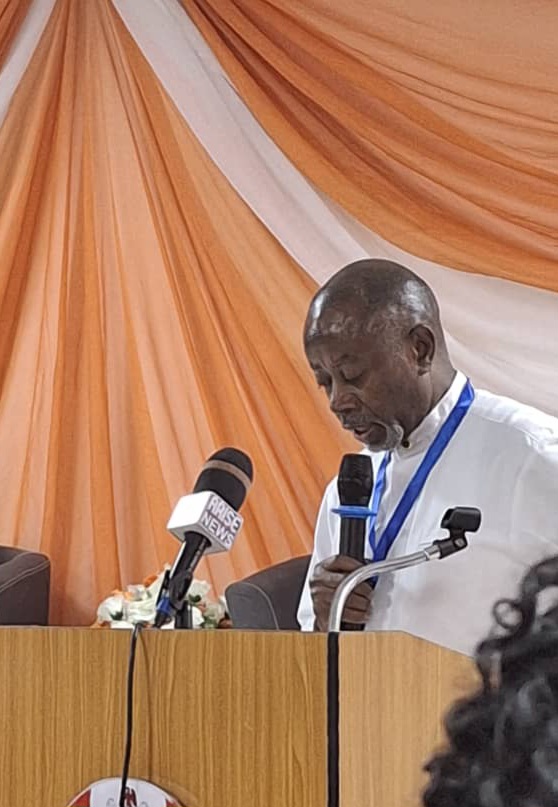
In a statement issued on Wednesday, AFRICMIL Coordinator, Dr. Chido Onumah, recalled that the need for stronger protections was highlighted during the first Sub-regional Conference on Whistleblowing and Whistleblower Protection in West Africa, held in Abuja in November 2024.
“This is a landmark moment,” Onumah said.
“Senegal’s adoption of the law reinforces anticorruption reforms in the region and strengthens the resolve of the Whistleblowing Advocacy Coalition of West Africa (WACOWA), which was established at the Abuja conference.”
The new law enables whistleblowers to report corruption and financial crimes anonymously and securely, either internally or through designated authorities. It also provides for incentives, including a 10 per cent reward from recovered illicit funds or an amount set by relevant authorities. AFRICMIL praised the Platform to Protect Whistleblowers in Africa (PPLAAF) for its advocacy role in pushing for the legislation and called on Senegal’s government to ensure effective implementation in collaboration with civil society.
Onumah, who is also the chairman of the board of Whistle Blowing International Network (WIN), stressed that Nigeria must learn from Senegal’s example. He noted that Nigeria’s whistleblower policy, introduced in 2016 and managed by the Presidential Initiative on Continuous Audit (PICA), initially recorded impressive recoveries of stolen funds and assets. However, public enthusiasm has since waned due to the absence of legal protection for whistleblowers.
“Despite nine years of advocacy by civil society and other stakeholders, Nigeria is yet to move from policy to law,” he said. “The enactment and enforcement of whistleblower protection laws are not just legal instruments but foundations of good governance, accountability, and public trust.”
AFRICMIL urged the Nigerian government and other West African countries to emulate Ghana and Senegal by enacting similar laws.
“We congratulate the people of Senegal, legislators, and civil society champions whose determination made this milestone possible,” Onumah added.
“With this law, West Africa moves closer to a future where corruption is exposed, whistleblowers are protected rather than persecuted, and transnational crime is curtailed.”
