

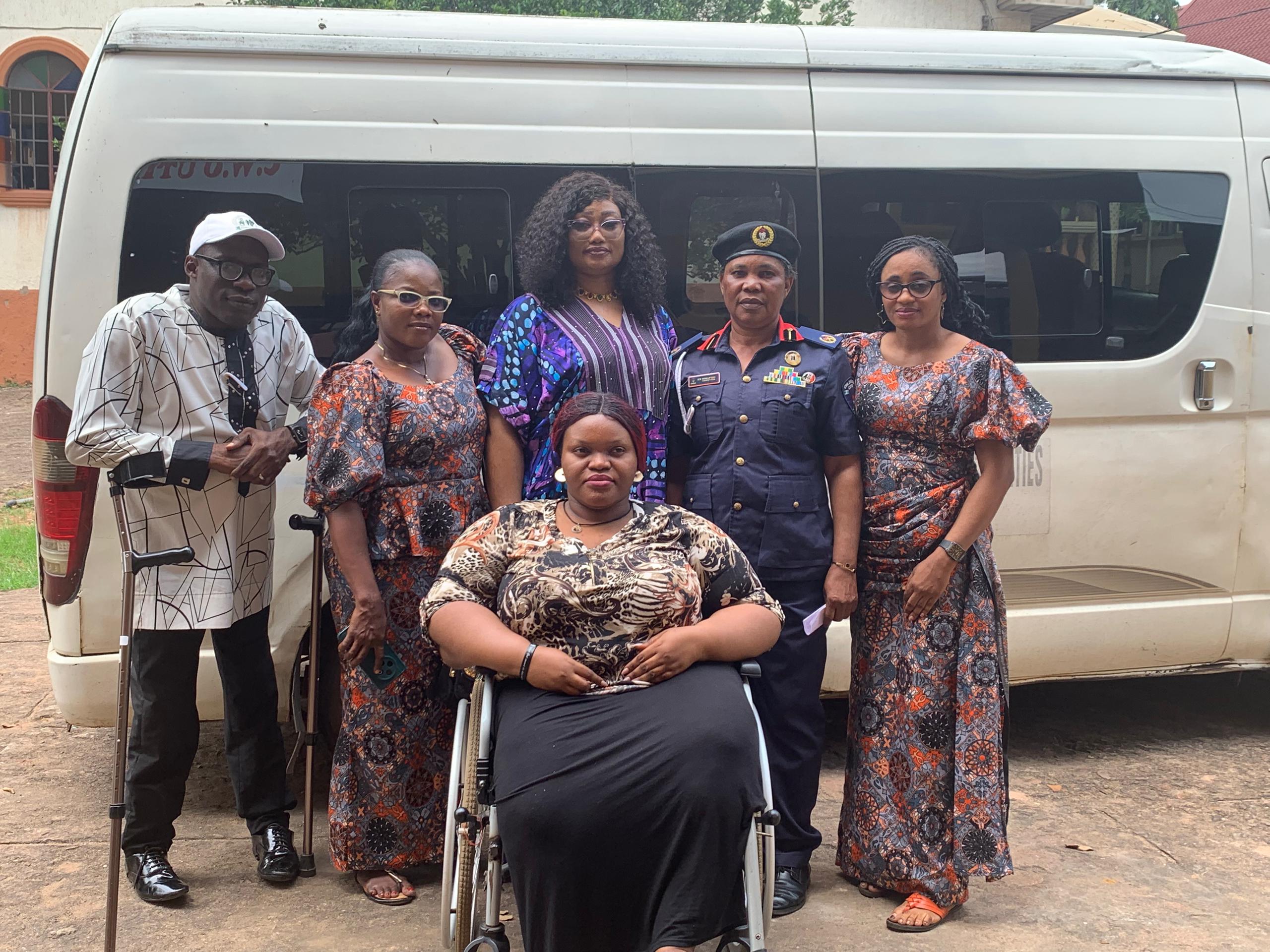
Lawrence Ndubeze, Awka
Women under the aegis of the Association of Anambra State Women with Disabilities (AASWoD) have called for a more inclusive electoral process ahead of the November 8 governorship election in the state.
The women made the call on Friday during their annual general meeting in Amawbia, Awka South Local Government Area.
AASWoD is the women’s wing of the Joint National Association of Persons with Disabilities (JONAPWD), Anambra State Chapter, established to seek solutions to challenges affecting women with disabilities in the state.
Speaking at the meeting, JONAPWD Anambra State Chairman, Comrade Ugochukwu Okeke, lamented the difficulties women with disabilities face in exercising their franchise, including the poor attitude of the public, lack of mobility on election day, and inaccessibility of polling booths.
“Many challenges our members face during voting include lack of access to polling booths sited at elevated positions. It is very difficult for some of us in wheelchairs to access such polling units. Another is the restriction of vehicular movement, which is our major means of mobility.
“For persons with albinism, they struggle to see the print on ballot papers, which is why INEC needs to provide magnifying glasses to ensure our active participation,” Okeke said.
He noted that INEC had promised to develop a card pass to enhance the mobility of PWDs on election day, adding that the association was working to identify its members across the state to ensure adequate provision of assistive devices.
Okeke urged INEC to sustain efforts to include PWDs in the electoral process and collaborate with political parties to accommodate them in their structures.
The convener of the meeting and State Woman Leader of JONAPWD, Comrade Nwanokwara Ncheta, explained that the event focused on voter education and active participation of women with disabilities in the governorship election.
She emphasized that political participation is both a fundamental right and a responsibility, crucial to ensuring that persons with disabilities are fully included in the democratic process.
While commending INEC for its efforts to improve electoral participation for PWDs, Ncheta urged the commission to do more to make polling units accessible, provide assistive devices, and train security personnel on handling voters with disabilities.
Ukamaka Eya, who represented INEC at the event and serves as Desk Officer for CSOs and PWDs, reassured participants that the commission had made adequate provisions to facilitate their participation in the election.
Similarly, Eberechukwu Nwufoh of the Nigeria Security and Civil Defence Corps (NSCDC), Anambra State Command, assured that the agency was committed to ensuring zero discrimination against PWDs during the polls.
