
Close Menu
Ikenga Online
    What's Hot

    Otti clears decade-long pension arrears for Abia ADP retirees

    March 6, 2026

    Boundary crisis: Ebonyi orders destruction of shrines in Amasiri

    March 6, 2026

    Rivers monarch to Otti: Your successor will have big shoes to fill

    March 6, 2026
    Facebook X (Twitter) Instagram
    Ikenga Online
    Facebook X (Twitter) Instagram YouTube
    Donate
    • Home
      • Igboezue
      • Hall of Fame
      • Hall of Shame
    • News
      1. Other States
      2. National
      3. International
      4. Interviews
      5. Personalities
      6. View All

      Coroner gives LASUTH 14 days to account for unidentified body in Pelumi Onifade death probe

      March 6, 2026

      Kaduna victims’ coalition demands probe of alleged abuses under El-Rufai

      February 16, 2026

      Dadiyata: Kperogi raises questions as El-Rufai, Ganduje trade allegations

      February 15, 2026

      Kole Shettima, others to be turbaned by Machina Emirate

      January 26, 2026

      Ugwuanyi to Greece, Chioma Ohakim to Poland as Tinubu approves 65 ambassadorial postings

      March 6, 2026

      Medical fellowship not equivalent to PhD, FG clarifies

      March 6, 2026

      IPAC threatens 2027 election boycott over electoral act

      March 6, 2026

      RULAAC urges safeguards, democratic oversight in proposed state police framework

      March 5, 2026

      Okonjo-Iweala canvasses fresh ideas to revitalise WTO ahead of MC14

      March 6, 2026

      A Critical review of Reparations: History, Struggle, Politics and Law, by Chido Onumah 

      March 4, 2026

      Iran strikes: US issues security alert to citizens in Nigeria, worldwide

      March 2, 2026

      Iran supreme leader, Ayatollah Ali Khamenei killed in US–Israel strikes

      March 1, 2026

      Slash jumbo salaries to pay minimum wage, Bishop tells Tinubu

      June 19, 2024

      Nigeria remains a country in crisis that needs to heal – Chido Onumah

      January 24, 2024

      The Ekweremadus: Obasanjo writes UK court, seeks pardon for them

      April 5, 2023

      I’m coming with loads of experience to re-set Abia – Greg Ibe

      February 1, 2023

      Anambra-born Ugochi Nwizu shines as UNN best graduating doctor with multiple distinctions

      September 29, 2023

      Bulwark for women, girls: Meet Ikengaonline September town-hall guest speaker, Prof Joy Ezeilo

      September 27, 2023

      Rufai Oseni, the most dangerous man on Nigerian TV by Okey Ndibe

      February 13, 2023

      Stanley Macebuh: Unforgettable pathfinder of modern Nigerian journalism by Uzor Maxim Uzoatu

      February 7, 2023

      Otti clears decade-long pension arrears for Abia ADP retirees

      March 6, 2026

      Boundary crisis: Ebonyi orders destruction of shrines in Amasiri

      March 6, 2026

      Rivers monarch to Otti: Your successor will have big shoes to fill

      March 6, 2026

      Okonjo-Iweala canvasses fresh ideas to revitalise WTO ahead of MC14

      March 6, 2026
    • Abia

      Otti clears decade-long pension arrears for Abia ADP retirees

      March 6, 2026

      Rivers monarch to Otti: Your successor will have big shoes to fill

      March 6, 2026

      Abia tops climate change preparedness ranking, wins PACE commendation

      March 5, 2026

      Rights Abuse: Army warns soldiers, threatens sanctions over gambling, misconduct

      March 5, 2026

      Otti applauds Ohanaeze leadership, reaffirms support for Igbo unity, development

      March 4, 2026
    • Anambra

      ALGAF: JDPC tasks fellows on project monitoring for grassroots development

      March 2, 2026

      Thousands to benefit from IDEAS-TVET project in Anambra — Prof Onyeizugbe

      February 24, 2026

      Sit-at-home: Anambra govt urges transporters to resume full operations

      February 24, 2026

      Soludo shuts down Nnewi auto parts market over sit-at-home

      February 23, 2026

      IWA, Igbo stakeholders push for enforcement of laws to strengthen Igbo language

      February 22, 2026
    • Ebonyi

      Boundary crisis: Ebonyi orders destruction of shrines in Amasiri

      March 6, 2026

      Breaking: Kidnapped father of former Ebonyi deputy governor killed by abductors

      March 6, 2026

      AE-FUNAI college of medicine inducts 42 pioneer doctors

      March 5, 2026

      Varsity offers free respiratory treatment to Ebonyi rice mill workers

      March 5, 2026

      Former Ebonyi deputy governor’s father kidnapped

      March 1, 2026
    • Delta
    • Enugu

      Rev Father escapes death, two vigilantes killed, as gunmen invade Enugu community

      March 5, 2026

      Enugu govt takes over warehouse renovated by UNICEF, thanks donor

      March 5, 2026

      APC concludes congresses, elects new executives in Enugu

      March 4, 2026

      Enugu council boss inaugurates six solar-powered boreholes

      March 1, 2026

      Mbah urges Enugu youths to seize opportunities in technology, innovation

      February 25, 2026
    • Imo

      Disband ‘Tiger Base’ now, Igbo group petitions Gov Uzodimma

      February 25, 2026

      RULAAC urges Imo CP to probe alleged atrocities by vigilante leader in Njaba

      February 13, 2026

      Akagburuonye @ 60: Ex-Eagles stars storm Mbaise to honour humanitarian

      February 13, 2026

      RULAAC petitions Imo attorney-general over alleged torture, sexual abuse of trainee nurse

      January 25, 2026

      Reporters’ diaries: S-East governors earn praise for rural road improvements

      January 6, 2026
    • Rivers

      Aba Power breaks new ground with electricity supply to Rivers

      February 22, 2026

      Investigate Asari Dokubo over anti-Igbo rants now, IIC tells security agencies

      February 20, 2026

      Ohanaeze inaugurates committee on Igbo strategic engagement

      February 2, 2026

      Rivers assembly vows to proceed with Gov Fubara, deputy’s impeachment process 

      January 16, 2026

      Financial disagreements fuel impeachment moves against Fubara — Aide alleges

      January 16, 2026
    • Politics

      IPAC threatens 2027 election boycott over electoral act

      March 6, 2026

      APC targets Abia in 2027 as Ikoh hails party unity, Tinubu’s reforms

      March 4, 2026

      APC concludes congresses, elects new executives in Enugu

      March 4, 2026

      Digital membership register, trap set for opposition parties — ADC

      March 3, 2026

      APC dismisses ADC allegations over attack on Peter Obi, Odigie-Oyegun, others 

      February 26, 2026
    • Opinion & Editorial
      • Editorial
      • Columnists
        • Osmund Agbo
        • Chido Onumah
        • Uche Ugboajah
        • Hassan Gimba
        • Edwin Madunagu
        • Rudolf Okonkwo
        • Azu Ishiekwene
        • Osita Chidoka
        • Owei Lakemfa
        • Chidi Odinkalu
      • Opinion
    • Special Reports
    • Art & Entertainment
      • Nollywood
      • Music
      • Ikengaonline Literary Series (ILS)
      • Life
      • Travels
    • Sports
    Ikenga Online
    Home » An unusual view of banditry by Azu Ishiekwene
    Azu Ishiekwene

    An unusual view of banditry by Azu Ishiekwene

    EditorBy EditorSeptember 11, 2025No Comments7 Mins Read
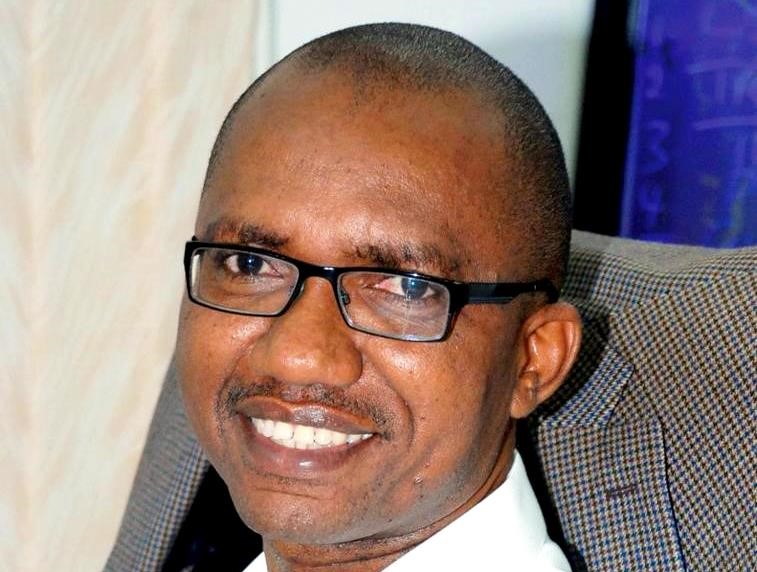
    Azu Ishiekwene

    By Azu Ishiekwene

    Zamfara State Governor, Dauda Lawal, is hardly in the news. Lawal has enough on his plate in a region struggling with banditry and insurgency, and in a state whose political heavyweights oppose him over political differences.

    He has learned to mind the state’s business, hardly ever throwing stones except when attacked by Abuja politicians who live in glass houses.

    It was, therefore, a surprise last week when he released a viral video that made headlines. Following the increase in banditry in the region, especially in Zamfara and neighbouring Katsina State, which left at least 17 dead in two weeks, the governor said that, left to him, he could end the scourge in two months.

    The question is, how? “I swear to Almighty Allah,” Lawal said, “Wherever a bandit leader is in Zamfara, I know. And if he goes out, I know. With my mobile phone, I can show you where these bandits are today. But we cannot do anything beyond our powers.” If only he had the power to give direct orders, the governor said, he would end banditry in Zamfara in 60 days.

    Complicated reality

    The reality is a little more complicated. Depending on your source, an estimated 15,000 to 20,000 people have been killed in banditry and insurgency-related fatalities in the North West alone in the last 10 years. This is on the scale of lives lost in the Kosovo War, or 40 percent of the toll in Sierra Leone’s 10-year civil war, even though non-state actors are waging banditry.

    The numbers hardly reflect the suffering of thousands of children whose parents have been killed, homes without mothers or loved ones, individuals permanently injured or displaced, sources of livelihood destroyed, futures ruined, and a present lived in fear and uncertainty.

    Lawal once told a story of how some bandits, whose plans were intercepted based on intelligence, managed to get away before he could get through the Byzantine chain of military command in Abuja. He is right to be frustrated by a system that reduces governors to figureheads in the face of severe security challenges, because we’re afraid that governors could abuse state police.

    Sociology of banditry

    Yet, it would take more than technology and decentralised policing to curtail the menace. That is what an August 2025 study by the Danish Institute of International Studies suggests. The findings, which were just released, are worth considering.

    The study by Peer Schouten and Barnett James, the former a senior researcher, and the latter, a PhD student at Oxford University, is entitled “Divided, They Rule? The Emerging Banditry Landscape in Northwest Nigeria.” It examines the sociology of banditry, its roots and evolution, and how it has displaced jihadists who were predominantly a Sahelian franchise in scale and impact.

    The usual narrative frames bandits, jihadists, and religious extremists as “criminals and terrorists.” The study, however, takes a nuanced approach that offers an alternative view, distinguishing banditry from jihadism or other criminal franchises mainly based on ideology, geography and modes of operation.

    It says, for example, that, “Unlike jihadist groups, bandit networks operate without ideological ambitions, but significantly influence rural governance, challenging state authority through both roving predation and stationary extortion.”

    If it smells like banditry….

    I often use the terms interchangeably. If they talk like bandits, strike like bandits, and leave behind a trail of sorrow, tears and blood, then, for me, they are bandits, jihadists, criminals and terrorists. The point of the study, however, is that without establishing motive and methodology, response and policy could miss the mark.

    To speak Lawalese, the Zamfara State governor or any governor in Nigeria’s North West, who is interested in tackling insecurity, might need more than executive authority to succeed. They would need, in addition to state police (which I support fully), to understand the social psychology of the enemy they’re dealing with. Otherwise, we might be worse off in two times twenty months or whatever time Lawal might need.

    This study shares how, through a pattern of “roving predation and stationary extortion,” bandits have, since 2011, created a system of governance “that echoes, in significant ways, precolonial patterns of rule and extraction in the region.”

    Echoes of the Caliphate

    In plain language, the study says that banditry, which has evolved over the last nearly 15 years, especially, is reproducing a distinct feature of the Caliphate system in Northern Nigeria, which, among other things, depended heavily on “raiding and tribute-taking” for its expansion and sustenance.

    “Today’s banditry,” the study says, “reproduces these patterns, with modern motorcycles and mobile phones replacing the horses and single-shot muskets of the 19th century. While the tools have changed, the underlying dynamics of rule and accumulation remain strikingly familiar to the affected rural communities.”

    The research does not assume that the bandits are all Fulanis, as was the case mainly in the 18th and 19th centuries. Or that they harbour the state-building aspiration or religious zeal of the jihadists of the time. It, however, observes recurrent patterns of authority and legitimacy in these regions similar to the Caliphate model.

    Hydra-headed monster

    Lawal agonised about missing a prime bandit target because of command bureaucracy. The military, on its part, has also targeted prominent bandit leaders, the most recent successes being Baleri Fakai and Halilu Buzu.

    These were significant strides in the battle against banditry. This study, however, likens the bandit network to a hydra-headed monster. It’s a loose confederacy that adapts and replicates itself even after removing the current leader. They are designed to survive the loss of their leaders, whose elimination is sometimes unwelcome by the host community.

    Why? Last year, when Halilu Sububu was killed, for example, one source told the researchers that, “It was an error to kill Buzu (Halilu). He started doing good things, telling bandits to stop harassing the Fulani. He had a positive influence in Zamfara, Kaduna, Katsina, Kebbi and Sokoto.”

    In other words, in a strange mutational trajectory, bandits are transforming from “criminals and terrorists” to “carers,” filling the void of absentee governments. Call it the Stockholm Syndrome, if you like, but those who wondered why bandit-in-chief Kachalla Ado Aliero was crowned Sarkin Fulani in Zamfara in 2022 need not wonder anymore.

    And those rightly outraged by the foolishness of making peace deals with bandits instead of bombing them to dust might wish to pause. As they say in South West Nigeria, when the leaf has wrapped the soap bar for too long, they become indistinguishable.

    Quoting an instance in a pathetic case, the study says, “In 2024, kachalla Najaja’s men (bandits) punished Anka town (in Zamfara) for harbouring vigilantes by preventing its residents from harvesting millet, using starvation as a tool to force submission. Desperate villagers ultimately negotiated ‘peace’ by paying N50 million. One negotiator reflected, ‘Our local ruler forbade us to negotiate, but he could not offer us protection nor guarantee us food.’”

    Loot big, die poor

    What do the bandits do with the money? They store their “wealth,” mainly from tributes, ransom cash, and rustled cattle, in fungible forms, which they use to purchase more cattle, but especially to buy more arms, a significant status symbol. Like the slave-holding elite of precolonial Africa, the prestige of bandit leaders is sometimes measured in their retinue of fighters, abductees or dependents. They make no pretence to egalitarianism. The leader enjoys a chunk of the loot.

    Yet, despite their legendary fame, a Kebbi hunter tells the researchers, “They have few worldly possessions” and die poor.

    The study concludes that banditry happens in the absence of sustained commitment to rural development, the creation of economic opportunity, and institutional reform. It’s thought-worthy for any government interested in a long-term solution.

    Ishiekwene is Editor-In-Chief of LEADERSHIP and author of the book Writing for Media and Monetising It.

    Editor
    • Website

    Related Posts

    Africa and the deadly dust from Iran by Azu Ishiekwene

    March 5, 2026

    Metabolism does not tolerate stagnation by Mukaila Kareem

    March 2, 2026

    From Tehran to Zamfara: The cost of abandoning diplomacy, by Cheta Nwanze 

    March 2, 2026
    Editors Picks

    Otti clears decade-long pension arrears for Abia ADP retirees

    March 6, 2026

    Boundary crisis: Ebonyi orders destruction of shrines in Amasiri

    March 6, 2026

    Rivers monarch to Otti: Your successor will have big shoes to fill

    March 6, 2026

    Okonjo-Iweala canvasses fresh ideas to revitalise WTO ahead of MC14

    March 6, 2026
    Latest Posts
    Abia

    Otti clears decade-long pension arrears for Abia ADP retirees

    Ebonyi

    Boundary crisis: Ebonyi orders destruction of shrines in Amasiri

    Abia

    Rivers monarch to Otti: Your successor will have big shoes to fill

    Subscribe to Updates

    Get the latest news from Ikenga Online.

    Advertisement
    Demo

    IkengaOnline is a publication of the Ikenga Media & Cultural Awareness Initiative (IMCAI), a non-profit organisation with offices in Houston Texas and Abuja.

    We're social. Connect with us:

    Facebook X (Twitter) Instagram YouTube LinkedIn WhatsApp RSS
    • Home
      • Igboezue
      • Hall of Fame
      • Hall of Shame
    • News
      • Other States
      • National
      • International
      • Interviews
      • Personalities
    • Abia
    • Anambra
    • Ebonyi
    • Delta
    • Enugu
    • Imo
    • Rivers
    • Politics
    • Opinion & Editorial
      • Editorial
      • Columnists
        • Osmund Agbo
        • Chido Onumah
        • Uche Ugboajah
        • Hassan Gimba
        • Edwin Madunagu
        • Rudolf Okonkwo
        • Azu Ishiekwene
        • Osita Chidoka
        • Owei Lakemfa
        • Chidi Odinkalu
      • Opinion
    • Special Reports
    • Art & Entertainment
      • Nollywood
      • Music
      • Ikengaonline Literary Series (ILS)
      • Life
      • Travels
    • Sports

    Subscribe to Updates

    Get the latest news from Ikenga Online.

    Facebook X (Twitter) Instagram LinkedIn WhatsApp RSS
    © 2026 Ikenga Online. Ikenga.

    Type above and press Enter to search. Press Esc to cancel.