

Our Reporter, Abuja
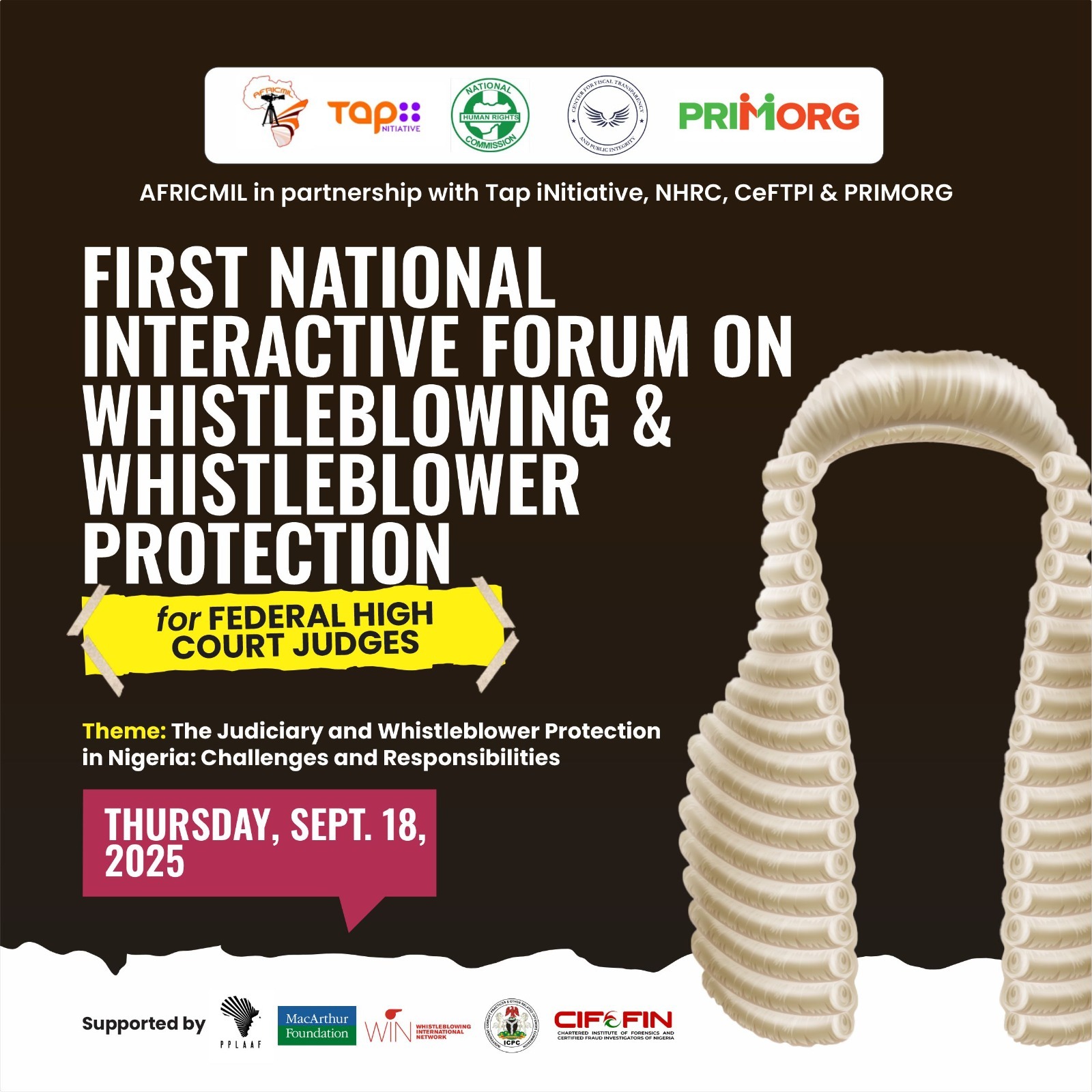
The African Centre for Media and Information Literacy (AFRICMIL) will on Thursday, September 18, convene Nigeria’s first-ever National Interactive Forum for Judges on Whistleblowing and Whistleblower Protection in Abuja.
Organised in partnership with Tap iNitiative, the National Human Rights Commission (NHRC), Centre for Fiscal Transparency and Public Integrity (CeFTPI), and Progressive Impact Organisation for Community Development (PRIMORG), the forum is themed: “The Judiciary and Whistleblower Protection in Nigeria: Challenges and Responsibilities.”
The initiative is described as a landmark effort to strengthen judicial understanding of the courts’ role in safeguarding whistleblowers and interpreting emerging legal frameworks around whistleblowing. It is also part of AFRICMIL’s ongoing campaign for a dedicated whistleblower protection law in Nigeria.
The one-day event will draw participants from across the country, including select Federal High Court judges from all six geopolitical zones, heads of anti-corruption agencies, the police, civil society representatives, and the media.
Anthony Ojukwu, a Senior Advocate of Nigeria (SAN) and Executive Secretary of the NHRC, will deliver the keynote address, after which a five-member panel will reflect on the theme and share perspectives.
AFRICMIL Coordinator, Dr. Chido Onumah, in a statement ahead of the event, underscored the importance of judicial involvement in whistleblower protection.
“The judiciary is the cornerstone of any effective whistleblower protection system. As we continue to advocate a robust legal framework, it is imperative that our judges are equipped with the knowledge and perspective to handle whistleblower cases with wisdom and fairness,” Onumah said.
The forum will explore critical issues such as balancing transparency with national security, protecting the anonymity of whistleblowers, adjudicating cases of retaliation, and developing a harmonised approach to whistleblower litigation.
AFRICMIL expressed concern that, nine years after Nigeria introduced the whistleblower policy under the Presidential Initiative on Continuous Audit (PICA), the absence of a legal framework has eroded public confidence. While the policy initially led to significant recoveries of stolen funds, many citizens have since been discouraged from reporting corruption due to the lack of protection against reprisals.
“A well-informed judiciary is essential for the success of any whistleblower legislation. The enactment of a law is only the first step. Its effectiveness will ultimately be determined by the courts,” Onumah added, urging the government to fast-track the process of transmitting a draft whistleblower protection bill to the National Assembly.
The event is supported by the Platform to Protect Whistleblowers in Africa (PPLAAF), MacArthur Foundation, Whistleblowing International Network (WIN), the Independent Corrupt Practices and Other Related Offences Commission (ICPC), and the Chartered Institute of Forensics and Certified Fraud Investigators of Nigeria (CIFCFIN).
