

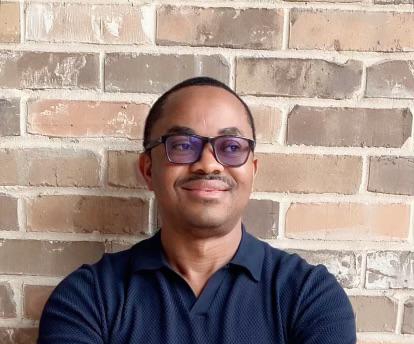
I dusted off my dad’s pet name for me, Mondus, and paired it with his own name, Fidelis. Voilà, Osmund Agbo became Mondus Fidelis. It sounded classy, almost like a Roman senator or a luxury brand of whatever.
I hadn’t heard of Dauda Kahutu Rarara until my friend Farooq Kperogi wrote about him on Facebook. Apparently, he’s a highlife maestro whose music has captivated northern Nigeria and earned him a massive following. But Farooq wasn’t writing about “Aisha,” or any of the singer’s big hits, which has racked up millions of views and streams across platforms. Instead, he was zeroing in on one of his long-standing pet peeves: academic fraud. Farooq can sniff out one from a mile away.
But what struck me most about the story wasn’t the absurdity of counterfeit honors. It was the poetry of his name: Dauda Kahutu Rarara. Since the moment I heard it, I haven’t been able to get it out of my head. I find myself muttering it under my breath, turning it into a tune so lyrical it could headline its own concert. In a country where people fake degrees, fake accents, and fake lifestyles, this thirty-nine year-old gifted artist has at least given us one thing real; a name that sings.
Names do that to us. They lodge in the memory. They carry power, history, and mystery. They can make us laugh, command respect, or arouse curiosity. They can even decide how the world treats us.
I learned this the hard way.
My first job in the U.S. was as a telemarketer. Here was a fresh-off-the-boat “Johnny-Just-Come” with a heavy Nigerian accent trying to sell things over the phone to Americans who already struggle to understand their closest neighbors, let alone me. Needles to say if wasn’t a walk in the park.
My name didn’t help. Every introduction turned into a Tower of Babel summit.
“Hello, this is Osmund Agbo…”
“Oh, hi Usman!”
“No, Osmund.”
“Osmondo?”
“No, Osmund!”
By the time I’d finished explaining that I wasn’t Muslim, Hispanic, or from Mars, the customer had either hung up or lost interest.
As a matter of survival, I decided it was time to rebrand myself. After all, in America, this is practically a rite of passage. Countless Asia immigrants slip into new identities the moment they arrive: Wei becomes Wayne, Chen morphs into Shawn, and so on. If they could do it, why not me? I also reasoned that if Beyoncé can transform into Sasha Fierce and The Rock can reinvent himself as Dwayne Johnson again, then surely Osmund Agbo could evolve into someone else; someone easier for strangers to remember, but most importantly, easier for me to sell and earn my wage.
I dusted off my dad’s pet name for me, Mondus, and paired it with his own name, Fidelis. Voilà, Osmund Agbo became Mondus Fidelis. It sounded classy, almost like a Roman senator or a luxury brand of whatever.
Clients responded better. My supervisor, a middle-aged African-American named Patricia, however, wasn’t impressed. She thought I was assuming a different identity. I tried explaining it was just marketing, not witness protection but she didn’t budge. Frustrated, low on sales, and forbidden from being creative, I quit. But here’s the thing: that experiment reinforced something I already knew; names matter.
Names are not just labels. They’re compressed biographies, miniature brands, and, in show business, the ultimate marketing tool. A name can be a verbal costume that makes you memorable, exotic, or larger than life.
That’s why so many stars ditch their birth names for something shorter, sharper, or sexier. Caryn Elaine Johnson morphed into Whoopi Goldberg, a name with comedic bounce. Eric Marlon Bishop became Jamie Foxx, a slyly gender-neutral name that helped him get stage time. Tara Leigh Patrick transformed into Carmen Electra, a name that practically crackles with sultry voltage.
Sometimes the change is about pronunciation, sometimes about image. A stage name can evoke glamour, mystery, humor, or even danger. It gives an artist a blank slate. A chance to be bolder and freer than the person behind it. From Marilyn Monroe (born Norma Jeane Mortenson) to Elton John (born Reginald Kenneth Dwight), reinvention-by-renaming is practically a rite of passage in showbiz. In that world, a name isn’t just a name; it’s an invitation.
And it isn’t only Hollywood. Across Nigeria, musicians, actors, and comedians routinely adopt stage names. It’s part marketing, part reinvention, part self-mythology. In a country where social mobility can be tough and identities are often locked into tribe, religion, or region, a name can be a passport to a wider audience. It’s a way of saying: “Don’t box me in. This is who I choose to be.”
Which brings me back to Dauda Kahutu Rarara. In a space where so many people strive to sound urbane, polished, and untraceable, he’s managed to do the opposite. His name is unabashedly local, musical, and unforgettable. It has the rhythm of Hausa praise poetry. It has the bounce of a chorus. It doesn’t apologize for its roots; it celebrates them.
Forget the dubious doctorate. Forget the fake university calling the fake degree fake. The real story here is that, for all our obsession with titles, the thing that lingers is a name. And sometimes, the name is the brand.
We live in a world obsessed with reinvention. Social media gives everyone a stage name, a curated persona. Yet the magic of names endures. They shape our first impressions and sometimes our destinies. They’re shorthand for our stories. They can be both masks and mirrors.
When I say Dauda Kahutu Rarara, it rolls off my tongue like a drumbeat. It’s the kind of name you want to chant at a rally or write on a marquee. It’s proof that in a world of artificial honors, some things like a perfectly pitched name don’t need faking.
“What’s in a name?” Shakespeare asked. More than we think. In the end, a name can make you forgettable or unforgettable. It can hold you back or propel you forward. It can be a disguise, a weapon, a prayer, or a song.
For the singer from Katsina, it’s a song. And in a country drowning in fake degrees, that may be the most authentic credential he’ll ever need.
Osmund Agbo is a medical doctor and author. His works include, Black Grit, White Knuckles: The Philosophy of Black Renaissance and a fiction work titled The Velvet Court: Courtesan Chronicles. His latest works, Pray, Let the Shaman Die and Ma’am, I Do Not Come to You for Love, have just been released. He can be reached@ eagleosmund@yahoo.com
