

Our Reporter, Abuja
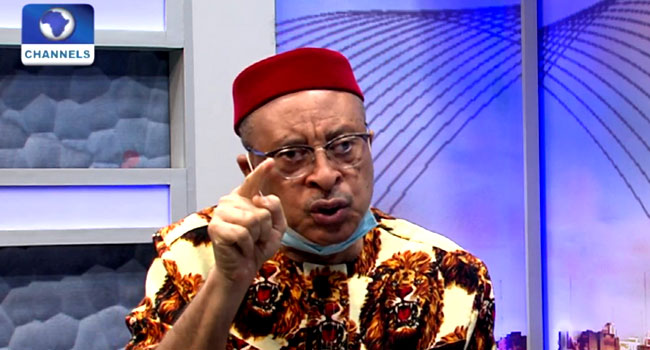
The federal high court in Abuja has struck down the shadow government initiative recently announced by renowned political economist and former presidential candidate, Professor Pat Utomi, declaring it unconstitutional and without recognition under Nigerian law.
Delivering judgment on Monday, Justice James Omotosho ruled that while citizens are entitled to hold government accountable through lawful civic platforms, the establishment of a parallel structure resembling a government is outside the scope of the 1999 Constitution (as amended).
“The Nigerian Constitution vests executive authority solely in the elected President and recognised state institutions,” Justice Omotosho said.
“Any attempt to create a parallel government, however symbolic, has no legal backing and cannot be permitted.”
Mr Utomi had unveiled the idea of a “shadow government” earlier this month, describing it as a civic initiative designed to monitor policies, critique governance, and offer alternative solutions to national challenges. According to him, the project was not intended to usurp state powers but to deepen accountability and public participation in governance.
The plan, however, generated heated debate, with critics arguing that it could create political confusion, undermine state authority, and embolden unconstitutional tendencies. Supporters, on the other hand, hailed it as a democratic tool commonly practised in advanced democracies like the United Kingdom, where opposition parties form shadow cabinets to scrutinise government actions.
By Monday’s ruling, however, the court made clear that Nigeria’s constitutional framework does not make provision for such an arrangement. The decision effectively restrains Mr Utomi and his associates from proceeding with the initiative in its current form.
The judgment is expected to spark fresh conversations on the limits of civic innovation in Nigeria’s democracy, particularly as citizens and civil society groups continue to push for stronger accountability mechanisms in the face of governance challenges.
Neither Mr Utomi nor his legal team had issued an immediate reaction to the ruling as of press time.
