

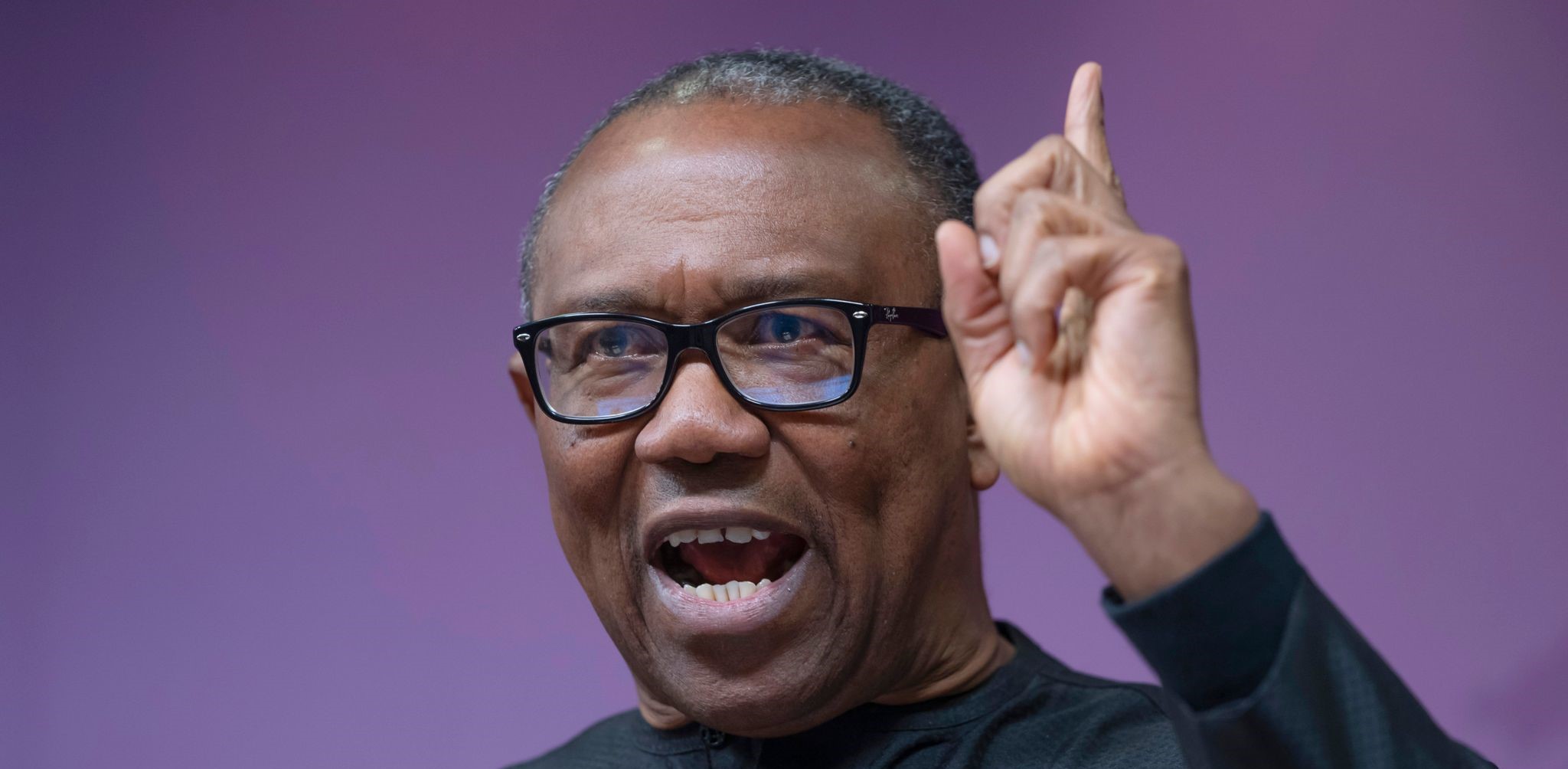
Our Reporter, Abuja
The Presidential Candidate of the Labour Party in the 2023 general elections, Mr. Peter Obi, has urged the Federal Government to decentralise port development across Nigeria, warning that concentrating maritime infrastructure in Lagos undermines national economic growth and equity.
Obi, who made the call in a statement on Friday titled, “The Imperative of Diversifying Port Development in Nigeria,” said while the Federal Government’s recent approval of $1 billion (₦1.5 trillion) for the modernisation of the Apapa and TinCan Island Ports in Lagos was commendable, it highlighted the “longstanding imbalance” in Nigeria’s infrastructure investment.
He stressed that the nation’s port development strategy must be guided by accountability, transparency, and fairness to all regions.
“Nigeria’s infrastructure investment remains excessively concentrated in Lagos, often at the expense of other strategic ports such as Warri, Port Harcourt, Calabar, and Onne,” Obi said.
“If fully developed, these ports could enhance productivity, drive trade, create jobs, and open new economic corridors that would lift millions out of poverty across the federation.”
Citing examples from countries such as Vietnam, Indonesia, South Africa, Egypt, Morocco, Algeria, and Ghana, the former Anambra governor noted that successful economies decentralised port operations to ensure balanced access to trade and development.
“No country seeking to maximise its blue economy concentrates all maritime activities in a single city,” Obi argued.
“Decentralisation reduces congestion, improves logistics, enhances national security, and promotes balanced economic growth.”
He lamented that over 70 per cent of Nigeria’s port activities are still concentrated in Lagos, resulting in chronic congestion, high demurrage costs, environmental degradation, and logistical bottlenecks that discourage investors and inflate prices nationwide.
The former governor maintained that revitalising other ports — including those in Warri, Port Harcourt, Calabar, and Onne — was not merely an infrastructural necessity but a national imperative.
“Developing other ports would decongest Lagos, reduce shipping costs, attract investment, create employment, and stimulate regional economies,” he stated.
Obi also emphasised the need for broader reforms in the maritime sector, including tackling corruption, cutting bureaucracy, and adopting modern technology to achieve a seamless, paperless port system.
He added that if properly managed, the Lagos modernisation project could serve as a model for a comprehensive maritime transformation that benefits all regions of the country.
“Now more than ever, Nigeria must rebuild with fairness, guided by equity, integrity, and a clear vision to transform our nation from one of consumption to one of production and shared prosperity,” Obi concluded.
