

Ike Nnachi, Abakaliki
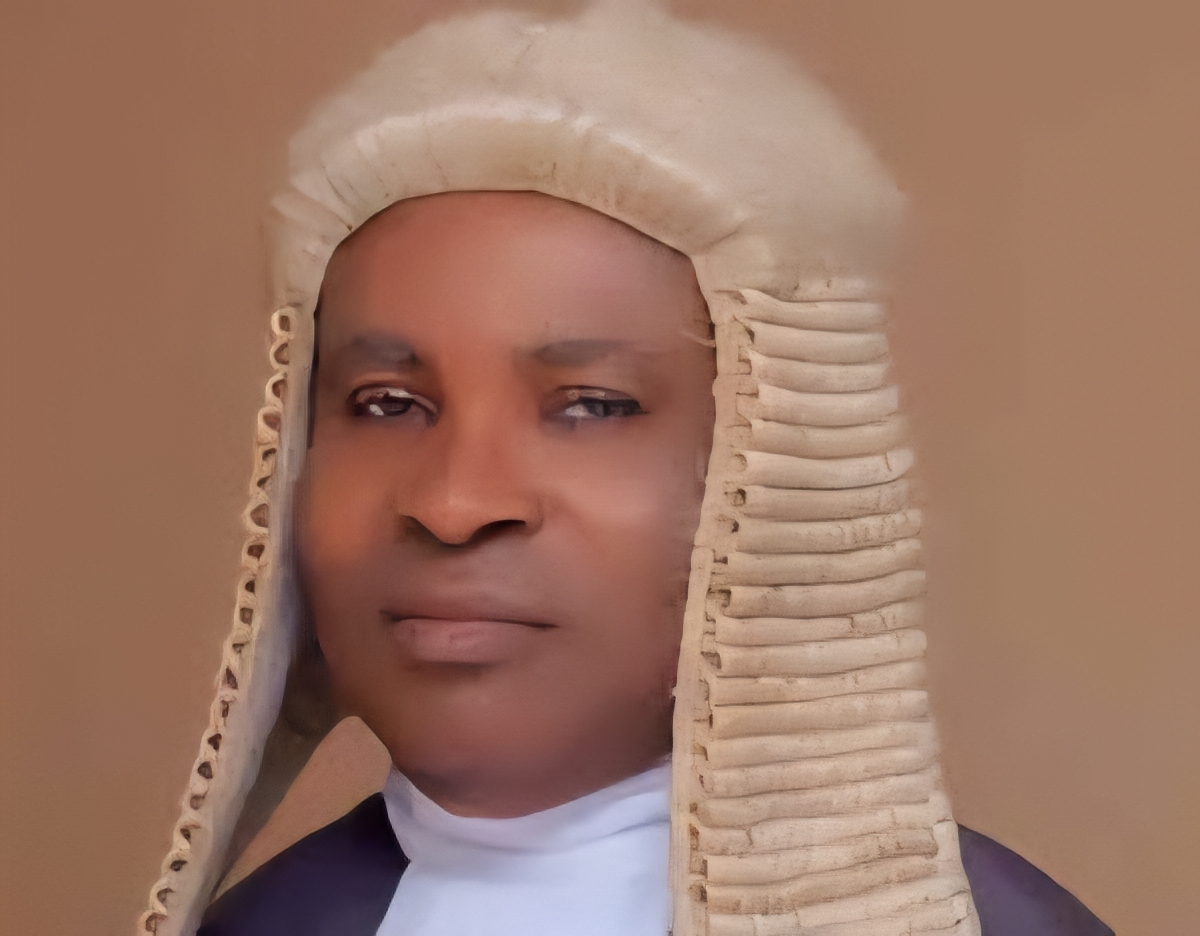
The Chief Judge of Ebonyi State, Hon. Justice Elvis Ngene, has expressed concern over the persistence of corruption in Nigeria’s justice delivery system, warning that it threatens fair hearing and public access to justice.
Justice Ngene gave the warning on Friday during a special court session to mark the opening of the 2025/2026 legal year of the Ebonyi State Judiciary, held at the High Court complex, Abakaliki.
According to him, corruption within the judiciary manifests through bribery, manipulation, and the perversion of justice for monetary or political gain — practices that continue to erode public confidence in the courts.
“There is no denying the fact that integrity issues do exist within the justice system in Nigeria,” he stated.
“Public perception of corruption among judicial and court officers discourages some people from seeking justice through the courts, preferring to settle disputes elsewhere.”
The Chief Judge, however, commended the National Judicial Council (NJC) for its disciplinary efforts in addressing unethical conduct among judicial officers.
Quoting the Court of Appeal’s decision in FRN v. Ngamjiwa (2017) LPELR-43391 (CA), Justice Ngene reminded judges to remain “true and faithful to the Constitution and the law.”
“All of us at the Bench must maintain the highest ethical standards, as any act of misconduct undermines the credibility of the entire justice system,” he said.
“Any slight violation of the Code of Conduct for Judicial Officers constitutes judicial misconduct.”
Ebonyi Judiciary Commended for Integrity
Justice Ngene praised the Ebonyi State Judiciary for maintaining what he described as “an impeccable record of chastity and integrity.” He assured that judges and magistrates in the state would continue to uphold these values as they advance into the new legal year.
Infrastructure and Institutional Growth
The Chief Judge also highlighted ongoing infrastructural and institutional developments across the state’s judicial divisions.
He revealed that the new edifice housing six magistrate courts at the Ochudo Centenary City is nearing completion, while High Courts 1 and 2 in Abakaliki have been completed and are awaiting commissioning alongside the expected appointment of a new judge.
Justice Ngene further disclosed that a new High Court complex is under construction in Ohaozara, with plans to extend similar projects to other judicial divisions.
Tackling Delays and Underfunding
He identified underfunding and trial delays as major impediments to access to justice, describing them as “the biggest ailments afflicting the justice system.”
The Chief Judge called for renewed investment in reforms such as strengthening specialized courts, including Small Claims and Family Courts, to ensure cost-effective justice delivery.
“Improving access to justice is not a challenge to be fixed singlehandedly by any one body,” he said.
“We must work collaboratively with the Executive, Legislature, Correctional Institutions, Civil Society Organizations, the Academia, and individuals.”
Call for Judicial Autonomy
Reiterating the call for judicial autonomy, Justice Ngene lamented the inadequate funding of the judiciary, which, he said, often leaves it “at the mercy of the pocket.”
“The drum of judicial autonomy has been beaten for so long that the melody seems to have been doused, but we cannot give up on it,” he declared.
He, however, commended successive administrations in Ebonyi State — particularly the current government led by Governor Francis Ogbonna Nwifuru — for their consistent support of the judiciary.
According to him, such investment has elevated the state’s judiciary “to an enviable height in the comity of judiciaries in Nigeria.”
Looking Ahead
Justice Ngene assured that the judiciary would continue to embrace digitization and promote rigorous legal education to align with global trends.
“As the world gradually becomes digitized, our attention must focus on more rigorous legal education and innovation,” he said.
He concluded by reaffirming the Ebonyi Judiciary’s commitment to integrity, transparency, and efficiency in the dispensation of justice.
