

Lawrence Ndubeze, Awka
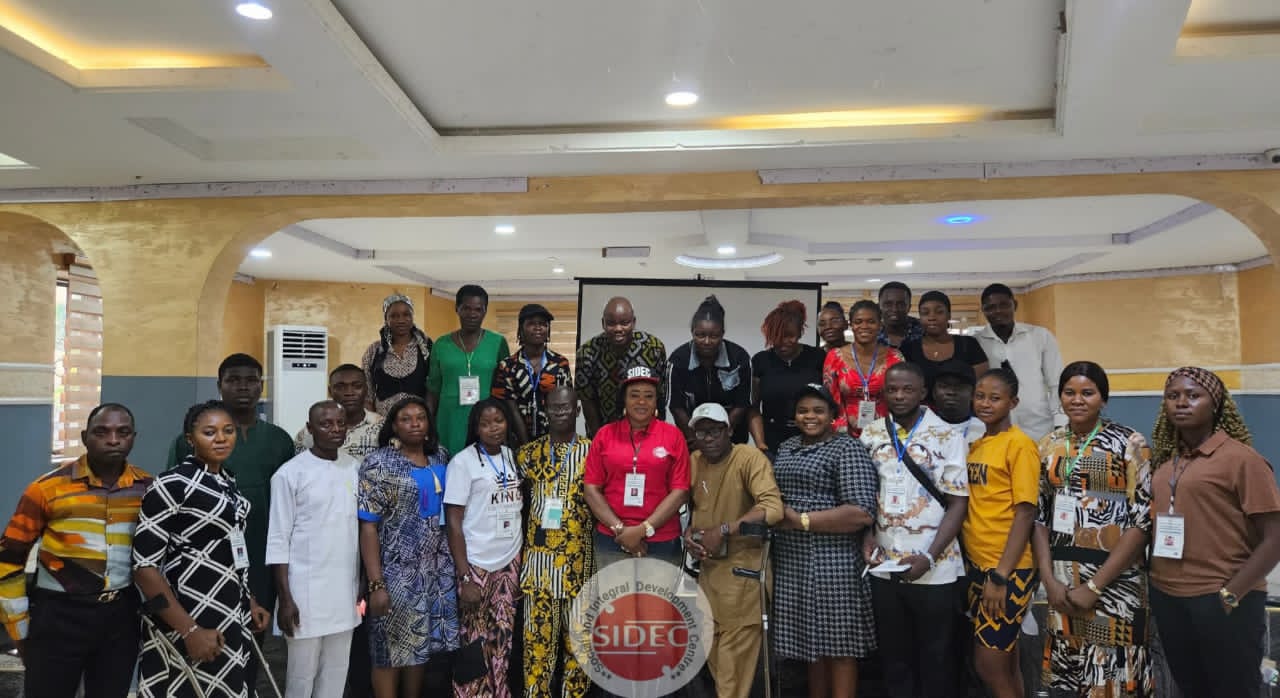
The Social and Integral Development Centre (SIDEC) has trained its election observers ahead of their deployment across all 21 local government areas of Anambra State for Saturday’s governorship election.
SIDEC is among the 114 domestic observer groups accredited by the Independent National Electoral Commission (INEC) for the off-cycle poll.
Addressing the trainees, SIDEC Executive Director, Ugochi Ehiahuruike, charged the observers to maintain strict neutrality and adhere to all regulations guiding election observation.
“As our observers, you must be mindful of your conduct. We do not want to hear that you are involved in anything outside the task of observing this election,” Ehiahuruike cautioned.
“Remember, you are observers, not monitors. Your role is to observe and report, not interfere with the work of INEC officials.”
She said SIDEC expects comprehensive reports on the participation of women, youths, and persons with disabilities (PWDs), as well as the conduct of INEC ad-hoc staff and security personnel — particularly in their treatment of vulnerable groups.
Ehiahuruike also tasked the observers to document and report incidents of vote buying, violence, or any other electoral malpractices.
In a presentation on combating fake news and misinformation, the Regional Officer and ECOWAS Liaison Lead at the West Africa Democracy Solidarity Network (WADEMOS), Dr. Austin Aigbe, urged the observers to help counter misinformation that could disrupt the electoral process.
“Whenever you encounter information you cannot independently verify, share it with SIDEC for prompt fact-checking. We will release verified updates to the public,” Aigbe said, stressing that fake news is often weaponized to mislead voters.
Also speaking, Comrade Ugochukwu Okeke, Chairman of the Joint National Association of Persons with Disabilities (JONAPWD) in Anambra State, urged observers to pay close attention to how PWDs are treated at polling units.
“There is something we call priority voting — PWDs, the elderly, and visibly pregnant women should be allowed to vote first,” he said.
“We also want you to note whether assistive materials like magnifying glasses for persons with albinism, braille ballot papers for the visually impaired, and sign language interpreters for the hearing impaired are available.”
Participants at the training pledged to carry out their duties with integrity, patriotism, and commitment to deepening democracy in Anambra State and Nigeria.
