

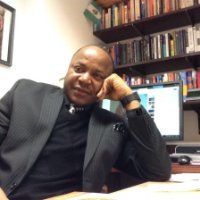
By Vitus Ozoke
The day Nigeria finds accountable leadership is the day its so-called religious problems will fade into history. The day Nigerians stop kneeling before corrupt leaders as they kneel before God, that is the day the chains will break…”
There is a lie that has stalked Nigeria since independence – that our greatest enemy is religious division. It is a myth carefully designed, polished, and perpetuated by those who benefit from chaos: the political elite. Religion has been made the convenient scapegoat for every outbreak of violence, every act of terror, every national fracture. But look closely, and the real puppeteers emerge – the politicians who weaponize and exploit faith to mask their failures and feed their ambitions. For decades, the Nigerian political class has fed the nation a dangerous illusion: that Muslims and Christians are each other’s enemies. It is a purposeful falsehood – one that keeps the people divided while the ruling political elite loot in peace.
The truth is that Nigeria’s Muslim and Christian populations have coexisted for centuries, with deep cultural and economic interdependence. Nigerians across faiths share common values – resilience, hospitality, and a strong drive for survival. The average Nigerian, Muslim or Christian, does not wake up in the morning thinking about jihad or crusades. They wake up thinking about survival – how to buy garri, how to keep their generator running, how to escape the nightmare of joblessness and insecurity, how to pay rising rent, and how to stay alive in a country where life is cheap and leadership is a burden. This pragmatic coexistence contradicts the narrative of endemic religious hatred. When a trader in Kano greets a customer in Enugu, or a driver in Ibadan picks up a passenger from Sokoto, there’s no religious animosity in that transaction. There’s only hunger and hustle – the shared misery of a people betrayed by their leaders.
Yet, in this misery, religion has become the last refuge. With no functioning government to offer hope, faith becomes the anesthetic that dulls the pain. Churches and mosques have taken the place of what the government should have been. They have become the de facto social welfare agencies, providing a safety net in a failed state – feeding the poor, promising miracles, offering hope where government has fallen short. The pulpit now feeds the poor that the government forgot, and the imam comforts the broken that the system destroyed. It is this structural vacuum and desperation that politicians exploit under the guise of charity, effectively buying loyalty through pious performance in a spiritual dependency that has made the people pliable and easily manipulated by politicians who know how to speak the language of faith when elections draw near. The result is a nation where faith has been turned into a political currency – traded by elites and consumed by the desperate.
Nigeria’s post-independence history demonstrates a consistent pattern: politicians instrumentalize religion to achieve political legitimacy. Every election season, the shameless masquerades emerge from their gated woods, and we see the same grotesque theatre: politicians in agbada and babanriga, suddenly rediscover faith, crossing from mosque on Friday to church on Sunday with staged humility, quoting scripture they neither believe nor understand, and pretending piety they do not possess. They distribute prayer mats and hymn books, not to honor God but to mobilize votes and marginalize their opponents. They turn faith into a campaign strategy, preaching peace in public while funding chaos and violence in secret. When the ballots close, they return to their barricaded villas, leaving the people to quarrel and kill themselves over adulterated doctrines while they divide the treasury and preside over policies that perpetuate inequality and economic stagnation, the true engines of unrest.
The financiers behind religious violence in Nigeria are not imams or pastors. They are rarely true religious extremists in the theological sense. They are not men of God – they are men of power. They are politicians, opportunists, and power brokers who fund sectarian violence as a diversionary tactic. They understand the formula: divide the poor by faith, control them through fear. Stoke the flames of difference and watch the masses burn themselves while you harvest votes and contracts. The preachers who incite division do so not out of theology but out of economics. Every mob, every riot, every sectarian flame, has a politician behind it who profits from chaos. It is not faith that fuels Nigeria’s bloodshed; it is politics dressed in the robe of faith. The blood of Nigerians shed in the name of religion is not holy blood – it is political blood. It is the blood of manipulation, not belief. It is this manipulation of faith that transforms legitimate social grievances into religious conflicts.
And now, even the world has joined the deception. When President Donald Trump thundered about sending American troops to Nigeria to stop the “killing of Christians,” he did more than ignite diplomatic outrage – he exposed how deeply the world misunderstands Nigeria’s tragedy. His threat, cloaked in moral outrage, plays perfectly into the same false script Nigerian politicians have used for decades: that the country’s crisis is a holy war. It is not. The bloodshed in Nigeria is not about Christians versus Muslims; it is about citizens versus a failed state – hardworking citizens versus a heartlessly corrupt political class. Indeed, when Hajiah Naja’atu Mohammed revealed that when she asked Bola Tinubu what blueprint he had for the insecurity and killings in the North, his blunt response was, “I’ll not have a blueprint because I’d be stepping on too many toes – they might kill me.” That’s not religion; that’s politics born out of cowardice.
The politicians who instrumentalize religious divisions in Nigeria do not act out of zealotry – these men are far too satanically corrupt to be remotely genuinely religious. They fund and fan the flames of faith as a subterfuge for political violence. They exploit faith as a tool of control. They politically manufacture and maintain a government system that profits from division, poverty, and patronage. It is all politics – cynical, cold, calculated politics. So, by misinterpreting our suffering as a religious conflict, Trump and Washington have now joined the chorus of those who weaponize faith while ignoring the real culprit – a political elite that has turned Nigeria into a slaughterhouse of poverty, corruption, and neglect.
Let me state this clearly: Nigeria does not need American boots on its soil. It needs leaders in its government with a modicum of conscience. Donald Trump’s sudden moral outrage over “Christian persecution” in Nigeria is not driven by any genuine empathy – it is strategic ignorance disguised in bogus diplomacy. Truth be told, Donald Trump does not give a flying fig about “shithole” Nigeria or its Christian population. A man who would send $40 billion of American taxpayers’ dollars to bail out Argentina because of his personal friendship with its leader, but would refuse to fund food stamps for 42 million poor and starving Americans, in defiance of court orders, is not an exemplar for humanitarian empathy and Christian ethos. It’s all politics on both sides of this grotesquely perfidious performance.
But if Washington truly wants to help, it should stop gratuitously echoing the lies of Nigerian politicians who hide their greed behind religious sentiments. The same politicians who admitted they cannot even develop a security blueprint for fear of “killing toes” are hardly defenders of faith – they are defenders of corruption. They do not serve religion; they serve self-interest. The problem in Nigeria is not Islam, not Christianity, not religion – it is egregious leadership. Sending troops to Nigeria would not end the killings; it would only embolden those who profit from division. What Nigeria needs is not foreign soldiers but a thorough political cleansing – a comprehensive, General Jerry Rawlings-style purge of the corrupt souls who have hijacked both power and faith.
Again, and at the risk of sounding like a broken record, Nigeria’s problem is not doctrinal – it is systemic. Admittedly, religion occupies a central place in Nigeria’s social consciousness, but its influence in national conflict is often exaggerated and misrepresented. While sectarian tensions appear recurrent, empirical analysis shows that these tensions are rarely theological. Instead, they are politically orchestrated phenomena, designed to distract the populace from the structural failures of leadership that only serve to consolidate elite power and control.
So, Nigeria’s real problem is leadership. It has always been leadership. Our so-called leaders are egregiously corrupt, spectacularly inept, and perpetually unrepentant. They weaponize faith to hide their incompetence. They drape their greed in the garments of religion and turn the pulpit into a platform for propaganda. Nigeria is a country where public office is a private business, and where failure carries no consequences. Our roads are death traps, our hospitals are morgues, our schools are ruins, yet our politicians preach unity and development as though words could fix what greed has destroyed.
Until Nigeria addresses its leadership problem, religion will continue to serve as a mask for evil. We must unmask it. The day we stop letting politicians manipulate our faith for personal gain is the day Nigeria begins to heal. When a hungry Muslim and a hungry Christian finally realize that their shared hunger comes from the same source – the ruling elite – the spell will be broken. When impoverished Christians and destitute Muslims see that their true enemy is the same – a system designed to keep them poor, divided, and desperate – then and only then will our mosques and churches join in the same cry for deliverance and freedom, stop being battlegrounds, and become what they were meant to be: sanctuaries of conscience.
For the umpteenth time, Nigeria’s problem has never been religion. It has always been egregiously bad leadership. Religion, in the hands of the political elite, has been transformed into both a shield and a sword – a cover for corruption and a weapon for division. Nigeria’s salvation will not come from a pulpit or a minaret, not from a pastor’s sermon or an imam’s prayer; instead, it will come from its people’s awakening. Nigeria must first confront its governance crisis. Reforms must address corruption, institutional weakness, and elite impunity. The focus must shift from religious tolerance – which assumes inevitable hostility – to social justice, which removes the material conditions that enable elite manipulation. The answer, therefore, is not in silencing faith but in reforming politics.
The day Nigeria finds accountable leadership is the day its so-called religious problems will fade into history. The day Nigerians stop kneeling before corrupt leaders as they kneel before God, that is the day the chains will break. Until then, religion will remain the opium of the oppressed, politics will remain the syringe that injects it, and politicians will remain the conscience-less quacks who kill their helpless patients for personal profit. And if there is any role for religion in all this, may it be that it fuels their speedy journey into hellfire, as it fuels the inferno in that eternal pit of hell. Amen.
Dr. Vitus Ozoke is a lawyer, human rights activist, and public affairs analyst based in the United States. He writes on politics, governance, and the moral costs of leadership failure in Africa.
