

Our Reporter, New York
A professor of Electrical and Electronics Engineering at the Federal University of Technology, Owerri (FUTO), Dr. Micheal Ndinechi, has criticised the inability of Nigerian universities to update their academic curriculum in line with modern global trends.
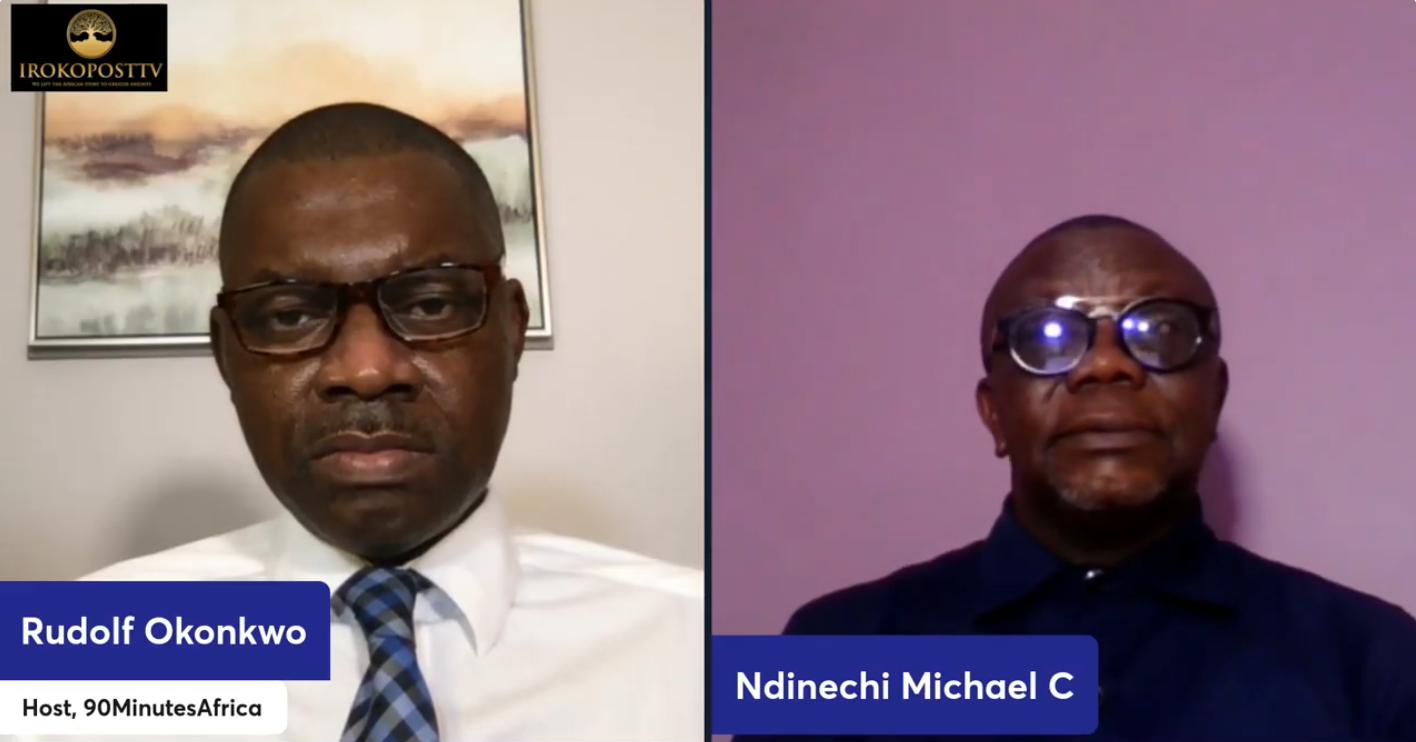
Speaking in an interview with Rudolf Okonkwo on 90Minutes Africa, the former Director of the Electronic Development Institute, Awka, said no Nigerian university is leading in artificial intelligence research because the Nigerian University Commission (NUC) imposes a uniform curriculum on all institutions.
“The university system in Nigeria runs a rigid curriculum,” he said.
“For instance, the Core Curriculum Minimum Academic Standards (CCMAS) captured only introductory concepts of AI because it was introduced just before the global AI explosion. Because of the rigidity of the curriculum, universities don’t have the freedom to change or innovate.”
Ndinechi, a former Dean of the School of Electrical Systems Engineering and Technology, urged the NUC to urgently amend the CCMAS to reflect current knowledge, warning that universities risk “teaching today what expired yesterday.”
He also lamented the poor state of facilities in public universities, describing them as mass-production factories producing poorly equipped graduates. According to him, instead of strengthening existing institutions to deliver quality training, government continues to establish new universities “in every corner of the country.”
Ndinechi further stressed the need to develop artificial intelligence solutions tailored to African challenges, warning that the continent may be left behind if governments fail to support local innovation.
Addressing the controversy surrounding the appointment of Dr. Isa Ali Pantami as a Professor of Cybersecurity at FUTO in 2021, Ndinechi dismissed claims that Vice Chancellor Prof. Nnenna Oti influenced the process.
He clarified that the appointment process had begun before Oti assumed office.
“Her predecessor had already completed the necessary procedures. She only presented the report to the Council for approval, which we granted,” he said, noting that he was a member of the governing council at the time.
He defended the university’s decision to appoint the former Minister of Communications and Digital Economy as a professor, arguing that there was nothing wrong with appointing a serving minister. However, he said he could not confirm whether Dr. Pantami returned to the university after his ministerial tenure ended, as he no longer has access to the relevant files.
