

Our Reporter, Abuja
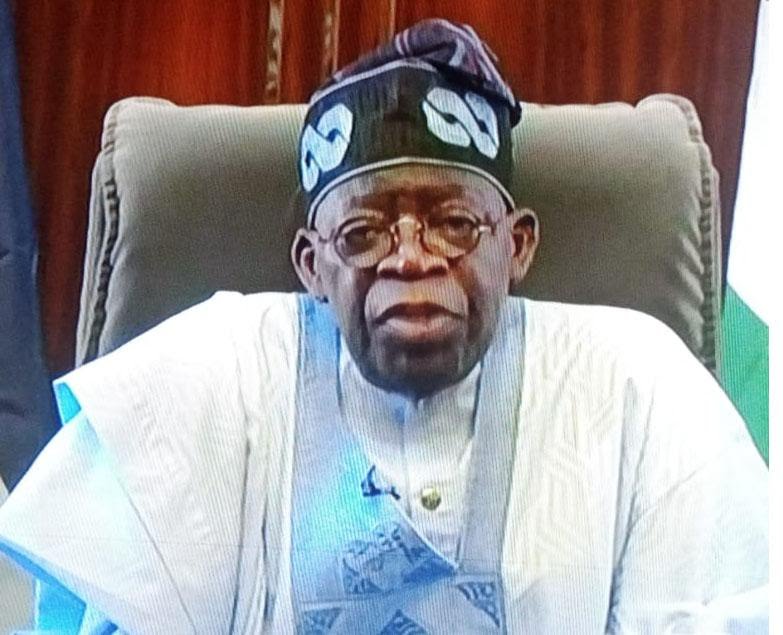
President Bola Tinubu on Wednesday reaffirmed that his directive ordering the withdrawal and redeployment of police officers attached to VIPs, VVIPs and serving ministers remained irrevocable, warning that non-compliance would not be tolerated.
Speaking at the opening of the Federal Executive Council (FEC) meeting at the State House, Abuja, according to a statement issued by Bayo Onanuga, Special Adviser to the President on Information and Strategy, the President told ministers and other senior officials to immediately adhere to the directive, stressing that the Nigeria Police Force must be freed to perform its core constitutional duty.
“If you have any problem because of the nature of your assignments, please contact the IGP and get my clearance,” Tinubu cautioned.
The statement said President Tinubu directed the National Security Adviser, Nuhu Ribadu; Minister of Police Affairs, Senator Ibrahim Gaidam; and the Inspector-General of Police, Kayode Egbetokun, to ensure full enforcement of the order.
Tinubu said police officers were trained to protect the lives and property of citizens—particularly the most vulnerable—and should not be assigned primarily to guard privileged individuals. He announced that the Civil Defence Corps would take over VIP protection responsibilities.
“The National Security and Civil Defence Corps are trained for VIP protection, and they are armed too,” he said, adding that the Minister of Interior, Olubunmi Tunji-Ojo, would oversee the transition.
The President said redeploying police personnel to core security operations had become crucial as the country continues to grapple with kidnapping, banditry and terrorism.
“We face challenges here and there of kidnapping, banditry and terrorism. We need all forces utilised. I know some people are exposed; we will make the exceptions. The Civil Defence is very much around,” he noted.
Tinubu directed that any special assignment requiring police protection must receive prior clearance from the Inspector-General. “NSA, take this very seriously,” he added.
On national agricultural reforms, the President instructed Vice President Kashim Shettima, in his capacity as Chairman of the National Economic Council (NEC), to intensify sensitisation of governors on the implementation of ranching reforms aimed at addressing persistent herder-farmer conflicts.
He also mandated the Minister of Livestock Development, Idi Muktar Maiha, to begin mobilisation for ranching projects, with a focus on conflict-prone areas.
“The Minister of Livestock, see which village or grazing area can be rehabilitated for ranching. We must eliminate this area of conflict and make livestock reform economically viable. The opportunity is there; let’s utilise it. You should emphasise the constitutional requirement that the land belongs to the state,” the President said.
Tinubu stressed that communities and villages facing recurrent conflicts must be prioritised, noting that properly implemented ranching would significantly reduce clashes and protect vulnerable populations.
