
Close Menu
Ikenga Online
    What's Hot

    Right of reply: Why state police is Nigeria’s imperative lifeline by Olukayode Ajulo

    December 14, 2025

    Thoughts on returning safety to Nigeria’s schools by Adaobi Obiabunmuo

    December 14, 2025

    MASSOB condemns EFCC’s arrest of former Anambra governor, Ngige

    December 14, 2025
    Facebook X (Twitter) Instagram
    Ikenga Online
    Facebook X (Twitter) Instagram YouTube
    Donate
    • Home
      • Igboezue
      • Hall of Fame
      • Hall of Shame
    • News
      1. Other States
      2. National
      3. International
      4. Interviews
      5. Personalities
      6. View All

      Breaking: 14 escape death as plane crash-lands at Kano airport

      December 14, 2025

      Bayelsa deputy governor dies after sudden collapse, PDP mourns

      December 11, 2025

      Gov Adeleke joins Accord Party, declares bid for second term

      December 9, 2025

      100 of remaining kidnapped Niger school children regain freedom

      December 8, 2025

      Kanu’s royal father, cabinet write Tinubu, seek presidential pardon

      December 12, 2025

      Ex-labour minister, Ngige docked, remanded in Kuje prison

      December 12, 2025

      Tinubu insists on immediate withdrawal of police orderlies from VIPs, directs strict enforcement

      December 10, 2025

      Senate approves Tinubu’s request to deploy troops to Benin Republic

      December 9, 2025

      Coups: ECOWAS declares state of emergency in West Africa

      December 9, 2025

      Senate approves Tinubu’s request to deploy troops to Benin Republic

      December 9, 2025

      Burkina Faso grounds Nigerian military aircraft over alleged airspace violation

      December 9, 2025

      Tinubu praises Nigerian troops for helping  to foil coup in Benin Republic

      December 8, 2025

      Slash jumbo salaries to pay minimum wage, Bishop tells Tinubu

      June 19, 2024

      Nigeria remains a country in crisis that needs to heal – Chido Onumah

      January 24, 2024

      The Ekweremadus: Obasanjo writes UK court, seeks pardon for them

      April 5, 2023

      I’m coming with loads of experience to re-set Abia – Greg Ibe

      February 1, 2023

      Anambra-born Ugochi Nwizu shines as UNN best graduating doctor with multiple distinctions

      September 29, 2023

      Bulwark for women, girls: Meet Ikengaonline September town-hall guest speaker, Prof Joy Ezeilo

      September 27, 2023

      Rufai Oseni, the most dangerous man on Nigerian TV by Okey Ndibe

      February 13, 2023

      Stanley Macebuh: Unforgettable pathfinder of modern Nigerian journalism by Uzor Maxim Uzoatu

      February 7, 2023

      MASSOB condemns EFCC’s arrest of former Anambra governor, Ngige

      December 14, 2025

      Nwifuru approves N150,000 Christmas bonus for Ebonyi workers

      December 14, 2025

      Breaking: 14 escape death as plane crash-lands at Kano airport

      December 14, 2025

      Police arrest 6 alleged cultists in Enugu, recover firearms, other exhibits

      December 14, 2025
    • Abia

      Kanu’s royal father, cabinet write Tinubu, seek presidential pardon

      December 12, 2025

      Abia’s maternal mortality rate drops from 1,114 to 136 per 100,000 births

      December 12, 2025

      MOUAU VC lauds varsity women for support, says unity remains his greatest legacy

      December 11, 2025

      We’ve restored Abia’s dignity – Gov Otti

      December 11, 2025

      Abia SSG, Prof Kalu, embarks on leave of absence — Otti

      December 10, 2025
    • Anambra

      MASSOB condemns EFCC’s arrest of former Anambra governor, Ngige

      December 14, 2025

      Group vows to shame more sexual offenders in 2026

      December 9, 2025

      PWDs urge Soludo to strengthen disability commission, enforce rights law

      December 6, 2025

      LAP awards 36 Anambra students ₦1m annual full scholarship

      December 6, 2025

      FirstPower electricity announces planned outage in Anambra

      December 5, 2025
    • Ebonyi

      Nwifuru approves N150,000 Christmas bonus for Ebonyi workers

      December 14, 2025

      Ebonyi launches one health initiative to strengthen disease prevention

      December 11, 2025

      Ebonyi distributes relief materials to victims of varsity hostel collapse

      December 10, 2025

      Lawyer remanded for alleged cyberbullying of lawmaker

      December 9, 2025

      How Governor Nwifuru is transforming Ebonyi’s health sector

      December 9, 2025
    • Delta
    • Enugu

      Police arrest 6 alleged cultists in Enugu, recover firearms, other exhibits

      December 14, 2025

      CAPPA bemoans deteriorating rights protection in Nigeria, calls for end to impunity

      December 11, 2025

      Group calls for unity in Enugu North senatorial zone

      December 10, 2025

      Enugu govt inaugurates task force on GBV

      December 9, 2025

      Retirement: Courier company trains 100 customs officers on export, solid minerals, agro-industrial businesses

      December 9, 2025
    • Imo

      MASSOB condemns EFCC’s arrest of former Anambra governor, Ngige

      December 14, 2025

      RULAAC condemns alleged police compromise in defilement case of 9-year-old in Imo

      December 12, 2025

      Pro-Biafra groups condemn Nnamdi Kanu’s sentence, vow to sustain agitation

      December 5, 2025

      Gunmen hijack Aba-bound bus, abduct 14 passengers in Imo

      December 3, 2025

      Catholic bishops condemn violence in Nigeria, call for govt action to restore peace

      November 26, 2025
    • Rivers

      Tinubu celebrates ‘shining star’ Wike at 58

      December 13, 2025

      Defection: PDP replies Fubara, says gov’s woes self inflicted 

      December 10, 2025

      BREAKING: Governor Fubara finally defects to APC

      December 9, 2025

      For the second time, Rivers speaker Amaewhule, 15 other lawmakers defect to APC

      December 5, 2025

      DSS quizzes social media user for allegedly advocating coup d’état

      October 29, 2025
    • Politics

      Bayelsa deputy governor dies after sudden collapse, PDP mourns

      December 11, 2025

      Defection: PDP replies Fubara, says gov’s woes self inflicted 

      December 10, 2025

      Gov Adeleke joins Accord Party, declares bid for second term

      December 9, 2025

      BREAKING: Governor Fubara finally defects to APC

      December 9, 2025

      Abia APC group endorses Tinubu for 2027, Ikoh for governorship

      December 8, 2025
    • Opinion & Editorial
      • Editorial
      • Columnists
        • Osmund Agbo
        • Chido Onumah
        • Uche Ugboajah
        • Hassan Gimba
        • Edwin Madunagu
        • Rudolf Okonkwo
        • Azu Ishiekwene
        • Osita Chidoka
        • Owei Lakemfa
        • Chidi Odinkalu
      • Opinion
    • Special Reports
    • Art & Entertainment
      • Nollywood
      • Music
      • Ikengaonline Literary Series (ILS)
      • Life
      • Travels
    • Sports
    Ikenga Online
    Home » Right of reply: Why state police is Nigeria’s imperative lifeline by Olukayode Ajulo
    Chidi Odinkalu

    Right of reply: Why state police is Nigeria’s imperative lifeline by Olukayode Ajulo

    EditorBy EditorDecember 14, 2025Updated:December 14, 2025No Comments7 Mins Read
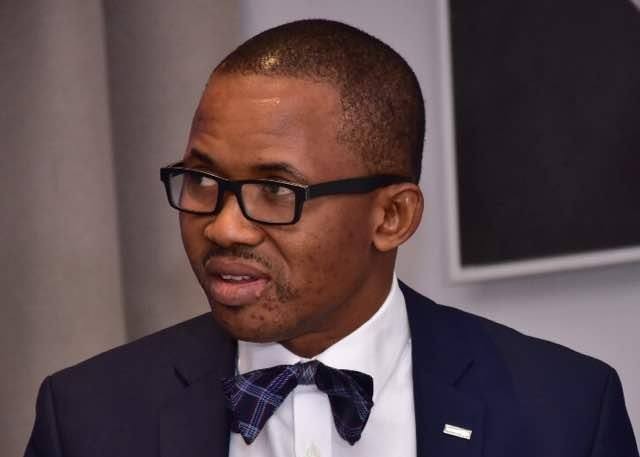
    Dr Olukayode Ajulo

    By Olukayode Ajulo

    My brother, Professor Chidi Odinkalu, offers a critique of President Bola Ahmed Tinubu’s nationwide security emergency announcement on November 26, 2025. He expresses significant concerns regarding the proposal for state police, suggesting that it could potentially lead to challenges that resemble a form of ‘decentralised despotism.’ Odinkalu invokes ghosts of colonial-era Native Authority abuses, Sharia-era missteps in Zamfara, and vigilante fiascos in Benue and Anambra to argue that state-level security is a Pandora’s box of impunity and ethnic strife. This criticism is not just path-dependent nostalgia; it is a dangerously narrow refusal to confront the undeniable limitations of Nigeria’s current centralised policing structure, an overburdened institution struggling to meet the demands of a rapidly evolving security landscape.

    Despite the dedication of countless officers, the Nigeria Police Force (NPF) is patently constrained by a structure that no longer aligns with the size, diversity, and complexity of the federation. The result has been persistent security gaps that have allowed abductions and violent crimes to escalate. From July 2023 to June 2024 alone, Nigeria recorded 7,568 abductions, a grim reminder that reforms cannot remain theoretical.

    In the face of this reality, state police is not a fad or sleight of hand; it is an existential necessity for a federation suffocating under a one-size-fits-all approach. And nowhere does this truth shine brighter than in the quiet but powerful example of the South-West Security Network, Operation Amotekun, South-West Nigeria’s home-grown innovation that demonstrates how decentralised policing can function; equally, transparently, and effectively.

    Let us dispense with the historical red herrings Odinkalu trots out. The Native Authority Police of the 1940s-1960s were not federalism’s progeny but colonial relics, weaponised by local potentates in an era bereft of democratic guardrails or judicial oversight. Zamfara’s Sharia experiment in 1999 was no policing innovation but a theocratic gamble that conflated religious zeal with security, breeding chaos not through decentralisation but through ideological overreach. 

    Benue’s vigilantes and Anambra’s Bakassi Boys? These were ad-hoc unregulated militias improvised in the early Fourth Republic security vacuum, products of political desperation, not structured police forces with constitutional legitimacy. To extrapolate from those anomalies to a modern state-police framework is intellectual overreach. It overlooks Nigeria’s 2025 democratic ecosystem, which includes independent judiciaries, civil society oversight, human rights commissions, and legal guardrails that did not exist two decades ago.

    The NPF’s structural challenge is not rooted in a lack of effort or patriotism; it stems from a centralisation model that restricts responsiveness to local threats. With an overstretched command system, underfunding, and the diversion of officers to duties far removed from core policing, the Force’s capacity is routinely tested. This is why multiple reform committees, including the Parry Osayande Committee in 2012, have consistently recommended decentralisation to improve efficiency and local intelligence gathering.

    Enter Operation Amotekun: Established in January 2020 and codified into our laws, the South-West Security Network stands as a distinguished example of how decentralised policing can function effectively within a framework of constitutional and democratic oversight. As the Attorney-General of Ondo State, I can affirm that Amotekun operates in full compliance with state law. My office has provided effective supervision of the Agency in Ondo State as prescribed.

    In contrast to Professor Odinkalu’s concerns, Amotekun has successfully enhanced community-centred security while upholding principles of fairness and inclusivity. In 2025 alone, its border surge operations created a security “firewall” across the South-west, disrupting infiltration by criminal cells through community-based intelligence that the centralised structure struggles to access at the same speed. These results are rooted not in brute force but in cultural fluency, localised intelligence, and accountability.

    The United Nations’ September 2025 romance of Amotekun as a “clear signal” of innovative subnational security architecture for insecurity’s defeat underscores its global acclaim: in five years, it has curtailed daredevil attacks, rescued hostages, and restored night-time normalcy in forests once bandit havens, all while operating under strict gubernatorial oversight tempered by inter-state coordination and civil society audits.

    Amotekun‘s playbook is emphatic. The data is undeniable: by mid-2025, reported kidnappings in Ondo and Osun dropped by nearly 70%, despite Amotekun operating without the full access to arms and resources available to conventional federal agencies. No ethnic pogroms. No governor-driven repression. Just measurable wins.

    The December 1, 2025, commissioning of Ondo Amotekun’s state-of-the-art Command Centre by Governor Lucky Orimisan Aiyedatiwa, featuring drones, surveillance systems, intelligent mapping, and real-time citizen security reporting, demonstrates both scalability and modernisation. But this milestone is only one strand in a broader system of deliberate reforms and investments that have repositioned Ondo State as the pacesetter of subnational security governance in Nigeria.

    Governor Aiyedatiwa has provided what critics like Odinkalu conveniently ignore: a living demonstration of how state-level security can thrive under constitutional discipline, democratic oversight, and responsible leadership. His recent approval of 500 new Amotekun recruits, the largest single expansion since the corps was created, reflects not just manpower strengthening but strategic foresight, ensuring that intelligence gathering, border patrols, forest surveillance, and rural rapid-response capabilities are scaled proportionately to modern threats. This recruitment drive sits alongside continuous training programmes, expanded operatives’ welfare, new patrol vehicles, digital communication systems, and the restructuring of operational zones across senatorial districts.

    Indeed, Governor Aiyedatiwa’s approach embodies the very model of “decentralised accountability” that scholars insist is needed for state police to flourish: clear operational mandates, legislative transparency, inter-agency intelligence fusion, and unwavering gubernatorial backing untainted by political interference. His firm public defence of Amotekun’s leadership, refusing to bow to unfounded media pressures or politicised agitation, demonstrates the maturity and continuity required to stabilise security institutions. Far from Odinkalu’s phantom of “local despots,” Governor Aiyedatiwa has shown that decentralised security powers can be exercised as instruments of protection, not tools of oppression.

    Under his stewardship, Ondo has become the South-west’s most consistent case study in measurable security returns: reduced kidnapping hotspots, fortified forest corridors, proactive anti-banditry operations, and operational synergy with traditional rulers, hunters, farmers, and community networks. What emerges is not repression, but participatory security built on trust and shared intelligence the very ethic that centralised policing cannot replicate with equal speed or cultural fluency.

    Aiyedatiwa’s interventions expose the hollowness of the anti–state police argument. If Amotekun can achieve these outcomes with limited arms and without constitutional police powers, then imagine what can be accomplished when legal authority, resources, and federal oversight converge in a fully domesticated state-police system. Ondo State today stands as empirical evidence, not theory, that responsible subnational leadership can enhance national security, deepen public confidence, and strengthen the federation.

    In every sense, Governor Aiyedatiwa has shown that when a state chief executive embraces decentralised security not as a political ornament but as a governance obligation, safety becomes a demonstrable reality, not a rhetorical promise. His administration’s commitment proves that Nigeria’s future security architecture must be bottom-up, not top-down; community-driven, not command-chain congested. And that is precisely why Amotekun, under leaders like Aiyedatiwa, is the brightest beam pointing Nigeria toward the inevitability of state police.

    Critics like Odinkalu argue that 37 subnational police units would fragment the country. But the Amotekun model proves the opposite: with federal oversight standards (training, vetting by the National Police Service Commission, uniform guidelines, and transparent budgeting through state assemblies), decentralised security becomes a force multiplier, not a threat. These sub-national police units will immensely amplify, not erode, national cohesion. This is true of federalism, not the “variable geometry” Odinkalu sneers at, but a pragmatic mosaic that decentralises risk while centralising accountability.

    Nigeria’s challenges differ across regions: herder–farmer conflicts in the North, cultism in the South, kidnapping in the Middle Belt and oil theft in the Niger Delta. A centralised force cannot effectively tailor solutions to all. State police can.

    President Tinubu’s “innocuous insertion” inviting National Assembly review of state police laws is no artifice, it’s an overdue gauntlet thrown to lawmakers to codify Amotekun’s virtues nationwide. It is pragmatic. It is constitutional. And it is a call to respond to a nation in distress.

    Dr Ajulo is the Attorney-General and Commissioner for Justice, Ondo State.

    Editor
    • Website

    Related Posts

    Thoughts on returning safety to Nigeria’s schools by Adaobi Obiabunmuo

    December 14, 2025

    Manufacturers of coups and bandits by Uzor Maxim Uzoatu  

    December 10, 2025

    Tribute to Lionel Messi (2) by Promise Adiele

    December 10, 2025
    Editors Picks

    Right of reply: Why state police is Nigeria’s imperative lifeline by Olukayode Ajulo

    December 14, 2025

    Thoughts on returning safety to Nigeria’s schools by Adaobi Obiabunmuo

    December 14, 2025

    MASSOB condemns EFCC’s arrest of former Anambra governor, Ngige

    December 14, 2025

    Nwifuru approves N150,000 Christmas bonus for Ebonyi workers

    December 14, 2025
    Latest Posts
    Chidi Odinkalu

    Right of reply: Why state police is Nigeria’s imperative lifeline by Olukayode Ajulo

    Opinion

    Thoughts on returning safety to Nigeria’s schools by Adaobi Obiabunmuo

    Anambra

    MASSOB condemns EFCC’s arrest of former Anambra governor, Ngige

    Subscribe to Updates

    Get the latest news from Ikenga Online.

    Advertisement
    Demo

    IkengaOnline is a publication of the Ikenga Media & Cultural Awareness Initiative (IMCAI), a non-profit organisation with offices in Houston Texas and Abuja.

    We're social. Connect with us:

    Facebook X (Twitter) Instagram YouTube LinkedIn WhatsApp RSS
    • Home
      • Igboezue
      • Hall of Fame
      • Hall of Shame
    • News
      • Other States
      • National
      • International
      • Interviews
      • Personalities
    • Abia
    • Anambra
    • Ebonyi
    • Delta
    • Enugu
    • Imo
    • Rivers
    • Politics
    • Opinion & Editorial
      • Editorial
      • Columnists
        • Osmund Agbo
        • Chido Onumah
        • Uche Ugboajah
        • Hassan Gimba
        • Edwin Madunagu
        • Rudolf Okonkwo
        • Azu Ishiekwene
        • Osita Chidoka
        • Owei Lakemfa
        • Chidi Odinkalu
      • Opinion
    • Special Reports
    • Art & Entertainment
      • Nollywood
      • Music
      • Ikengaonline Literary Series (ILS)
      • Life
      • Travels
    • Sports

    Subscribe to Updates

    Get the latest news from Ikenga Online.

    Facebook X (Twitter) Instagram LinkedIn WhatsApp RSS
    © 2025 Ikenga Online. Ikenga.

    Type above and press Enter to search. Press Esc to cancel.