
Close Menu
Ikenga Online
    What's Hot

    Scores injured as Abuja–Kaduna train derails

    March 16, 2026

    2027: Step down for Igbo president, groups urge Tinubu

    March 16, 2026

    Israeli president visits missile-hit home, warns Iran of ‘more havoc’ over cluster munitions attack

    March 16, 2026
    Facebook X (Twitter) Instagram
    Ikenga Online
    Facebook X (Twitter) Instagram YouTube
    Donate
    • Home
      • Igboezue
      • Hall of Fame
      • Hall of Shame
    • News
      1. Other States
      2. National
      3. International
      4. Interviews
      5. Personalities
      6. View All

      Scores injured as Abuja–Kaduna train derails

      March 16, 2026

      Coroner gives LASUTH 14 days to account for unidentified body in Pelumi Onifade death probe

      March 6, 2026

      Kaduna victims’ coalition demands probe of alleged abuses under El-Rufai

      February 16, 2026

      Dadiyata: Kperogi raises questions as El-Rufai, Ganduje trade allegations

      February 15, 2026

      Obi faults Tinubu’s reforms as Nigeria’s poverty rate hits 63 per cent 

      March 16, 2026

      ‘Current wages now starvation stipends’ — NLC, urges urgent relief

      March 15, 2026

      Obi blasts lawmakers for removing forgery offences from election petitions

      March 14, 2026

      Troops foil Boko Haram/ISWAP attacks on two military bases in Borno

      March 13, 2026

      Israeli president visits missile-hit home, warns Iran of ‘more havoc’ over cluster munitions attack

      March 16, 2026

      My father, wife killed by US, Israel — Iran’s new leader speaks, vows revenge

      March 12, 2026

      Okonjo-Iweala canvasses fresh ideas to revitalise WTO ahead of MC14

      March 6, 2026

      A Critical review of Reparations: History, Struggle, Politics and Law, by Chido Onumah 

      March 4, 2026

      Slash jumbo salaries to pay minimum wage, Bishop tells Tinubu

      June 19, 2024

      Nigeria remains a country in crisis that needs to heal – Chido Onumah

      January 24, 2024

      The Ekweremadus: Obasanjo writes UK court, seeks pardon for them

      April 5, 2023

      I’m coming with loads of experience to re-set Abia – Greg Ibe

      February 1, 2023

      Anambra-born Ugochi Nwizu shines as UNN best graduating doctor with multiple distinctions

      September 29, 2023

      Bulwark for women, girls: Meet Ikengaonline September town-hall guest speaker, Prof Joy Ezeilo

      September 27, 2023

      Rufai Oseni, the most dangerous man on Nigerian TV by Okey Ndibe

      February 13, 2023

      Stanley Macebuh: Unforgettable pathfinder of modern Nigerian journalism by Uzor Maxim Uzoatu

      February 7, 2023

      Scores injured as Abuja–Kaduna train derails

      March 16, 2026

      2027: Step down for Igbo president, groups urge Tinubu

      March 16, 2026

      Israeli president visits missile-hit home, warns Iran of ‘more havoc’ over cluster munitions attack

      March 16, 2026

      Pray for Gov Otti’s success, CoS Ajagba urges as Apostle Egede bows out of ministry

      March 16, 2026
    • Abia

      Pray for Gov Otti’s success, CoS Ajagba urges as Apostle Egede bows out of ministry

      March 16, 2026

      2027: Renewed Hope Ambassadors begin grassroots membership drive in Abia

      March 15, 2026

      Otti vows to reply criritics with more work as Ogah backs gov, Tinubu for reelection 

      March 15, 2026

      Presco plans $200m palm oil investment in Abia, eyes 5,000 jobs

      March 14, 2026

      Abia govt tasks contractors on strict adherence to standards

      March 13, 2026
    • Anambra

      FirstPower not responsible for drop in electricity supply in Anambra — Okafor

      March 12, 2026

      Issues of women’s rights should go beyond policies, commitments – RoLAC

      March 11, 2026

      IWD 2026: AHF Nigeria trains health workers to address gender gap in HIV care

      March 8, 2026

      Soludo urged to review sacking of revenue workers in Anambra

      March 8, 2026

      ALGAF: JDPC tasks fellows on project monitoring for grassroots development

      March 2, 2026
    • Ebonyi

      NELAN engineers’ death linked to Effium–Ezza Effium conflict – Umahi 

      March 16, 2026

      Reinforced concrete roads will guarantee quality, durability — Umahi

      March 14, 2026

      Ezza/Ezillo crisis: Community seeks Nwifuru’s help to return home after 18 years of displacement

      March 11, 2026

      Police nab alleged mastermind of former Ebonyi deputy governor’s father’s murder

      March 10, 2026

      Court slams ₦5m damages against ex-PDP publicity secretary for defaming lawyer

      March 9, 2026
    • Delta
    • Enugu

      2027: Step down for Igbo president, groups urge Tinubu

      March 16, 2026

      Nsukka zone emerges winner of Enugu secondary schools sports championship

      March 15, 2026

      MainPower announces temporary power outage in Enugu over substation maintenance

      March 13, 2026

      Police arrest 5,895 suspects, rescue 168 kidnap victims in Enugu — CP

      March 12, 2026

      Seyi Tinubu launches drug bank for indigent patients at UNTH

      March 10, 2026
    • Imo

      MASSOB urges Ndigbo to obtain PVCs, lists benefits

      March 13, 2026

      Disband ‘Tiger Base’ now, Igbo group petitions Gov Uzodimma

      February 25, 2026

      RULAAC urges Imo CP to probe alleged atrocities by vigilante leader in Njaba

      February 13, 2026

      Akagburuonye @ 60: Ex-Eagles stars storm Mbaise to honour humanitarian

      February 13, 2026

      RULAAC petitions Imo attorney-general over alleged torture, sexual abuse of trainee nurse

      January 25, 2026
    • Rivers

      Aba Power breaks new ground with electricity supply to Rivers

      February 22, 2026

      Investigate Asari Dokubo over anti-Igbo rants now, IIC tells security agencies

      February 20, 2026

      Ohanaeze inaugurates committee on Igbo strategic engagement

      February 2, 2026

      Rivers assembly vows to proceed with Gov Fubara, deputy’s impeachment process 

      January 16, 2026

      Financial disagreements fuel impeachment moves against Fubara — Aide alleges

      January 16, 2026
    • Politics

      2027: Step down for Igbo president, groups urge Tinubu

      March 16, 2026

      2027: Renewed Hope Ambassadors begin grassroots membership drive in Abia

      March 15, 2026

      PDP BoT disagrees with appeal court judgment, moves to reconcile party leaders

      March 11, 2026

      Court voids INEC decision to exclude ‘I Love Nigeria’ from registering as political party

      March 10, 2026

      Return our mandate, APGA tells Abaribe, Ikwechegh after dumping party for ADC, LP

      March 8, 2026
    • Opinion & Editorial
      • Editorial
      • Columnists
        • Osmund Agbo
        • Chido Onumah
        • Uche Ugboajah
        • Hassan Gimba
        • Edwin Madunagu
        • Rudolf Okonkwo
        • Azu Ishiekwene
        • Osita Chidoka
        • Owei Lakemfa
        • Chidi Odinkalu
      • Opinion
    • Special Reports
    • Art & Entertainment
      • Nollywood
      • Music
      • Ikengaonline Literary Series (ILS)
      • Life
      • Travels
    • Sports
    Ikenga Online
    Home » Who Gets to Be Black in Today’s World? By Osmund Agbo
    Opinion

    Who Gets to Be Black in Today’s World? By Osmund Agbo

    Osmond AgboBy Osmond AgboDecember 25, 2025No Comments7 Mins Read
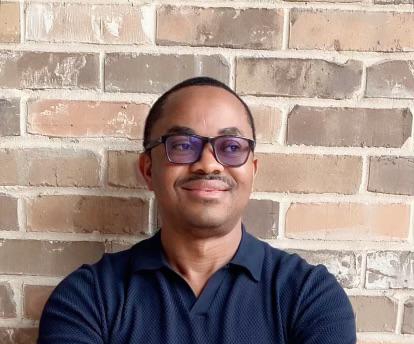
    Dr Osmund Agbo

    In a world that has long profited from Black fragmentation, unity rooted in respect for difference may be the most enduring gift we offer each other.

    In recent weeks, Somali Americans have been subjected to baseless insinuations in the United States. What renders this episode particularly disquieting is not merely the malevolence of the attacks, but the ambivalence of the response. Some Blacks have hesitated to offer unequivocal solidarity, emphasizing that some Somalis do not self-identify as Black. The implicit message is unmistakable: if one does not claim Blackness, one cannot reasonably expect Black protection.

    This situation recalls my visit to the Dominican Republic two months ago, where I observed a striking phenomenon. A substantial segment of the population of African descent, some possessing skin of darker shades than mine, were reticent to identify explicitly as Black. Instead, many resorted to alternative designations. “Indio,” a term referencing the island’s long-vanished Taíno population. “Mulatto,” emphasizing mixed European and African ancestry and distancing oneself from a “pure” Black identity. “Moreno,” simply denoting brown. Anything but Black.

    Superficial observation might lead one to ascribe this reticence to self-denial or internalized inferiority. Yet a deeper examination reveals that Black identity across the African diaspora has never been a monolithic inheritance. It is shaped by geography, power, historical contingency, and survival. To interpret hesitation in embracing Blackness as betrayal rather than as a survival strategy is to misconstrue the very mechanisms through which Blackness was constructed, fractured, and, in numerous contexts, rendered perilous.

    The African diaspora did not emerge from voluntary migration but from a cataclysmic rupture. Millions were stripped of their ethnic, linguistic, and cultural identities and assigned a new one: Black. This designation was far from neutral. It functioned as a juridical and philosophical instrument of enslavement. Yet the consequences of racialization manifested unevenly across societies. Communities devised divergent strategies for negotiating the burden of Blackness; some met it with defiance, others with evasion.

    The Dominican Republic exemplifies the existential peril of Black identity. Despite a population overwhelmingly descended from Africans, Dominican national identity was meticulously engineered to repudiate Blackness. Under the Spanish colonial legacy and later the dictatorship of Rafael Trujillo, Blackness was conflated with Haitian identity, coded as foreign, dangerous, and subversive. To be Black was not merely to possess dark skin; it was to be politically and socially suspect.

    Dominicans responded by cultivating a lexicon that permitted Blackness to exist without acknowledgment: indio, moreno, trigueño. These were not casual euphemisms but vital instruments of survival. History rewarded those who distanced themselves from Blackness and punished those who could not. The 1937 Parsley Massacre and the 2013 denationalization of Dominicans of Haitian descent were not anomalies; they were logical extensions of a system equating Blackness with illegitimacy.

    Puerto Rico offers a subtler contrast. There, African ancestry was never wholly repudiated, yet it was carefully curated. Puerto Rican identity crystallized around a tri-racial narrative of Spanish, Taíno, and African heritage, acknowledging Black roots while ensuring they remained culturally expressive but politically peripheral. Blackness thrived in music, dance, and religion but rarely served as the foundation for collective political action. The result was containment rather than exclusion.

    Cuba pursued yet another trajectory. Following the 1959 revolution, the state declared racism resolved. Class supplanted race as the primary axis of struggle, and Black political organizing was discouraged as divisive. Afro-Cubans gained access to social and educational resources but forfeited the language to articulate persistent racial inequality. Blackness survived culturally but was expected to dissolve politically into revolutionary sameness.

    Brazil, home to the largest population of African descendants outside Africa, perfected the art of obfuscation. Under the ideology of racial democracy, Blackness was subdivided into myriad chromatic categories. Whitening, biological, cultural, and social, became the principal avenue to advancement. For generations, identifying as Black entailed penalties, while claiming mixture conferred opportunity. Only recently has a mass Afro-Brazilian consciousness begun to challenge this long-standing fiction.

    These historical trajectories reveal a compelling pattern: in numerous societies, reluctance to embrace Black identity was rarely self-loathing; it was survival.

    This context illuminates the experience of Somali Americans in the United States. Many arrive with robust ethnic, linguistic, and religious identities cultivated outside the transatlantic slave experience. In East Africa, Black was never the primary social category; clan, language, and culture were paramount. In America, however, they are abruptly racialized as Black and expected to inherit a history, politics, and trauma they did not experience.

    Some embrace this designation. Others hesitate. Such hesitation is frequently misinterpreted as arrogance or repudiation, when it is more accurately a collision of disparate diasporic histories. The situation is further complicated by America’s inconsistent racial taxonomy, which classifies North Africans as White on census forms while simultaneously treating them as socially suspect. In the United States, race is less a matter of ancestry than of the mutable meanings power assigns to bodies.

    The peril lies in converting identity into a litmus test of loyalty. Solidarity enforced by coercion is not solidarity at all. Blackness has never been monolithic, and demanding uniformity from a fractured diaspora merely reproduces the very logic that historically weaponized difference.

    The pertinent question is not whether Somali Americans, Dominicans, or Brazilians employ the “right” terminology. It is whether we comprehend why Blackness has been proclaimed boldly in some contexts and whispered, obscured, or evaded in others.

    Mature Black consciousness does not begin with gatekeeping. It begins with historical literacy. It recognizes that communities devised divergent strategies under disparate regimes of punishment and reward. It understands that unity cannot emerge from erasure of complexity, but through honest engagement with it.

    If this essay advocates unity, it is not because the variations within Black identity are trivial, but because they are earned. They were forged under different systems of violence, reward, and survival. To disregard these differences is to misunderstand history. To weaponize them is to perpetuate injustice. Unity, therefore, does not imply uniformity. It implies recognition, a candid acknowledgment of how Blackness evolved through different languages, geographies, and historical exigencies.

    The error lies in conflating hesitation with hostility, or difference with disloyalty. What some interpret as denial is often the residue of systems that rendered Blackness a potential liability. A mature global Black consciousness does not demand a singular narrative; it demands humility—the willingness to listen before judging, and to understand before condemning.

    Perhaps this is where the spirit of the season offers a subtle lesson. Christmas, at its essence, is not about uniform belief but about the profound possibility that light enters the world through humility, that dignity is restored through recognition, and that divisions may be bridged not by force, but by grace. In a diaspora still bearing the scars of empire and enslavement, choosing understanding over suspicion is neither naïve nor sentimental; it is revolutionary.

    In a world that has long profited from Black fragmentation, unity rooted in respect for difference may be the most enduring gift we offer each other. Not a singular way to be Black, but a shared commitment to safeguard one another’s humanity wherever history has placed us.

    Merry Christmas!

    Osmund Agbo is a medical doctor and author. His works include Black Grit, White Knuckles: The Philosophy of Black Renaissance and a fiction work titled The Velvet Court: Courtesan Chronicles. His latest works, Pray, Let the Shaman Dieand Ma’am, I Do Not Come to You for Love, have just been released. He can be reached at eagleosmund@yahoo.com

    Osmond Agbo

    Related Posts

    Igbo identity and the crisis of internal sabotage: Revisiting Chimamanda Adichie’s Igbo bu Igbo by Vitus Ozoke 

    March 16, 2026

    The warm chair: A quiet lesson in metabolism by Mukaila Kareem

    March 15, 2026

    A country without earthquakes — yet shaken by itself by Max Amuchie 

    March 15, 2026
    Editors Picks

    Scores injured as Abuja–Kaduna train derails

    March 16, 2026

    2027: Step down for Igbo president, groups urge Tinubu

    March 16, 2026

    Israeli president visits missile-hit home, warns Iran of ‘more havoc’ over cluster munitions attack

    March 16, 2026

    Igbo identity and the crisis of internal sabotage: Revisiting Chimamanda Adichie’s Igbo bu Igbo by Vitus Ozoke 

    March 16, 2026
    Latest Posts
    News

    Scores injured as Abuja–Kaduna train derails

    Politics

    2027: Step down for Igbo president, groups urge Tinubu

    International

    Israeli president visits missile-hit home, warns Iran of ‘more havoc’ over cluster munitions attack

    Subscribe to Updates

    Get the latest news from Ikenga Online.

    Advertisement
    Demo

    IkengaOnline is a publication of the Ikenga Media & Cultural Awareness Initiative (IMCAI), a non-profit organisation with offices in Houston Texas and Abuja.

    We're social. Connect with us:

    Facebook X (Twitter) Instagram YouTube LinkedIn WhatsApp RSS
    • Home
      • Igboezue
      • Hall of Fame
      • Hall of Shame
    • News
      • Other States
      • National
      • International
      • Interviews
      • Personalities
    • Abia
    • Anambra
    • Ebonyi
    • Delta
    • Enugu
    • Imo
    • Rivers
    • Politics
    • Opinion & Editorial
      • Editorial
      • Columnists
        • Osmund Agbo
        • Chido Onumah
        • Uche Ugboajah
        • Hassan Gimba
        • Edwin Madunagu
        • Rudolf Okonkwo
        • Azu Ishiekwene
        • Osita Chidoka
        • Owei Lakemfa
        • Chidi Odinkalu
      • Opinion
    • Special Reports
    • Art & Entertainment
      • Nollywood
      • Music
      • Ikengaonline Literary Series (ILS)
      • Life
      • Travels
    • Sports

    Subscribe to Updates

    Get the latest news from Ikenga Online.

    Facebook X (Twitter) Instagram LinkedIn WhatsApp RSS
    © 2026 Ikenga Online. Ikenga.

    Type above and press Enter to search. Press Esc to cancel.