

Stephen Ukandu, Umuahia
In a bold move to deepen economic growth, improve the business climate, and attract investors, the Abia State Government has commenced steps to establish a comprehensive industrial policy for the state.
To this end, the government has inaugurated a committee to midwife the formulation and implementation of the policy.
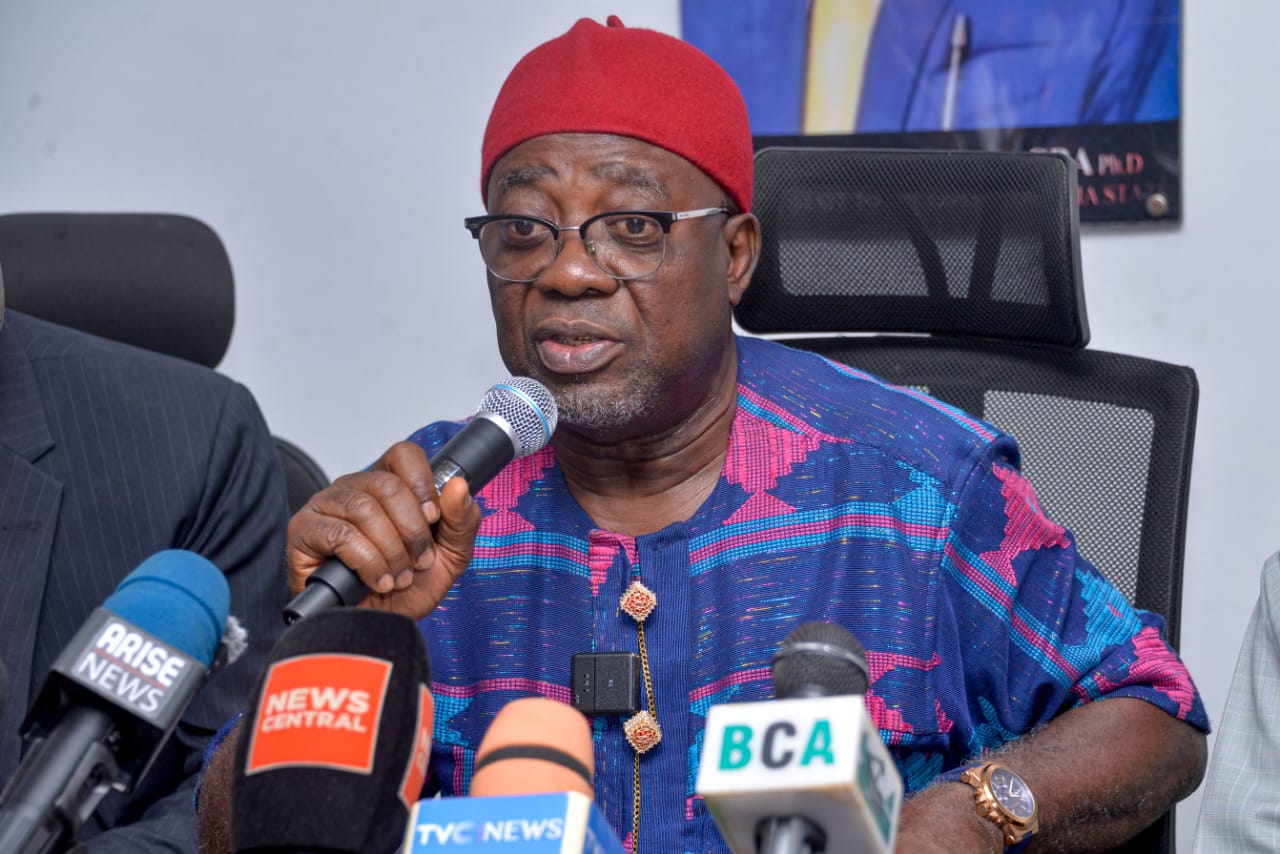
The Commissioner for Information, Prince Okey Kanu, disclosed this on Tuesday at the Government House, Umuahia, while briefing journalists on the outcome of the State Executive Council meeting presided over by Governor Alex Otti.
Prince Kanu explained that the decision to put an industrial policy in place became imperative in view of the sweeping reforms and massive transformation the state has witnessed across critical sectors in the last 31 months.
“Abia State Government believes the time has come to have a clear and well-articulated industrial policy that will drive industrial development in the state,” he said.
According to him, the state, through its Ease of Doing Business Agency, has made significant progress in creating a more business-friendly environment, adding that the new industrial policy would consolidate these gains.
“In the coming weeks, when the policy is ready, the public will be invited to a formal launch,” Prince Kanu stated.
He noted that the policy, combined with an improved ease of doing business environment, would not only attract investments but also help to properly market Abia’s economic potentials while strengthening its comparative advantages in resource availability and management.
The Commissioner further announced that the state government had initiated additional plans for urban renewal in line with its long-term development blueprint spanning 2025 to 2050.
He said the initiative would be driven by the Umuahia Capital Development Authority (UCDA), Greater Aba Development Authority (GADA), and Greater Ohafia Development Authority (GODA).
According to him, the urban renewal programme will focus on critical infrastructure initiatives such as street naming, house numbering, and geo-referencing, aimed at creating order, improving service delivery, and stimulating all-round economic growth.
“One of the challenges in our cities is the absence of proper street names and house numbers. You can spend hours trying to locate an address because the streets are not properly identified,” he lamented.
Prince Kanu explained that the lack of standardised addressing affects planning, security, emergency response, logistics, and digital services.
“Imagine a fire outbreak where there is no clear address. You begin to give directions like ‘when you get to that junction, turn left.’ That is not how modern cities function,” he said.
He stressed that standardised street naming and house numbering would bring order, enhance efficiency, and make the state more attractive to investors.
“The state government will soon appoint a project manager to drive and manage this very important initiative,” he added.
On infrastructure development, Prince Kanu disclosed that the Ministry of Works undertook direct labour projects in 49 locations across the state during the period under review.
He said three of the projects have been completed, one new project has been added to the ministry’s maintenance basket, while 31 road projects are currently under contract, with work ongoing at various sites.
The Commissioner also revealed that the pilot rollout of electric bus services in the state is progressing smoothly, with residents enjoying free rides.
“So far, no fewer than 77,774 Abians and residents have benefited from the free electric bus rides, and the number is still growing,” he said.
The Commissioner for Transport, Dr Chimezie Ukaegbu, and the Special Adviser to the Governor on Media and Publicity, Mr Ferdinand Ekeoma, were present at the briefing.
