

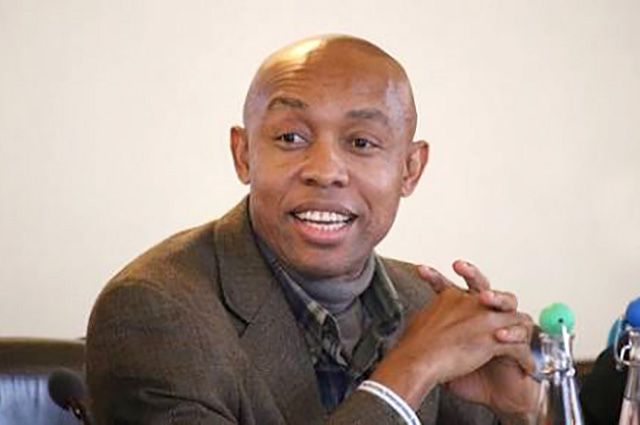
By Chidi Anselm Odinkalu
Abdul Leigh Balogun became a judge of the High Court of Lagos State in 1976. In a career as a trial judge spanning 17 years and three different decades, the man better known as A.L.A.L Balogun earned a deserved reputation as one of the most knowledgeable trial judges to adorn the Nigerian judiciary. His reputation for fairness was unquestioned. That ultimately saved his judicial career.
On 9 March 1979, Justice Balogun delivered judgment in a land matter originally filed in 1975, the year before he became a judge. His judgment decided the case against the original claimants. The following day, on 10 March, Abdul Balogun showed up at the law office of the counsel to the claimants. It was a Saturday. The claimants, who had lost the case, were in consultation with their lawyers when the judge visited.
At the visit, Justice Balogun invited the claimant’s lawyers to attend court the next working day. On Monday, 12 March 1979, the court proposed to hear submissions from lawyers as it considered the “recall” its earlier judgment of 10 March to correct errors he had spotted in the judgment.
On the appointed day, the lawyers for the claimants did not attend court. The defendants, who had won the case, were represented and addressed the court through their lawyers. The judge had also invited them.
Thereafter, Justice Balogun delivered a lengthy and well researched judgment in which he claimed an inherent jurisdiction to correct errors he said he had identified in his original judgment but his original verdict remained unchanged. So, in two separate judgments over two working days, the claimants lost twice. They had good reason to be irate.
The claimants appealed, asking the appellate courts to nullify both judgments of 9 and 12 March 1979 and order a retrial. When it decided the appeal seven years later on 17 June 1986, the Supreme Court was at pains to point out that the motive of the judge in this case was not bias but what it called the “laudable aspiration” of perfection. However, Supreme Court described the conduct of a judge choosing to go to the law office of counsel involved in litigation before him as both “reproachable and irregular” and justified its decision on the ground that this caused “erosion of confidence in the judicial process.” The court warned that “a trial judge ought to know that he is on trial for any improper conduct during the trial of a case before him and immediately thereafter.”
In the judicial traditions of those days, the idea of extra-judicial mingling or intercourse between litigants or their counsel on the one hand and appellate judges on the other was unheard of. So, the court was content to confine its admonition to trial judges. Today, the ethics of judging in Nigeria appear to know of no such distinctions anymore.
Justice Balogun recovered from this case and went on to have a stellar career on the High Court of Lagos, from where he retired in 1993. He lived for another 20 years thereafter, before he died in August 2013. Six months before his death, in February 2013, the National Judicial Council, (NJC) terminated the judicial career of Thomas Naron, a judge of the High Court of Plateau State, because “there were constant and regular voice calls and exchange of mms and sms (text) messages between Hon. Justice Naron and one of the lead counsel for one of the parties to the suit in the Osun State Gubernatorial Election Tribunal, contrary to the Code of Conduct for Judicial Officers of the Federal Republic of Nigeria.”
In the wake of an unprecedented operation by the State Security Service (SSS) against some senior judges across the country in October 2016, a serving Justice of the Supreme Court, Inyang Okoro, was reported to have informed the then Chief Justice of Nigeria (CJN), Mahmud Mohammed, in February of the same year of a nocturnal visit to his home by then Transport Minister and former governor of Rivers State, Rotimi Amaechi.
At the visit, Mr. Amaechi reportedly claimed that his party, the All Progressives Congress (APC), had “mandated him to inform (the judge) that they must win their election appeals in Rivers State, Akwa Ibom and Abia State at all costs.” Mr. Amaechi’s media spokespersons publicly denied these claims in colourful language. Despite the best efforts of civil society advocates to ensure a transparent investigation, the allegations appear to have subsequently been swept under the proverbial carpet.
The latest public disclosure of extra-judicial dalliance involving senior judges and litigants before them came last week from that most durable phenomenon in contemporary Kano politics, Rabiu Musa Kwankwaso.
In March 2019, the contest for the governorship of Kano State pitted then incumbent, Abdullahi Gabduje of the APC against Kwankwaso’s protégé, Abba Kabir Yusuf, of the Peoples’ Democratic Party (PDP). With about 100,000 votes left to harvest, the Independent National Electoral Commission (INEC) declared the contest inconclusive. At that point, Yusuf was ahead with 26,655 votes.
When INEC concluded the supplementary vote, it awarded 45,876 votes to Ganduje and 10,239 votes to Yusuf, enabling it to declare the latter the loser with a margin of just 8,982 votes out of 2,242,396 votes cast. The contest ultimately ended in January 2020 when the Supreme Court affirmed Ganduje as duly elected.
In the wake of last week’s feckless embrace by Kabir Abba Yusuf of his former nemesis, Abdullahi Ganduje, a heart-broken Kwankwaso disclosed that in the struggle for what they believed to be their mandate in 2019, he went with Abba Yusuf “to the homes of all the supreme court judges in Nigeria to beg them…. in their villages and towns.”
Muhammad Dattijo, who memorably retired from the Supreme Court in 2023 and was on the Court in 2019, promptly issued a rebuttal challenging Kwankwaso’s claim and denying ever having met him or Abba Yusuf. He has also rightly challenged Kwankwaso to disclose the names of the Justices of the Supreme Court whom he claims to have met. The Supreme Court chooses to maintain eloquent silence.
Judges, according to the United Nations Basic Principles on the Independence of the Judiciary, “shall decide matters before them impartially, on the basis of facts and in accordance with the law, without any restrictions, improper influences, inducements, pressures, threats or interferences, direct or indirect, from any quarter or for any reason.”
In June 2023, Senator Adamu Bulkachuwa confessed on the floor of Nigeria’s Senate that indeed, some important cases may have been decided in the bedroom that he shared with his wife, Zainab, who was President of the Court of Appeal for over six years until 2020. It would be surprising if this species of concupiscent jurisprudence was brewed exclusively chez Bulkachuwa.
There was a time when this would have attracted consequences in Nigeria. But after a few news headlines, Adamu Bulkachuwa’s disclosures were buried in the sepulchre of the NJC’s complicit silence.
40 years ago, the Supreme Court found that Justice Balogun’s quest for perfection mitigated his transgression. The erosion of public confidence in the judiciary which the Supreme Court was conscious to safeguard against then has become a self-fulfilling prophecy. Today, a predominant species of judicial vagabondage pursues perfidy.
The NJC’s own Judicial Code of Conduct indeed requires that “[a] Judge shall avoid developing excessively close relationship with frequent litigants – such as government ministers or their officials, municipal officials, police prosecutors in any Court where the Judge often sits.”
In November 2023, the Chief Judge of the Federal High Court, John Tsoho, turned up in the office of the Minister of the Federal Capital Territory (FCT), Nyesom Wike, to heartily congratulate the minister for his “bias” for judges and beg him to allocate choice land in Abuja to them. Apparently, no one informed the Chief Judge that his posture was injudiciously intimate or that Mr. Wike was exactly what the Judicial Code of Conduct described as both a Minister and a “frequent litigant” before his court.
The norms of acceptable judicial conduct have been re-made. Yet many live in denial of the reality that, increasingly, cases before many courts in Nigeria are no longer decided in the courtrooms but in worshipful processions to the homes of the people we call “My Lord.”
A lawyer and a teacher, Odinkalu can be reached at chidi.odinkalu@tufts.edu
