

Ben Ezechime, Enugu
A non-governmental organisation (NGO), the Citizens Centre for Integrated Development and Social Rights (CCIDESOR), has decried what it described as the economic and fiscal emasculation of local government areas in Nigeria.
The organisation said the situation has fuelled insecurity, joblessness and deepening poverty at the grassroots across the country.
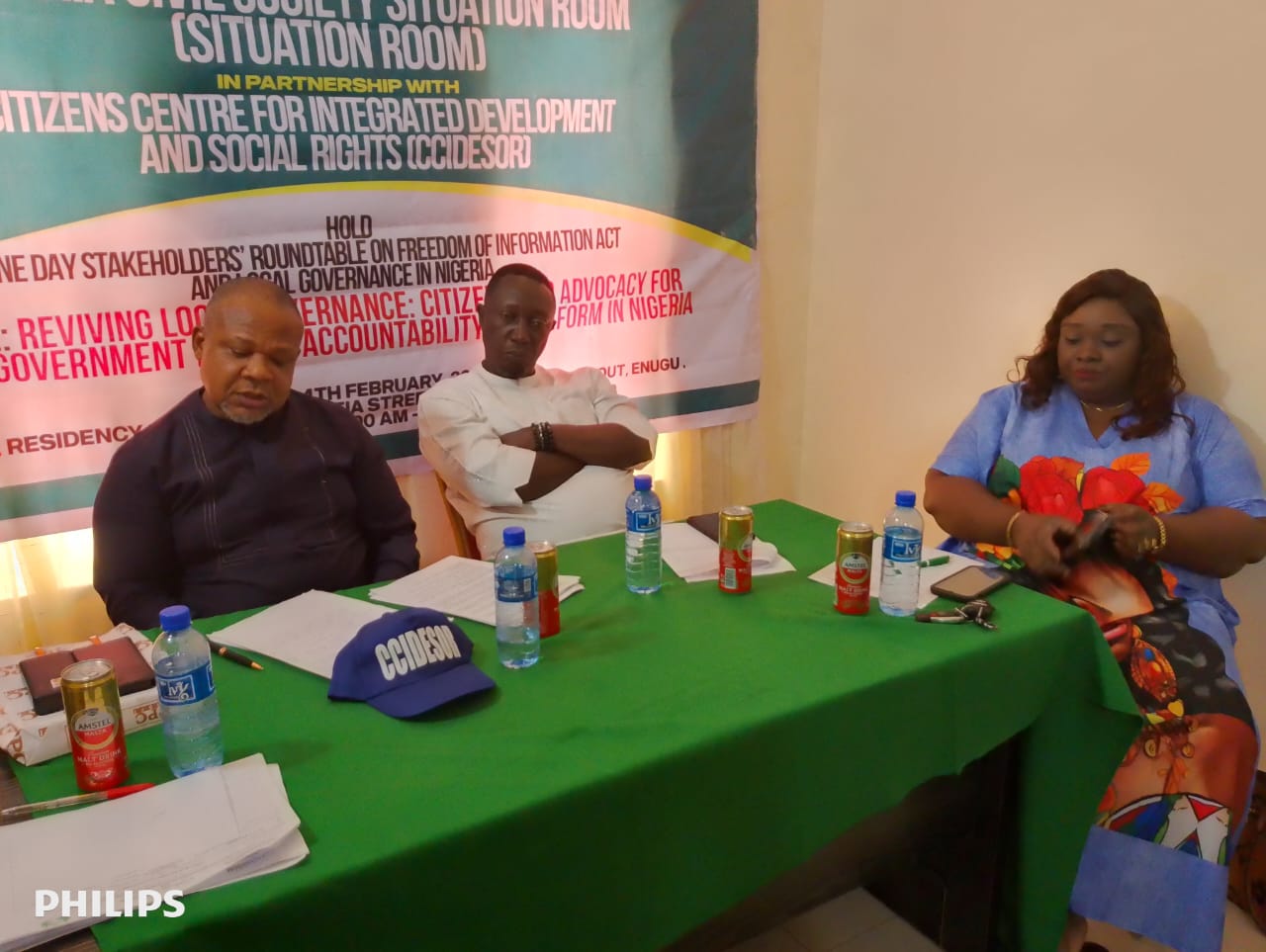
The Executive Director of CCIDESOR, Dr Emeka Ononamadu, made this known while speaking to journalists in Enugu on the side-lines of a Stakeholders’ Roundtable on the Freedom of Information (FOI) Act.
The roundtable, themed “Reviving Local Governance: Citizens-Led Advocacy for Local Government Budget Accountability and Reform in Nigeria,” was organised by CCIDESOR in partnership with the Nigeria Civil Society Situation Room (SituationRoom).
Ononamadu said the near collapse of the third tier of government had robbed local councils of fiscal capacity, revenue generation and job creation powers, resulting in widespread impoverishment and deprivation that have lowered the standard of living of Nigerians.
He called on the political class to allow all tiers of government to function effectively, noting that this would enable political office holders to be held accountable for resources received both internally and from the Federation Account.
“When you talk about the emasculation of council areas, it is the state governments you are referring to. They are the ones that have emasculated them,” he said.
“The state governments have, as our findings show, contracted out most local government functions to political party members and personal cronies, and this is happening across the country.
“We are saddened by this development because it has made people living in local council areas, as well as council workers, unproductive and redundant.”
He commended President Bola Tinubu for pursuing local government financial autonomy to a successful conclusion at the Supreme Court, but stressed that further steps were required to fully implement the apex court’s pronouncement.
Ononamadu also noted that local government administrations needed fiscal, political and administrative autonomy to stimulate local economies and achieve sustainable growth and prosperity.
On fiscal autonomy, he said local government councils should independently prepare annual budgets, strengthen internally generated revenue and establish short- and long-term investment plans to ensure sustainability.
“There is a need for 100 per cent political autonomy through credible, people-elected leadership, rather than the current practice of governors appointing caretaker administrators who are answerable only to them,” he said.
“The councils must also have full administrative control over affairs within their jurisdictions, including the power to make administrative laws that promote the welfare and prosperity of the people.”
Also speaking, the President of the National Union of Local Government Employees (NULGE), Enugu State Chapter, Mr Udoagha Ani, emphasised the need to revive the local government system to enhance effective governance at the grassroots.
Ani said a functional local council system would reduce pressure on state and federal governments, while giving the majority of Nigerians a sense of belonging and greater willingness to support development initiatives in their communities.
Other speakers at the roundtable similarly called for full autonomy for local governments as a pathway to improved grassroots development
