

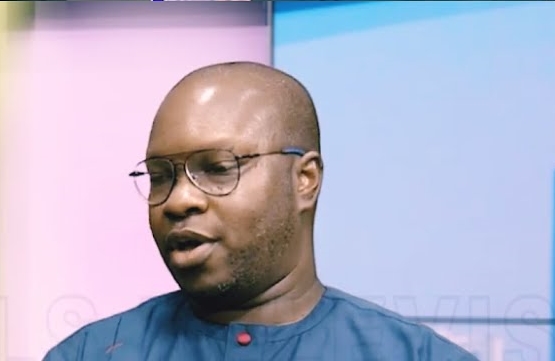
By Cheta Nwanze
The consequence is not just lost medals or preventable deaths. It is a deeper corrosion. A generation of young Nigerians learns that effort within the system yields nothing. They learn to look outward, to seek the exit. They japa from healthcare, from academia, from sports. And those who remain are forced into the exhausting work of being their own emergency services, their own advocates, their own support systems.
The death of Ifunanya Nwangene from a snakebite in Abuja was not a freak accident. It was the predictable outcome of a health system in total collapse, a system in which critical medicines vanish from capital city hospitals and survival depends on a lethal lottery of geography and wealth. The response to my recent write-up on this told me something important. Nigerians are exhausted. Exhausted by shortages, by costs, by the relentless need to be their own emergency services, their own advocates in corridors of medical power.
That exhaustion has a twin. It lives in our sports administration.
Grace Anigbata won the high jump at Nigeria’s Olympic trials in 2016. She was 18. Her jump of 1.7 metres beat everyone else. She did not go to Rio. The justification offered was staggering: “At age 18, she still has time.” Instead, an athlete who had not even competed at the trials was sent, and she did not make it past the first round. I wrote about this in 2017, predicting that Grace would eventually turn out for another country, and that Nigerians would later fall over themselves to claim her. Today, while Grace has not turned out for another nation, as far as I know, she has never been to the Olympics. A great potential wasted, and the cycle continues.
If she does turn out for someone else, she would not be alone. The list is now long enough to shame any country that pretends to value its own talent. Florence Ekpo-Umoh defected to Germany in 1995. Francis Obikwelu switched to Portugal in 2001 after alleging unjust treatment by officials at the Sydney Olympics. Glory Alozie left for Spain the same year. Femi Ogunode moved to Qatar in 2009 after being inexplicably left off Nigeria’s rosters for two major competitions. Salwa Eid Naser, born Ebelechukwu Agbapuonwu, became a world champion for Bahrain after switching at 16. Annette Echikunwoke won Olympic silver for the USA in 2024, her Nigerian dream killed by the Athletics Federation’s failure to conduct mandatory drug tests before Tokyo 2020. Favour Ofili announced her switch to Turkey in 2025, citing administrative negligence that cost her two Olympic appearances. Favour Ashe followed to Qatar this year.
What connects them is not merely individual frustration. It is a system that has perfected the art of rewarding failure while punishing excellence. The officials who oversaw the Rio farce were never queried, much less fired. The minister responsible remained in office, preening in an outdated uniform. No consequences. None.
This is the rentier mentality I wrote about in 2017, and it applies as neatly to healthcare as it does to sports. We expect to collect from anything we can claim as Nigerian without doing the work required to build. A young athlete trains for years, and we send someone else to the Olympics because “she still has time.” A singer is bitten by a snake in our national capital, and the hospital lacks antivenom because procurement is broken and storage is undermined by unreliable electricity. A novelist loses her child in a premium private hospital, and the response is a task force, another committee to treat symptoms while the disease rages unchecked.
We claim success we did not work for. When Anthony Joshua wins, we celebrate his Nigerianness, even though Nigeria did not contribute to building him. When Grace Anigbata or Favour Ofili eventually wins a medal for another country, we will do the same. When a tragedy strikes, we form committees. But we never fix the supply chains, never hold the officials accountable, never build the infrastructure that would make excellence possible at home.
The consequence is not just lost medals or preventable deaths. It is a deeper corrosion. A generation of young Nigerians learns that effort within the system yields nothing. They learn to look outward, to seek the exit. They japa from healthcare, from academia, from sports. And those who remain are forced into the exhausting work of being their own emergency services, their own advocates, their own support systems.
Until we break this cycle, until we start holding people accountable and building institutions that actually deliver, the exhaustion will persist. It will persist because it is the rational response to a state that has, for too long, failed to guarantee the most basic of dignities: the chance to live, to compete, to excel, without having to leave home to do it.
Nwanze is a partner at SBM Intelligence
