

…As workers allege unfair treatment, nepotism
Lawrence Nwimo, Awka
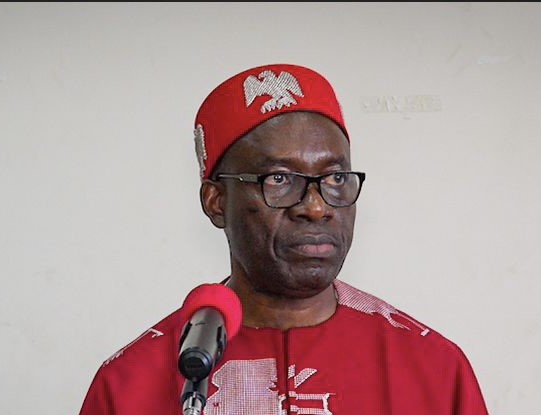
Governor of Anambra State, Prof. Chukwuma Soludo, has been urged to review the recent retrenchment of more than 200 workers of the Anambra State Internal Revenue Service (AIRS).
The workers were disengaged after failing a strategic tax administration examination conducted in collaboration with consulting firm PricewaterhouseCoopers (PwC), as part of efforts to revamp and professionalise the state’s revenue collection system.
Following the examination results, an internal memo from the Administration Department of AIRS, dated February 18, 2026, and signed by Nwalusi Ifeanyi on behalf of the Chairman and Chief Executive, directed the disengagement of Community Revenue Officers (CROs) and other staff who failed to meet the required pass mark in the computer-based test.
The memo, circulated to the affected workers, instructed them to surrender all official materials, including identity cards and work tools, to the Administration and Human Resources Department, with the retrenchment taking effect immediately after the handover process.
However, some of the affected workers have appealed for the governor’s intervention, noting that many of them had served the agency for several years. They also alleged unfair treatment and unprofessional conduct by the consulting firm and some members of the state revenue management.
The workers argued that the examination was a new experience for many staff members and suggested that supplementary training and professional development programmes would have been a more effective way to achieve the revenue service’s reform objectives.
They also raised concerns about the assessment process, pointing out that ongoing tax administration reforms across the country emphasise operational autonomy for state revenue agencies in the 36 states and the Federal Capital Territory.
A source within AIRS, who identified himself as Chukwuebuka Okeke, criticised the restructuring approach adopted by the state’s revenue service, saying reforms should focus on strengthening professionalism, setting clear performance targets, improving remuneration and encouraging professional certification.
According to him, the engagement of PwC to restructure AIRS was initially intended to make the agency more autonomous in line with Nigeria’s evolving tax administration framework.
“All these issues started when the government hired PricewaterhouseCoopers to restructure the Anambra Internal Revenue Service and make it autonomous. We are aware that Nigeria’s new tax law requires revenue services to be autonomous and manage their own staff and salaries.
“In other states, similar reforms were implemented smoothly. For instance, Enugu State introduced a new salary structure for revenue service workers, adding about ₦100,000 to their salaries and providing incentives for professional qualifications and meeting targets.
“In Anambra, however, PwC conducted an examination which led to the retrenchment of more than 100 Community Revenue Officers who had served for about seven years, while several core civil servants, including directors close to retirement, were redeployed,” he said.
Okeke described the exercise as unfair, noting that experienced directors nearing retirement were redeployed without any transition period. He also argued that the examination administered to the CROs was not directly relevant to their primary duties and that the workers should have been given time to acquire relevant certifications.
He further alleged that administrative issues, including appointments made by the immediate past chairman of the agency, contributed to the current challenges within AIRS.
“During his tenure, the former chairman introduced a woman as Senior Special Assistant on Technical Matters, presenting her simply as a professional with experience in revenue administration,” he said.
“The SSA was later discovered to be the chairman’s spouse. The relationship was not disclosed to the government or staff at the time of her appointment,” he alleged.
Okeke said the development raised governance concerns within the agency, claiming that departmental heads were sidelined in decision-making, with the agency’s activities largely coordinated by the former chairman and his aide.
“She allegedly manipulated revenue processes, sidelined department heads and took key decisions, including hiring and firing staff. When PwC was brought in to restructure AIRS, she reportedly worked with them as a coordinator and was later appointed Director of Taxes,” he added.
Okeke and other disengaged workers therefore called on the state government to review the circumstances surrounding the restructuring exercise and consider recalling affected staff.
They also urged the governor to investigate the appointment of the SSA in order to restore transparency and confidence within the revenue agency.
Reacting in a telephone interview, the Anambra State Commissioner for Finance, Okafor Moses Izuchukwu, whose ministry supervises AIRS, confirmed that the assessment exercise was part of the restructuring process and insisted that the affected staff failed to meet the required performance standard.
“Government gave the workers a chance to prove themselves through an examination. They wrote the aptitude test but many of them failed. They were given a second chance to write the test, yet they still failed. I don’t think there should be any reason for complaint,” he said.
“Pointing accusing fingers does not change the fact that government must strengthen its systems and processes. For years we have had situations where some staff do little yet continue to draw salaries.
“Those who passed the test and are likely to succeed in the interview stage will be retained. The process is still ongoing,” he added.
