

Lawrence Nwimo, Awka
The FirstPower Electricity Distribution Company Limited (FPEDL) has clarified the sharp drop in electricity supply currently being experienced across communities in Anambra State.
The company said the recent outages were caused by nationwide electricity generation challenges affecting the entire Nigerian power sector, rather than any operational failure on the part of the distribution company.
This clarification was contained in a statement by the company’s Head of Communications, Izunna Okafor, on Thursday, and obtained by Ikengaonline.
Okafor explained that electricity distribution companies operate only at the final stage of the electricity value chain and do not generate power or determine how much electricity is transmitted to any state.
He detailed how Nigeria’s electricity system functions through three major segments — generation, transmission and distribution. According to him, electricity is produced by Generation Companies (GenCos), transmitted nationwide through infrastructure managed by the Transmission Company of Nigeria (TCN), and finally distributed to consumers by distribution companies such as FirstPower.
Okafor noted that the electricity distributed in Anambra is generated in other parts of the country and transmitted through the national grid before reaching interface stations that supply the state. Consequently, whenever national electricity generation declines, the allocation to distribution companies across the country automatically reduces.
Relating the process to the current situation, Okafor revealed that Nigeria has recently been experiencing a significant reduction in electricity generation due to a severe shortage of natural gas supply to thermal power plants, which produce the bulk of electricity on the national grid.
He explained that the situation was worsened by the disruption caused by an explosion on the Escravos–Lagos gas pipeline in December last year, an incident that affected the operations of several gas-fired power plants. Although the pipeline was later repaired, he said the sector continues to grapple with lingering gas supply challenges and financial constraints affecting generation companies.
Okafor further noted that the situation has been compounded by the huge debts owed to generation companies within the electricity market.
According to him, available reports indicate that the liabilities currently exceed ₦6 trillion, a development that has significantly weakened the ability of power producers to procure the gas required to operate their plants optimally.
“As we may know, the recently triggered and ongoing Israel/US–Iran war has also caused immediate scarcity and a spike in the prices of petroleum products, further complicating issues in Nigeria’s energy sector,” he added.
Okafor said that because thermal plants rely heavily on natural gas to generate electricity, the shortage has forced several generating units to shut down or operate below their installed capacity.
He cited reports from the Nigerian Independent System Operator (NISO) showing that thermal power plants currently receive less than half of the gas required for optimal operations.
Giving further details, he said thermal plants require about 1,588.61 million standard cubic feet of gas per day to function efficiently, but only about 652.92 million standard cubic feet have been available in recent times — a severe shortfall that has significantly reduced electricity generation nationwide.
According to him, available generation on the national grid in February dropped to about 4,300 megawatts, far below Nigeria’s estimated demand. The situation, he said, was further aggravated by the shutdown of additional generating units, which removed about 292 megawatts from the grid.
Okafor said that as a result of the reduced generation, national grid operators have been compelled to implement load shedding across the country to maintain system stability and prevent a total collapse of the grid.
FirstPower explained that the nationwide reduction in generation has had a direct impact on electricity allocation to Anambra State.
Okafor said power supply to the state comes through four major transmission interface stations — Awada, GCM, Agu-Awka and Nibo — all of which receive electricity through the infrastructure of the Transmission Company of Nigeria.
According to him, before the current generation constraints, the combined average daily allocation to these interface stations was about 164.66 megawatts. However, due to the present shortfall in generation, the total allocation has dropped drastically to about 74.13 megawatts.
He said this represents a deficit of more than 90 megawatts, meaning that more than half of the electricity previously supplied to the state is currently unavailable.
The company noted that such a drastic reduction makes it impossible for distribution companies to maintain the same level of supply previously enjoyed by customers when national generation was higher.
To manage the limited electricity available, the company said it has introduced a load management system across feeders in the state, under which electricity supply is rationed across communities at different times of the day.
Okafor explained that under the arrangement, some areas receive electricity in the morning, others in the afternoon, while some are supplied at night. He added that the rotation is periodically adjusted to ensure fairness and prevent overloading of distribution infrastructure.
According to him, the load management system is necessary to prevent a total shutdown of the system that could plunge the entire state into darkness simultaneously.
Beyond supply challenges, FirstPower also addressed concerns relating to electricity metering in the state.
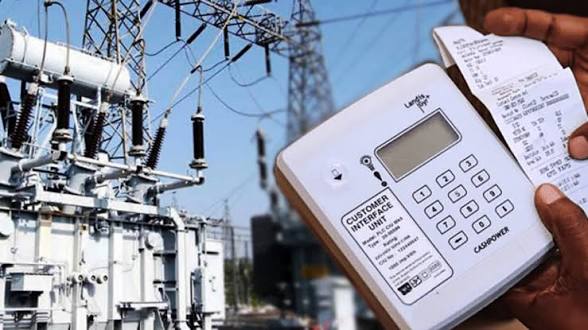
The company disclosed that meter penetration in Anambra currently stands between 40 and 45 per cent.
Okafor explained that to bridge the metering gap, the Federal Government introduced the National Mass Metering Programme under the supervision of the Central Bank of Nigeria to provide free prepaid meters to customers through distribution companies.
He said under the programme, FirstPower received about 5,960 meters, which were distributed within its operational areas covering Awka, Obosi and Onitsha feeders. He added that the company expects about 90,000 additional free meters in the next phase of the exercise.
Okafor also revealed that the company has established a meter laboratory in Onitsha to improve meter availability and enhance service delivery to customers in the state.
He explained that before the facility was created, such metering services for the region were handled from Enugu State. The establishment of the meter lab in Anambra, he said, was one of the first operational steps taken following the licensing of FirstPower as a distribution company.
According to him, the facility has the capacity to produce about 2,500 meters daily, while the company currently has over 5,000 prepaid meters in stock for customers who wish to purchase them.
The company said meters purchased by customers are delivered and installed within 10 working days after payment, while the cost is refunded through energy credits spread over 36 months.
FirstPower also addressed billing concerns raised by customers, explaining that irregular electricity supply often leads to sudden spikes in electricity usage whenever power is restored, as households and businesses tend to switch on several appliances simultaneously.
The company said such sudden demand can result in rapid consumption of electricity and higher meter readings.
It also warned that illegal connections, energy theft and meter bypass can significantly affect transformer readings and may ultimately impact the bills shared among legitimate customers within affected communities.
Customers were therefore encouraged to report such illegal practices through the company’s whistleblowing line (08161652465) to protect the integrity of the power system and ensure fairness in billing.
Regarding reports of planned protests over the electricity situation, FirstPower management acknowledged the constitutional right of citizens to protest but appealed to residents to understand that the current shortage is fundamentally a national generation issue beyond the operational control of distribution companies.
The company stressed that protests directed at distribution companies may not yield the desired results since the root causes of the electricity shortage lie at the generation and gas supply stages of the electricity value chain.
FirstPower reassured customers across Anambra State of its continued commitment to transparency, fair billing, regulatory compliance and improved customer engagement.
It added that once national electricity generation improves and allocations increase, electricity supply to Anambra State will also improve accordingly.
The company expressed appreciation to residents for their patience and understanding, assuring that it will continue to provide the best possible service with the electricity available while keeping the public adequately informed.
