

By Chido Onumah & Chiamaka Okafor-Onumah
Nigeria and Kenya, two of Africa’s economic powerhouses, will hold general elections in 2027. Nigeria’s election has been slated for January 16, 2027, by the Independent National Electoral Commission (INEC). It will be the eighth general election since military rule came to an end on May 29, 1999, in Africa’s most populous nation. Kenya’s holds on August 10, 2027, the second Tuesday of August, in adherence to Article 136(2)(a) of the Kenyan Constitution, which stipulates that elections must hold on the second Tuesday of August every five years.
As in other elections, these will be keenly contested not just at the polls but in the law courts and court of public opinion. In the latter, digital technology—the Internet, AI, algorithm, smart phones, etc.–will play a crucial role. Across the continent and beyond, digital technologies and their proprietors are shaping how we communicate, impacting debates and conversations both positively and negatively, redefining issues of freedom of expression and the right of access to information. Clearly, the way we respond to this new digital information order would determine whether society benefits or we all become casualties. If coordinated and managed properly, technology and digital platforms can enhance democratic participation, information integrity, reduce online strife and promote intercultural and interreligious dialogue.
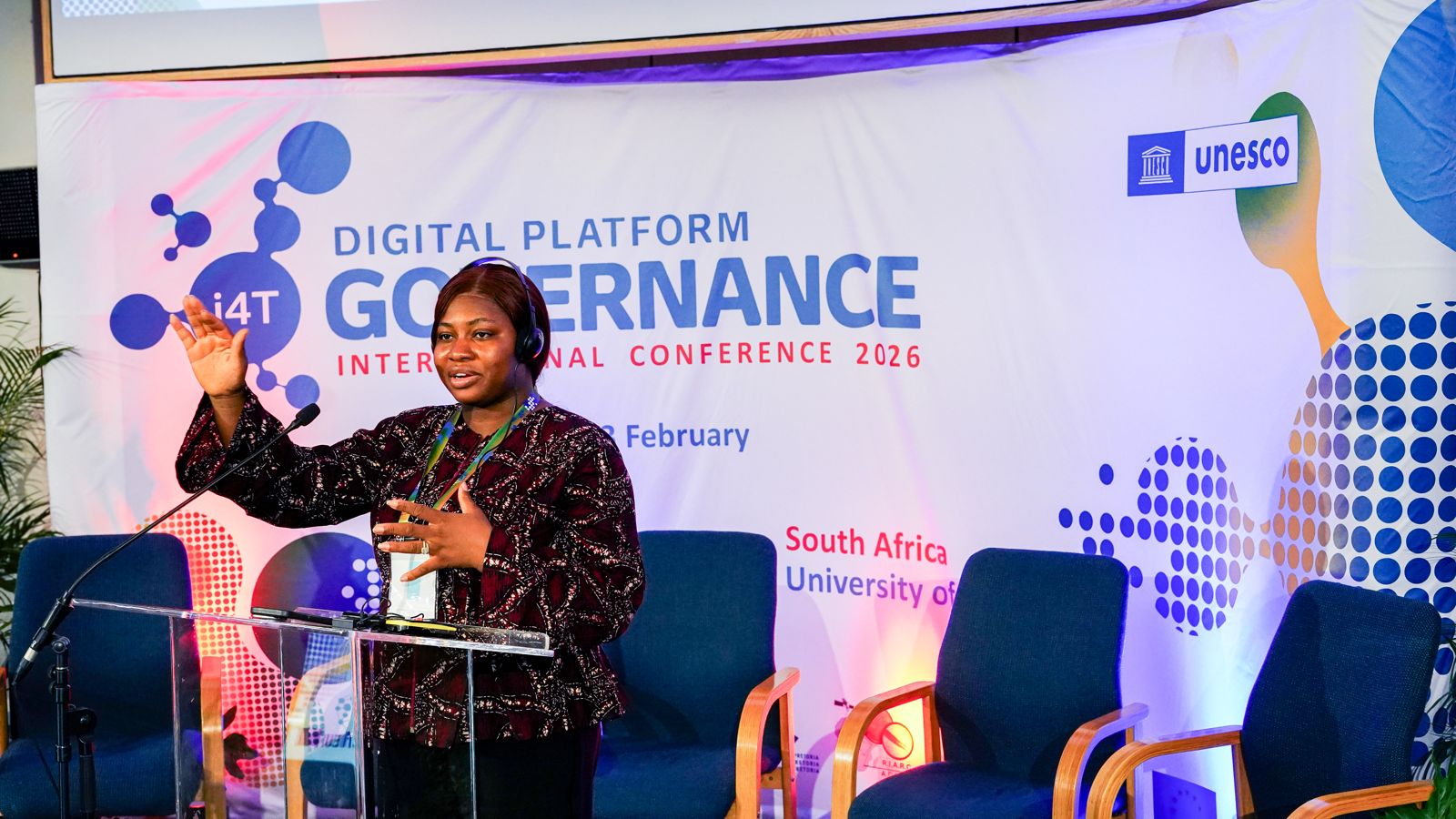
In the last six months, first in Praia, Cabo Verde, from September 3 to 5, 2025, and Pretoria, South Africa, from February 10 to 13, 2026, UNESCO, the ECOWAS Commission, the National Democratic Institute (NDI), Global Affairs Canada (GAC), Search for Common Ground (SFCG), Media Monitoring Africa (MMA) now Moxii Africa, Article 19, GIZ, Information, Communication Technologies and Media Regulators Forum of South Africa, Social Media 4 Peace South Africa (SM4PSA), the African Communication Regulation Authorities Network (ACRAN), the Francophone Network of Media Regulators (REFRAM), the I4T Knowledge Network, the European Union, and partners, have come together to hold two crucial conferences to focus attention on information integrity and digital platform governance not just in West Africa and the Sahel but across the African continent.
And nowhere are these issues more impactful or relevant than the democratic and electoral process. Elections are a vital part of the democratic process. The right to vote is an essential act of an informed citizenry. It is important, therefore, that citizens are empowered and knowledgeable consumers of news and information as well as equal and engaged participants in a democracy. Facts and credible information are essential to making sound decisions and creating an engaged and well-informed voting public. People must know how to recognise fact from fiction and use that knowledge to exercise their democratic rights.
Experience has shown that political actors remain committed to weaponizing viral false and misleading narratives to undermine confidence in the electoral system. Clearly, in the elections referenced at the beginning of this essay, mis- and disinformation will be pervasive throughout the campaign, the elections, and their aftermath, spreading across all social platforms. Vulnerabilities in the current information environment and their impact on the democratic process in the continent require urgent collective action.
This brings us back to the Praia and Pretoria convening. At the Praia conference, participants adopted the Praia Model Policy Framework for Information Integrity and endorsed the Action Plan for Information Integrity in West Africa and the Sahel, and the Guide for Regulators to Implement the Information Integrity Model Policy Information & Framework in West Africa and the Sahel.
These landmark documents mark a significant step forward in the sub-region’s “shared commitment to: strengthening multi-stakeholder partnerships and regulatory bodies cooperation, reinforcing access to information and media and information literacy (emphasis added), fostering human-rights based and systemic responses to phenomena that undermine information integrity, advancing inclusive, context-relevant, and rights-based governance of digital platforms across the region including during elections and crises.”
In his goodwill message at the Praia conference, Nigeria’s Minister of Information and National Orientation, Alhaji Mohammed Idris, who was represented by Dr Olalekan Fadolapo, Director General of the Advertising Regulatory Council of Nigeria (ARCON), noted that, “We live in an era where the digital landscape has become both a source of empowerment and vulnerability. Given the borderless nature of the digital information space, the need for greater collaboration among nations, especially regional groups, cannot be overemphasized. West Africa and the Sahel nations, and indeed Africa, must speak with one voice to address the neo-tyranny of intimidation perpetrated by digital platforms, using algorithms.
“Nigeria, as a country, recognizes the urgent need to safeguard the integrity of information across our region. As a government, we are taking decisive steps to address the proliferation of misinformation, disinformation, and hate speech—threats that undermine democratic institutions, social cohesion, and national security.
“A cornerstone of our strategy is the International Media and Information Literacy Institute (IMILI), situated at the National Open University of Nigeria, Abuja. IMILI has emerged as a continental hub for capacity building, research, and policy innovation in media and information literacy. Through partnerships with academia, civil society, and international organizations, IMILI has trained thousands of educators, journalists, women, and youth leaders in critical thinking and digital resilience and other emerging issues in environmental and science communication.”
Unfortunately, Nigeria was visibly missing when the conversation moved to the continental level in Pretoria, South Africa. With several plenaries and side events that featured regional perspectives on how to strengthen freedom of expression and information integrity online, the Pretoria conference sought to advance human rights-based and multistakeholder approaches to digital governance, and assess progress in the implementation of the UNESCO Guidelines for the Governance of Digital Platforms.
Pretoria’s Proposition for Action on digital platform governance encapsulates the idea that, “Digital platforms have become essential infrastructures for global communication, yet notwithstanding this achievement their governance, in most cases, remains fragmented, opaque, and often disconnected from human rights standards. Effective governance is possible through coordinated action grounded in clear principles and concrete commitments.”
At the Pretoria meeting, regulatory authorities, governments, platforms, civil society organizations, and researchers “agreed that safeguarding freedom of expression, access to information, freedom of association, the right to privacy and the protection of diverse cultural expressions while addressing systemic risks require key actions. This continues the multi-stakeholder approach developed at the UNESCO 2024 International Conference on Digital Platform Governance in Dubrovnik and the UNESCO 2022 Internet for Trust Conference.”
The Proposition for Action represents “a pledge by regulatory authorities and institutions dealing with the governance of digital platforms to multistakeholder approaches to advance on the implementation of the principles of transparency, accountability, due diligence, user empowerment, and alignment with international human rights standards in the public oversight of the design of new products and digital services as set out in the UNESCO Guidelines for the Governance of Digital Platforms and the Media and Information Literacy (MIL) Action Plan for Digital Platform Governance. It reaffirms the importance of respecting, protecting, and promoting human rights, safeguarding freedom of expression, the right to access to information, the right to privacy and freedom of association in all aspects of digital platform governance.
“Platform governance can no longer be addressed in isolation. It intersects with information policy, data protection, artificial intelligence and other emerging technologies, competition, election governance, child protection and education policy and cultural policy, thus demanding attention to the specific services and features that generate systemic risks, particularly algorithmic curation and monetization models. Meeting these challenges requires strong independent oversight institutions, consistent accountability, inclusive participation, and a governance vision centered on human rights and human dignity.”
One of the recommendations is that “communities can be empowered by launching coordinated national media and information literacy (MIL) initiatives. Regulators can initiate and support national media and information literacy programs, developed in partnership with educators, media organizations, civil society, and platforms, to strengthen users’ ability to navigate digital spaces safely and critically. Elevating MIL as a core regulatory strategy and multistakeholder priority, regulators can integrate MIL into supervisory frameworks as a systemic risk-mitigation measure, supported by sustained, dedicated public funding and cross-sector coordination.”
MILID Foundation’s intervention in Praia and Pretoria focused on building population resilience rather than concentrating on high-handed, restrictive technology regulations as a way of protecting and restoring the integrity of the information ecosystem. We see media and information literacy (MIL) as a regulatory buffer to a sub-regional and continental test on information integrity. It is, therefore, important that we prioritize it and understand how it can be integrated into the regional digital governance framework and strategy.
In the new world information and digital media order, of AI and the challenges of internet regulation, cybersecurity, data protection and information disorder, a strong MIL mechanism will promote democratic resilience, enhance peace, intercultural and interreligious dialogue, even development and regional cooperation.
We believe these issues are not mere technical or legal concerns. They are issues that define our democratic future, public safety and even national security. The threat and opportunities they present are things that need a holistic, proactive, and collaborative approach in addressing.
Chido Onumah, PhD., and Chiamaka Okafor-Onumah are co-founders of the Media and Information Literacy and Intercultural Dialogue (MILID) Foundation.
