

Stephen Ukandu, Umuahia
In the annals of Abia State, the 2023 governorship election will be remembered not merely for its outcome, but for the resilience of institutions and individuals under pressure, and the ultimate triumph of due process.
What began as a routine electoral exercise on Saturday, March 18, quickly evolved into a defining institutional test—one that exposed the fragility of Nigeria’s electoral system, yet also revealed its capacity for self-correction.
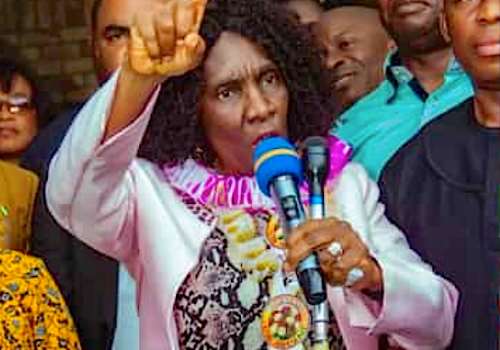
At the centre of events was the headquarters of the Independent National Electoral Commission (INEC) in Umuahia, where the collation of results unfolded amid mounting tension. Worthy of note also was the heroic role of the Vice Chancellor of the Federal University of Technology Owerri (FUTO), Prof. Nnenna Oti, who served as the Returning Officer for the exercise.
By Monday morning, results from 16 of the 17 local government areas had been received and announced. The figures clearly showed Alex Otti of the Labour Party in a comfortable lead, polling 172,246 votes against 78,628 votes secured by Chief Okey Ahiwe of the Peoples Democratic Party (PDP). The margin—93,618 votes—appeared decisive.
The delay in announcing results from Obingwa LGA—long regarded as a political stronghold with the capacity to swing elections—triggered a crisis of confidence. Rumours of inflated figures began to circulate, raising concerns about the integrity of the process.
As speculation intensified, so did public anxiety. Figures attributed to Obingwa shifted dramatically in the rumour mill, at times exceeding plausible thresholds when measured against the number of accredited voters.
Initially, it was speculated that the PDP candidate had secured 40,000 votes in Obingwa. The figure mysteriously climbed to 60,000, then 90,000, and eventually an astonishing 120,000 votes—all in favour of one candidate, with no corresponding increase for others. The credibility of the entire exercise was suddenly at stake.
This writer was among the array of journalists who curiously waited for the arrival of the much-anticipated Obingwa tsunami. Occasionally, the slogan, “Obingwa landslide is coming,” permeated the air at the Collation Centre, heightening the already tense atmosphere. The political temperature across the state was becoming overcharged as hours passed.
INEC’s decision to suspend collation of the Obingwa results, following reported attacks on its facilities, marked a critical turning point. Rather than rush to declare a winner amid controversy, the electoral body opted for caution—escalating the matter to its national headquarters in Abuja for forensic review. That decision, though prolonging the process, proved pivotal.
For four days, Abia remained on edge. Protests erupted, civil society groups demanded transparency, and citizens insisted that the sanctity of their votes must not be compromised. The pressure on INEC was immense, but so too was the expectation that it would rise to the occasion.
When collation eventually resumed on March 22 in Umuahia, it was clear that the election had transcended partisan contest—it had become a referendum on institutional credibility. All eyes were on the electoral umpire, especially the Returning Officer, Professor Nnenna Oti.
In that decisive moment, the State Returning Officer, Nnenna Oti, emerged as a symbol of institutional integrity. With the spotlight firmly on her, she proceeded to announce the final, verified results, including those from Obingwa LGA.
The outcome sharply contradicted earlier speculations. The PDP secured 9,962 votes in Obingwa, while the Labour Party recorded 3,776 votes—figures consistent with the number of accredited voters. With the process concluded, Alex Otti was formally declared the winner of the election.
The reaction across Abia was immediate and telling. Jubilations broke out, not just in celebration of a candidate’s victory, but in affirmation of a process many feared might have been compromised. For many residents, the declaration restored faith in the electoral system.
From this perspective, the real story of Abia 2023 is not simply about who won, but about how the system responded under strain. It was also all about sacrifice and service to humanity.
Prof. Nnenna Oti later, in her remarks, noted that she acted based on her conviction that justice must be served irrespective of the cost.
“They came with money, I rejected it; they came with intimidation, but I said no. I only fear God,” she thundered during a rousing welcome at FUTO.
INEC’s willingness to halt the process, investigate anomalies, and subject disputed results to scrutiny demonstrated an institutional maturity that is often questioned in Nigeria’s electoral history. Equally significant was the role of field officials, especially the Collation Officer and Electoral Officer in Obingwa, who, despite reported threats and inducements, upheld the principles of transparency and accountability.
The Obingwa episode, in particular, highlighted both the vulnerabilities and safeguards within the system. While attempts at manipulation were alleged, the mechanisms for verification—especially the use of voter accreditation data—ultimately provided a check against excesses.
Looking ahead to the 2027 elections, the lessons from Abia are profound. Strong institutions are not defined by the absence of challenges, but by their response to them. The events of March 2023 underscore the need to strengthen electoral processes, protect officials from undue influence, and deepen public trust.
Nearly three years on, assessments of Governor Alex Otti’s performance continue to shape public discourse. For many, his administration’s record lends credence to the outcome of that election, reinforcing the belief that the right choice was made.
In retrospect, Abia 2023 stands as a quiet but powerful reminder that democracy is not sustained by elections alone, but by the courage of institutions—and individuals—who choose to defend it when it matters most.
The fact remains that Prof. Nnenna Oti has carved a niche for herself as an embodiment of integrity, transparency, and uprightness—core qualities our society is in dire need of for the survival of our democracy. She, by all standards, deserves a national honour and a greater role at the centre to help INEC regain its waning public confidence.
