
Close Menu
Ikenga Online
    What's Hot

    For the second time, Rivers speaker Amaewhule, 15 other lawmakers defect to APC

    December 5, 2025

    SSDO partners Japan to expand healthcare support in Enugu

    December 5, 2025

    Enugu council boss pledges N5m for information on kidnappers’ hideouts

    December 5, 2025
    Facebook X (Twitter) Instagram
    Ikenga Online
    Facebook X (Twitter) Instagram YouTube
    Donate
    • Home
      • Igboezue
      • Hall of Fame
      • Hall of Shame
    • News
      1. Other States
      2. National
      3. International
      4. Interviews
      5. Personalities
      6. View All

      Bandits hit Kogi church, abduct pastor, wife, members

      November 30, 2025

      Kaduna Anglican priest dies in kidnappers’ den

      November 27, 2025

      Bandits mutilate one, abduct pregnant woman, 23 others in Niger communities

      November 27, 2025

      Freed abductees receive medical treatment in Kwara govt house

      November 24, 2025

      Rewarding ex-INEC chairman with ambassadorial role morally indefensible – Atiku 

      December 4, 2025

      Tinubu swears in Gen Musa as defence minister

      December 4, 2025

      Ex-CDS, Gen Musa confirmed as defence minister

      December 3, 2025

      Police to arrest personnel escorting VIPs, declare such duty Illegal

      December 3, 2025

      US issues visa ban on individuals behind Christian genocide in Nigeria

      December 4, 2025

      Tinubu approves Nigeria’s membership of US-Nigeria joint working group

      November 27, 2025

      Obi meets EU lawmakers, seeks stronger partnership to tackle Nigeria’s challenges

      November 26, 2025

      CPC: Nigeria engaging world diplomatically, will defeat terrorism – Tinubu 

      November 6, 2025

      Slash jumbo salaries to pay minimum wage, Bishop tells Tinubu

      June 19, 2024

      Nigeria remains a country in crisis that needs to heal – Chido Onumah

      January 24, 2024

      The Ekweremadus: Obasanjo writes UK court, seeks pardon for them

      April 5, 2023

      I’m coming with loads of experience to re-set Abia – Greg Ibe

      February 1, 2023

      Anambra-born Ugochi Nwizu shines as UNN best graduating doctor with multiple distinctions

      September 29, 2023

      Bulwark for women, girls: Meet Ikengaonline September town-hall guest speaker, Prof Joy Ezeilo

      September 27, 2023

      Rufai Oseni, the most dangerous man on Nigerian TV by Okey Ndibe

      February 13, 2023

      Stanley Macebuh: Unforgettable pathfinder of modern Nigerian journalism by Uzor Maxim Uzoatu

      February 7, 2023

      For the second time, Rivers speaker Amaewhule, 15 other lawmakers defect to APC

      December 5, 2025

      SSDO partners Japan to expand healthcare support in Enugu

      December 5, 2025

      Enugu council boss pledges N5m for information on kidnappers’ hideouts

      December 5, 2025

      FirstPower electricity announces planned outage in Anambra

      December 5, 2025
    • Abia

      Gunmen hijack Aba-bound bus, abduct 14 passengers in Imo

      December 3, 2025

      Removal of barriers against PWDs’ participation in society a must – Gov Otti

      December 3, 2025

      Abia set to unveil building material testing laboratory

      December 3, 2025

      Otti empowers 150 Abia Poly outstanding graduates with N1m each

      December 2, 2025

      Experts meet in Umuahia to tackle MSMEs challenges

      December 2, 2025
    • Anambra

      FirstPower electricity announces planned outage in Anambra

      December 5, 2025

      GPSDC, WACOL train journalists on GBV reporting, seek stronger collaboration

      December 5, 2025

      Police nab member of kidnap syndicate in Anambra

      December 4, 2025

      Tinubu empowers Anambra PWDs with N50m business grant

      December 3, 2025

      Commission to establish disability counselling centre in Anambra

      December 3, 2025
    • Ebonyi

      Ebonyi LG poll: Ezillo stakeholders adopt power shift to Ezzagu zone

      December 2, 2025

      Nwifuru moves to equip Ebonyi hospitals, sets up five-man equipment distribution committee

      November 28, 2025

      Court remands man for alleged cyberbullying of federal lawmaker

      November 26, 2025

      Nwifuru presents N884.8bn 2026 budget to Ebonyi assembly

      November 25, 2025

      Coalition groups condemn arrests, detention of critics, journalists in Ebonyi

      November 23, 2025
    • Delta
    • Enugu

      SSDO partners Japan to expand healthcare support in Enugu

      December 5, 2025

      Enugu council boss pledges N5m for information on kidnappers’ hideouts

      December 5, 2025

      PRODA DG preaches peace, unity among staff as 2025 games festival kicks off

      December 4, 2025

      Abductors of Enugu deputy governor’s kinsmen demand N20m ransom

      December 4, 2025

      Road crash: FRSC confirms 2 dead, 9 injured in Enugu multiple accidents 

      December 4, 2025
    • Imo

      Gunmen hijack Aba-bound bus, abduct 14 passengers in Imo

      December 3, 2025

      Catholic bishops condemn violence in Nigeria, call for govt action to restore peace

      November 26, 2025

      MASSOB blasts Ayodele over anti-Igbo comment

      November 26, 2025

      ASUU gives FG 8-day ultimatum over unmet demands, threatens full-blown strike

      November 13, 2025

      S’East now cocoa farm for security operatives — Nwanguma, RULAAC boss

      November 5, 2025
    • Rivers

      For the second time, Rivers speaker Amaewhule, 15 other lawmakers defect to APC

      December 5, 2025

      DSS quizzes social media user for allegedly advocating coup d’état

      October 29, 2025

      Rumuorlumeni community calls for halt on sale of waterfront lands

      October 20, 2025

      Ohanaeze presidents demand unconditional release of Kanu, others

      October 18, 2025

      Fubara gives reasons for not challenging emergency declaration in court

      September 19, 2025
    • Politics

      For the second time, Rivers speaker Amaewhule, 15 other lawmakers defect to APC

      December 5, 2025

      2027: Atiku finally joins ADC

      November 24, 2025

      Abia patriots caution APC leaders against ‘destructive opposition’ politics

      November 21, 2025

      S’East stakeholders meet in Enugu, unveil 2027 political road map 

      November 20, 2025

      PDP chairman invites President Trump, international community to ‘save Nigerian Democracy’

      November 18, 2025
    • Opinion & Editorial
      • Editorial
      • Columnists
        • Osmund Agbo
        • Chido Onumah
        • Uche Ugboajah
        • Hassan Gimba
        • Edwin Madunagu
        • Rudolf Okonkwo
        • Azu Ishiekwene
        • Osita Chidoka
        • Owei Lakemfa
        • Chidi Odinkalu
      • Opinion
    • Special Reports
    • Art & Entertainment
      • Nollywood
      • Music
      • Ikengaonline Literary Series (ILS)
      • Life
      • Travels
    • Sports
    Ikenga Online
    Home » Tinubu biting the bullet from day one by Azu Ishiekwene
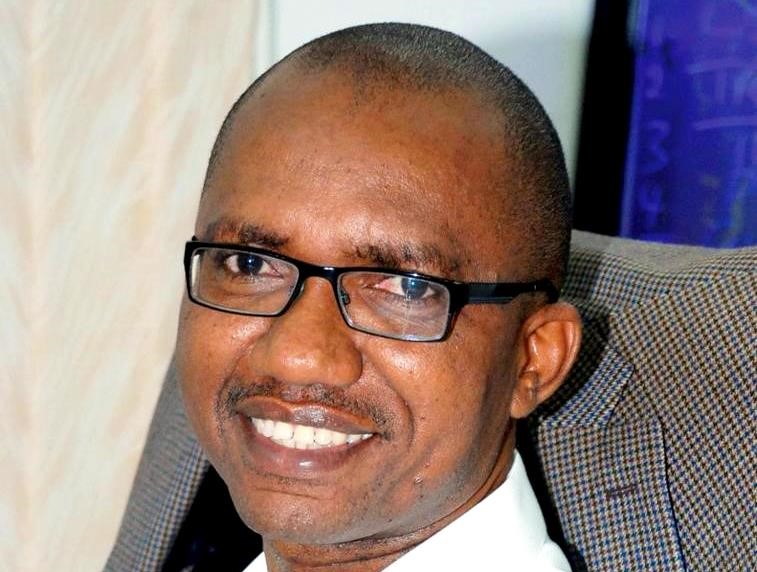
    Azu Ishiekwene

    Tinubu biting the bullet from day one by Azu Ishiekwene

    EditorBy EditorJune 1, 2023No Comments8 Mins Read
    Azu Ishiekwene


     By Azu Ishiekwene

    President Bola Ahmed Tinubu is under fire for announcing that petrol subsidy is gone from day one. His inauguration address also touched on a unified currency exchange, high interest rate and power, among others.

    Of all these, however, the one that got the headlines was petrol subsidy and the most frequently expressed concern, is why now? 

    To say, in his first speech, that fuel subsidy was gone, that a unified exchange rate was vital, and that the current interest rate was anti-people and anti-business, was the economic equivalent of an earthquake. 

    Of the four preceding presidential inauguration speeches since 1999 from Olusegun Obasanjo to Buhari, none that I reviewed was nearly as audacious and as provokingly clear as Tinubu’s position was on perhaps the most crucial economic decisions as he took office. 

    Obasanjo, for example, talked about corruption, loss of confidence in government and the Niger Delta crisis. His three successors spoke about infrastructure, corruption and unemployment. But none was bang on the nail, as frontal and clear, as Tinubu’s was. We’re struggling because we’re used to being lied to.

    Interestingly, in campaigns before the last general election, the other leading presidential candidates – Atiku Abubakar of the Peoples Democratic Party (PDP) and Peter Obi of Labour Party – said they would remove subsidy. Obi, in fact, called it an “organised crime” and he was right.

    For a man who has his work cut out for him, Tinubu does not have the luxury of philosophy or poetry. Not when organised criminals trading on a yearly petrol subsidy of about N4.4trillion as of 2022, have left the country bleeding nearly to death. He had to make his own structural earthquake or risk uncontrolled seismic explosion. If not now, then when? 

    Tinubu’s dilemma reminds me of the story of a number of leaders confronted with extremely difficult choices before they had time to settle in office. The first of them is the Israeli Prime Minister, Benjamin Netanyahu, who told his story eloquently in his autobiography, “Bibi: My story.”

    Israel might have had some important military successes before, but at the time Netanyahu became prime minister in 1996 the country was an economic basket case and inflation was in double digits.

    Netanyahu ran for and won the premiership against his father’s advice, against principalities in his own Likud Party and against veterans in the ruling Labour Party. Winning was hard, but making his victory count was even harder. The press and the unions hated him and didn’t hide it.

    As he rolled up his sleeves, he was shocked at what he found when he entered the cabinet room for his first meeting. The room was like a banquet hall, lined with omelets, cheese, assorted bread, tomatoes, cucumber, jam, cookies and so on.

    “The cabinet ministers were already busy munching away,” he wrote, “passing dishes to one another. It reminded me of the Shabbat Breakfast Club in the synagogue in Hull, Massachusetts.”

    It was the sort of executive indulgence that President Obasanjo also saw in Nigeria when he assumed office in 1999 and his response then, like Netanyahu’s on that day, was to scrap the nonsense immediately. 

    But cabinet menu reform was the least problem on his plate. The real challenge was how to free the country from a semi-socialist nanny economy, state control, exposure to future global vulnerabilities, the dominance of monopolies, and union fat cats.

    “By far the most important reform I enacted,” he said reflecting on that very difficult period, “was to liberate Israel’s rigid foreign currency controls. In 1998, Israel still resembled many third-world countries with regards to currency. Israelis could not take more than $7,000 out of the country without special authorisation from Israel’s central bank. Returning from abroad, they had to redeposit and register all foreign currency they held inside the country.” 

    His finance minister and other bureaucrats opposed his decision to announce immediate currency reforms. They argued that such a drastic step would seriously devalue the country’s currency. He bit the bullet, and his finance minister resigned in anger.

    By 2004, in spite of dire warnings of the disastrous consequences of his actions, Netanyahu had removed all foreign exchange restrictions. He transformed Israel’s economy from third to first world by following a simple rule: “Whenever possible, remove barriers to trade. Money, trade and investments generally flow to the freer economies away from the more controlled ones.”

    Of course, to unleash innovation and creativity, he also tackled the archaic educational system. He told university administrators at one point that although he had the utmost respect for the study of humanities, if he had to share government shekel between Tibetan poetry and microelectronics, he would have no hesitation putting the money in the latter.

    It wasn’t easy for China’s Deng Xiaoping either. In the face of very serious economic challenges, Xiaoping made painful decisions not very different from those of Netanyahu. He liberalised the economy, unleashed the energy of the private sector and the small businesses, and introduced one of the most controversial – yet most consequential social reforms: the one-child policy. 

    Also, India remained a nearly-there economic success story until nine years ago when Prime Minister Narendra Modi took some of the most far-reaching economic reforms, restructuring the tax system and expanding financial literacy and inclusiveness to cover the so-called “untouchables.”

    From Netanyahu to Modi, the lesson is clear: a leader who inherits a broken country and an under-performing economy must take tough decisions or risk failure. Of course, tough decisions do not necessarily guarantee success. But shying away from them guarantees failure.

    Since Tinubu said on Monday that petrol subsidy was gone, he has been criticised for a speech “lacking in empathy and philosophy.” If the current subsidy regime would officially end on June 30, why did he make an obviously unpopular decision on his first day on the job without first laying out how it was going to work?

    For decades in this country, I have listened to empathetic and philosophical speeches about how subsidy only benefits the rich and how the country is being robbed to indulge them, yet nothing fundamental has been done to correct the situation. Government after government just kicks the can down the road.

    I have heard union leaders, probably the greatest obstacles to a more transparent and efficient supply system, call for “greater stakeholder engagement,” when all they really want to do is exploit and milk public disaffection by holding the system hostage with threats of strikes, the sort of attitude that makes Margaret Thatcher’s handling of the unions in the UK look like redemption moment.

    President Goodluck Jonathan came very close to scrapping subsidy in 2012. He was snagged, not by his good intention, but by the discovery that $6.8 billion collected to mitigate the impact of subsidy removal between 2009 and 2011 after petrol prices were raised from N65 to N120, had been cornered and stolen by his own government officials.

    For eight years, President Muhammadu Buhari toyed with subsidy removal. In spite of strong support even by key members of his own party, however, he couldn’t quite overcome an approach-avoidance conflict, a catastrophic hallmark of his government.  

    In 2020 the minister of finance said subsidy had been removed from the budget. Yet Buhari, the minister of Petroleum Resources who once said subsidy was a scam, turned a blind eye as subsidy returned in full force reaching an all-time high according to Reuters of N4.4trillion in 2022 alone. 

    For lovers of philosophy and poetry, eight years of prevarication and temporising under Buhari was enough orchestra. One more day after would have unleashed the same forces that have held us hostage for this long. Not a luxury we can afford anymore.

    The immediate fallout of Tinubu’s announcement would be messy, even ugly, with spikes in general price levels. Even though NNPC Limited has not issued import franchises in the last two weeks at least, which means the market had been hedging and anticipating Tinubu’s announcement, he had barely finished speaking when petrol queues surfaced all over the country and pump prices per litre tripled in some places.

    That’s not new or unforeseen. Nor would the outcome have been significantly different even if Tinubu had waited another year before making the announcement or if NNPC had waited another six months before confirming the removal of pump price caps. 

    My guess is that after the initial inevitable chaos, the market would gradually adjust and consumers, used to the easy road, would adapt. Prodigal states, faced with shrinking handouts from Abuja, would also have to examine their fiscal choices. 

    There would be a need to reduce the impact on the weak and vulnerable, the bulk of who are outside the major cities and beyond the reach of the self-serving arguments of the city elite and the unions. But even intervention cannot start unless subsidy stops immediately to free funds.

    Petrol subsidy is gone, means petrol subsidy is gone. Anything short of saying so on day one, would have amounted to kicking the can down the road, again. And that, we have seen, has been the graveyard of speeches in the last several decades full of economic philosophy and poetry but meaning nothing. Enough. 

    Ishiekwene is Editor-In-Chief of LEADERSHIP


    Editor
    • Website

    Related Posts

    A troubling message from Guinea-Bissau, by Azu Ishiekwene

    December 4, 2025

    Jeunalists must have a uniform like policemen by Uzor Maxim Uzoatu 

    December 3, 2025

    An Open Letter to Ndigbo (2): What Must Change, by Osmund Agbo

    December 3, 2025
    Editors Picks

    For the second time, Rivers speaker Amaewhule, 15 other lawmakers defect to APC

    December 5, 2025

    SSDO partners Japan to expand healthcare support in Enugu

    December 5, 2025

    Enugu council boss pledges N5m for information on kidnappers’ hideouts

    December 5, 2025

    FirstPower electricity announces planned outage in Anambra

    December 5, 2025
    Latest Posts
    Rivers

    For the second time, Rivers speaker Amaewhule, 15 other lawmakers defect to APC

    Enugu

    SSDO partners Japan to expand healthcare support in Enugu

    Enugu

    Enugu council boss pledges N5m for information on kidnappers’ hideouts

    Subscribe to Updates

    Get the latest news from Ikenga Online.

    Advertisement
    Demo

    IkengaOnline is a publication of the Ikenga Media & Cultural Awareness Initiative (IMCAI), a non-profit organisation with offices in Houston Texas and Abuja.

    We're social. Connect with us:

    Facebook X (Twitter) Instagram YouTube LinkedIn WhatsApp RSS
    • Home
      • Igboezue
      • Hall of Fame
      • Hall of Shame
    • News
      • Other States
      • National
      • International
      • Interviews
      • Personalities
    • Abia
    • Anambra
    • Ebonyi
    • Delta
    • Enugu
    • Imo
    • Rivers
    • Politics
    • Opinion & Editorial
      • Editorial
      • Columnists
        • Osmund Agbo
        • Chido Onumah
        • Uche Ugboajah
        • Hassan Gimba
        • Edwin Madunagu
        • Rudolf Okonkwo
        • Azu Ishiekwene
        • Osita Chidoka
        • Owei Lakemfa
        • Chidi Odinkalu
      • Opinion
    • Special Reports
    • Art & Entertainment
      • Nollywood
      • Music
      • Ikengaonline Literary Series (ILS)
      • Life
      • Travels
    • Sports

    Subscribe to Updates

    Get the latest news from Ikenga Online.

    Facebook X (Twitter) Instagram LinkedIn WhatsApp RSS
    © 2025 Ikenga Online. Ikenga.

    Type above and press Enter to search. Press Esc to cancel.