
Close Menu
Ikenga Online
    What's Hot

    2027 Election timetable: Clarify result transmission plans – ADC urges INEC 

    February 13, 2026

    Otti unveils iconic Omenuko Bridge, vows to resist attempts to return Abia to ‘era of deceit’

    February 13, 2026

    US-Nigeria relations: The partnership of the hawk and the hen by Owei Lakemfa 

    February 13, 2026
    Facebook X (Twitter) Instagram
    Ikenga Online
    Facebook X (Twitter) Instagram YouTube
    Donate
    • Home
      • Igboezue
      • Hall of Fame
      • Hall of Shame
    • News
      1. Other States
      2. National
      3. International
      4. Interviews
      5. Personalities
      6. View All

      Kole Shettima, others to be turbaned by Machina Emirate

      January 26, 2026

      APC makes it 29 governors as Yusuf defects with 22 Kano lawmakers

      January 26, 2026

      Abduction of 172: Soldiers blocking access to Kaduna community, rights group alleges

      January 20, 2026

      RULAAC petitions Lagos CP over alleged unlawful detention, abuse of police powers

      January 18, 2026

      2027 Election timetable: Clarify result transmission plans – ADC urges INEC 

      February 13, 2026

      2027 general election: INEC fixes presidential polls on Feb 20, governorship on March 6 

      February 13, 2026

      2027 polls: INEC seeks N873bn, proposes N171bn 2026 budget

      February 12, 2026

      RULAAC petitions PSC over alleged extortion, retaliatory prosecution by Ogun DPO

      February 12, 2026

      US lawmakers propose visa ban, asset freeze on Kwankwaso, Miyetti Allah over alleged Christian genocide

      February 11, 2026

      Banditry: US finally deploys troops to Nigeria

      February 4, 2026

      Nnamdi Kanu conferred honorary citizenship of Georgia, USA

      January 24, 2026

      US delivers military supplies to Nigeria

      January 13, 2026

      Slash jumbo salaries to pay minimum wage, Bishop tells Tinubu

      June 19, 2024

      Nigeria remains a country in crisis that needs to heal – Chido Onumah

      January 24, 2024

      The Ekweremadus: Obasanjo writes UK court, seeks pardon for them

      April 5, 2023

      I’m coming with loads of experience to re-set Abia – Greg Ibe

      February 1, 2023

      Anambra-born Ugochi Nwizu shines as UNN best graduating doctor with multiple distinctions

      September 29, 2023

      Bulwark for women, girls: Meet Ikengaonline September town-hall guest speaker, Prof Joy Ezeilo

      September 27, 2023

      Rufai Oseni, the most dangerous man on Nigerian TV by Okey Ndibe

      February 13, 2023

      Stanley Macebuh: Unforgettable pathfinder of modern Nigerian journalism by Uzor Maxim Uzoatu

      February 7, 2023

      2027 Election timetable: Clarify result transmission plans – ADC urges INEC 

      February 13, 2026

      Otti unveils iconic Omenuko Bridge, vows to resist attempts to return Abia to ‘era of deceit’

      February 13, 2026

      2027 general election: INEC fixes presidential polls on Feb 20, governorship on March 6 

      February 13, 2026

      RULAAC urges Imo CP to probe alleged atrocities by vigilante leader in Njaba

      February 13, 2026
    • Abia

      Otti unveils iconic Omenuko Bridge, vows to resist attempts to return Abia to ‘era of deceit’

      February 13, 2026

      Michael Okpara’s kinsmen endorse Otti for second term

      February 13, 2026

      Remodelling: No trader will lose shop, Otti assures Aba traders

      February 13, 2026

      Otti receives NDDC torch of unity, reaffirms commitment to sports excellence

      February 12, 2026

      Globacom offices in Abia sealed over alleged ₦4bn tax default

      February 12, 2026
    • Anambra

      FG committed to building transformative infrastructure – Umahi

      February 12, 2026

      80 Anambra students receive full scholarships for JAMB, WAEC registrations

      February 6, 2026

      CVR: INEC registers 4,423 in Anambra, calls for increased participation

      February 4, 2026

      SWAN praises Soludo’s sports investment, calls for sector reforms

      February 4, 2026

      Onitsha main market reopens after one-week shutdown by Soludo

      February 2, 2026
    • Ebonyi

      Killings: Nwifuru orders Amasiri to return severed heads or face stiffer sanctions

      February 10, 2026

      Three children stolen in Abakaliki by unidentified women

      February 8, 2026

      S’East receiving unprecedented federal attention under Tinubu – Umahi

      February 8, 2026

      Nwifuru sets three-month deadline for projects, orders rural electrification — Omebe

      February 5, 2026

      Army debunks alleged killing of two soldiers in Amasiri/Oso Edda crisis

      February 4, 2026
    • Delta
    • Enugu

      1.5m children receive measles, rubella vaccines in one week — Report

      February 12, 2026

      Encomiums at Sen Okey Ezea’s night of tribute in Enugu

      February 11, 2026

      Ohanaeze: Igbo youths condemn fake news, demand investigation into threat statement

      February 8, 2026

      NBA president decries high-level of corruption among judicial officers

      February 7, 2026

      1,500 persons benefit from NAS medical outreach in Enugu community

      February 7, 2026
    • Imo

      RULAAC urges Imo CP to probe alleged atrocities by vigilante leader in Njaba

      February 13, 2026

      Akagburuonye @ 60: Ex-Eagles stars storm Mbaise to honour humanitarian

      February 13, 2026

      RULAAC petitions Imo attorney-general over alleged torture, sexual abuse of trainee nurse

      January 25, 2026

      Reporters’ diaries: S-East governors earn praise for rural road improvements

      January 6, 2026

      Rights advocates warn of threats over tiger base accountability campaign

      December 22, 2025
    • Rivers

      Ohanaeze inaugurates committee on Igbo strategic engagement

      February 2, 2026

      Rivers assembly vows to proceed with Gov Fubara, deputy’s impeachment process 

      January 16, 2026

      Financial disagreements fuel impeachment moves against Fubara — Aide alleges

      January 16, 2026

      The Tinubu I know will not discard Wike for Fubara — Fayose

      January 13, 2026

      APC rejects moves to impeach Gov Fubara

      January 8, 2026
    • Politics

      2027 Election timetable: Clarify result transmission plans – ADC urges INEC 

      February 13, 2026

      2027 general election: INEC fixes presidential polls on Feb 20, governorship on March 6 

      February 13, 2026

      Michael Okpara’s kinsmen endorse Otti for second term

      February 13, 2026

      2027 polls: INEC seeks N873bn, proposes N171bn 2026 budget

      February 12, 2026

      Atiku camp dismisses Fayose’s claims as ‘fabricated beer parlour tales’

      February 12, 2026
    • Opinion & Editorial
      • Editorial
      • Columnists
        • Osmund Agbo
        • Chido Onumah
        • Uche Ugboajah
        • Hassan Gimba
        • Edwin Madunagu
        • Rudolf Okonkwo
        • Azu Ishiekwene
        • Osita Chidoka
        • Owei Lakemfa
        • Chidi Odinkalu
      • Opinion
    • Special Reports
    • Art & Entertainment
      • Nollywood
      • Music
      • Ikengaonline Literary Series (ILS)
      • Life
      • Travels
    • Sports
    Ikenga Online
    Home » Does Africa have a January problem? By Chidi Anselm Odinkalu
    Chidi Odinkalu

    Does Africa have a January problem? By Chidi Anselm Odinkalu

    EditorBy EditorJanuary 6, 2025No Comments7 Mins Read
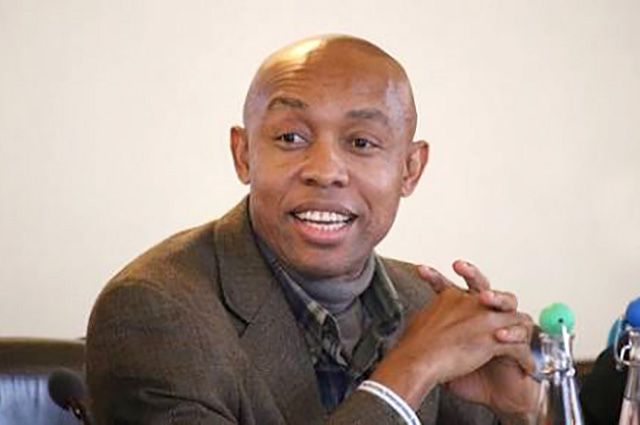
    Professor Chidi Anselm Odinkalu

    By Chidi Anselm Odinkalu

    57 years ago almost to the month, celebrated Kenya political scientist, Ali Mazrui, observed that “for some reason a disproportionate number of the historic acts of violence in Africa since independence have tended to happen in the months of January and February.” He had good reason for this.

    In January 1961, the Belgians and the Americans arranged to hand over to Moise Tshombe in Katanga, Patrice Lumumba, the inconvenient post-colonial Prime Minister of the country now known as the Democratic of the Congo. The following month, the world learnt of the brutal fate that befell Lumumba. The Congo and, indeed Africa, have both paid a heavy price for those events.

    Togo’s first president, Sylvanus Olympio, was killed in January 1963. Two years later, in January 1965, Pierre Ngendandumwe, Burundi’s Prime Minister, was assassinated.

    In the year before the assassination of Ngendandumwe, meanwhile, Ugandan, John Okello, led overthrow of Sultan Jamshid bin Abdullah in the very bloody Zanzibar Revolution. The Central Intelligence Agency (CIA) would later record with clinical economy that the effect of the revolution was that “the Arab regime of Zanzibar vanished in a single day as its leaders fled, died or were interned.”

    The year after the assassination in Burundi, it was the turn of Nigeria’s Prime Minister, Abubakar Tafawa Balewa together with the regional premiers in the Northern and Western regions. The following month, Ghana’s Kwame Nkrumah was overthrown while on his way to see Mao Tse Tung in Beijing, China.

    Professor Mazrui never did manage a dispositive answer to his question as to whether there is “any special reason why the opening months of January and February from year to year should have had such a disproportionate share of Africa’s great acts of turbulence?” Instead, he offered a telling insight, arguing that these events were the fallouts of the search for two forms of legitimacy essential to the trajectory of Africa after the colonial experience. One was the legitimacy of the state and the other was the legitimacy of regimes or of rulers.

    Nearly six decades later, these twin problems of state and regime legitimacy continue to afflict African countries but the ways in which different countries now respond to them have arguably made our collective African Januaries a little more interesting.

    In many countries, elections – rather than assassinations – have become the chosen path. In 2024, the people defenestrated ruling parties in Botswana, Ghana, Senegal, and even South Africa. Namibia’s ruling party edged a contest that produced the country’s first female president in an act of political survival for the ruling SWAPO that may just have postponed its day of electoral reckoning.

    Some of the elections during the year, of course, re-enacted familiar scenes from a discredited part in Africa’s history. Tunisia’s election in October 2024 arranged to re-select law professor and incumbent president, Kais Saied, with 90.7% of the votes cast. It was like a scene from the period before the Arab Spring.

    Since the turn of the millennium, however, many of Africa’s elections have been increasingly decided by judges not voters. In the latest example, in Mozambique, the ruling FRELIMO party procured a judicial validation of an election widely seen as heavily rigged in its favour. A country already ravaged by a murderous insurgency in its northern region of Cabo Delgado and a destructive cyclone must now live with self-inflicted ungovernability. The Botswana Democratic Party (BDP), in power since independence in 1966, made a different choice when the people rejected it.

    Judicial involvement in elections is not without high risk to the judges involved or to political stability. To deliver their judgment nullifying the rigged presidential election in 2020, the Malawi Defence Forces arranged to clothe all five judges of the Constitutional Court of Malawi who sat on the case with bullet-proof vests.

    In the same year, by contrast, the ruling party in Mali chose to steal through the courts 31 seats won by the opposition in parliament. The result was an uprising that led first to the dissolution of the Constitutional Court, and later the overthrow of the government in a military coup.

    Ghana’s 2024 election was the first in nearly one and a half decades not to end up in the courts. The candidate of the ruling party and incumbent Vice-President, Mahamudu Bawumia, conceded the race long before a far-from-credible electoral commission had got around to announcing any results.  Ahead of the election, the opposition had made it clear that they would not contemplate going to court if they were denied victory. In his concession, Bawumia saved the country from what would have been an assured date with instability.

    Judges do not always wait until after the ballot to weigh in with their own votes. In Burundi in 2015, President Pierre Nkurunziza was determined to run for a third term even though it seemed clear that he was constitutionally barred from doing so. The case ended up before the Constitutional Court where the judges initially decided to uphold term limits barring the president from running for a third term. Under pressure from a barrage of very personalised presidential threats, the Vice-President of the Constitutional Court, Sylvere Nimpagaritse, fled into exile and “the remaining judges then changed their decision in Nkurunziza’s favour.”

    The model of judicial overthrow of the popular will and its replacement with judges as the only eligible voters is, of course, an exclusively Nigerian invention. The politicians who control Nigeria’s Independent National Electoral Commission (INEC) are quick to intone “Go to court” at the end of every rigged election, secure in the knowledge that they have also rigged the courts and have many of the judges safely locked away inside their bedrooms.

    In the 2023 election cycle, over 81% of the seats contested ended up being decided by the judges. This business model of managing elections is bad both for democracy and for independence of the judiciary.

    First, it denies citizens the right to decide who governs them or on what platform.

    Second, the way in which judges achieve this result is not much different from the toppling of elective government by soldiers with guns. The only difference when the judges do it is that they deploy the artifice of law when in fact what they seek to do is to replace legality with corrupt whim.

    Third, the depth of judicial involvement in elections in Nigeria makes the judiciary a plaything of the politicians who have every incentive to capture and corrupt it.

    Fourth, this creates an internal market in judicial business that casualises all but political cases where the judges involved increase their chances of trading in judicial power and legitimacy for cash or powerful networks at the hands of politically exposed litigants.

    In 2025, Nigeria will enter the foothills of another major election cycle. With all the political parties all but defanged, the main theatre of activity will be the judiciary. In Imo State, for instance, where the National Judicial Council (NJC) has removed the Chief Judge for falsifying her age, the State Governor has chosen not to designate any replacement because, ostensibly, he does not find the options available politically palatable.  

    In the elections in Tanzania this year and in Uganda at the end of the year, judges will be very active persecuting regime opponents. In Nigeria, that is already routine even before the electoral gong tolls. The upshot is almost assuredly to guarantee uncertainty instead of ending it.

    When he wrote in 1968, Ali Mazrui thought that the opening months of the year seemed to guarantee turbulence in Africa. Today, that tendency occurs all year round. Far from becoming less turbulent, Africa’s January may have infected the remaining months of the year with a turbulent contagion.

    A lawyer and a teacher, Odinkalu can be reached at chidi.odinkalu@tufts.edu 

    Editor
    • Website

    Related Posts

    US-Nigeria relations: The partnership of the hawk and the hen by Owei Lakemfa 

    February 13, 2026

    FGM, culture and a dangerous lie, by Cheta Nwanze

    February 11, 2026

    Democracy in Name Only: Why Bother?, by Osmund Agbo

    February 11, 2026
    Editors Picks

    2027 Election timetable: Clarify result transmission plans – ADC urges INEC 

    February 13, 2026

    Otti unveils iconic Omenuko Bridge, vows to resist attempts to return Abia to ‘era of deceit’

    February 13, 2026

    US-Nigeria relations: The partnership of the hawk and the hen by Owei Lakemfa 

    February 13, 2026

    2027 general election: INEC fixes presidential polls on Feb 20, governorship on March 6 

    February 13, 2026
    Latest Posts
    Politics

    2027 Election timetable: Clarify result transmission plans – ADC urges INEC 

    Abia

    Otti unveils iconic Omenuko Bridge, vows to resist attempts to return Abia to ‘era of deceit’

    Owei Lakemfa

    US-Nigeria relations: The partnership of the hawk and the hen by Owei Lakemfa 

    Subscribe to Updates

    Get the latest news from Ikenga Online.

    Advertisement
    Demo

    IkengaOnline is a publication of the Ikenga Media & Cultural Awareness Initiative (IMCAI), a non-profit organisation with offices in Houston Texas and Abuja.

    We're social. Connect with us:

    Facebook X (Twitter) Instagram YouTube LinkedIn WhatsApp RSS
    • Home
      • Igboezue
      • Hall of Fame
      • Hall of Shame
    • News
      • Other States
      • National
      • International
      • Interviews
      • Personalities
    • Abia
    • Anambra
    • Ebonyi
    • Delta
    • Enugu
    • Imo
    • Rivers
    • Politics
    • Opinion & Editorial
      • Editorial
      • Columnists
        • Osmund Agbo
        • Chido Onumah
        • Uche Ugboajah
        • Hassan Gimba
        • Edwin Madunagu
        • Rudolf Okonkwo
        • Azu Ishiekwene
        • Osita Chidoka
        • Owei Lakemfa
        • Chidi Odinkalu
      • Opinion
    • Special Reports
    • Art & Entertainment
      • Nollywood
      • Music
      • Ikengaonline Literary Series (ILS)
      • Life
      • Travels
    • Sports

    Subscribe to Updates

    Get the latest news from Ikenga Online.

    Facebook X (Twitter) Instagram LinkedIn WhatsApp RSS
    © 2026 Ikenga Online. Ikenga.

    Type above and press Enter to search. Press Esc to cancel.