

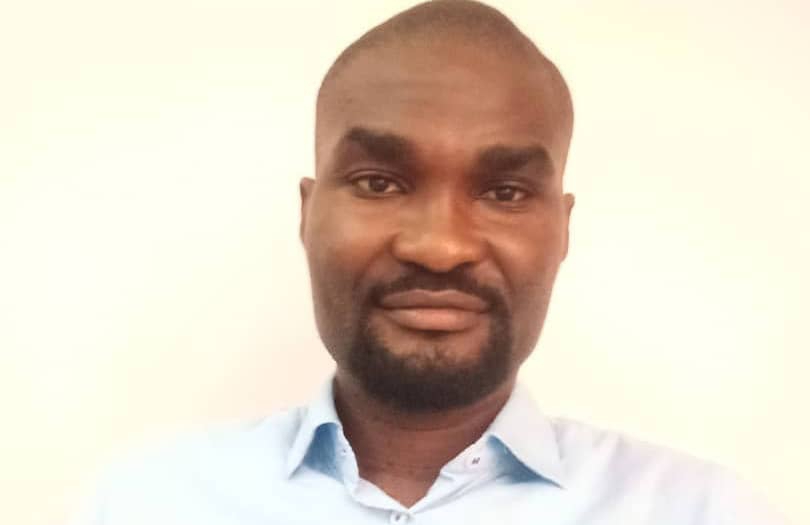
By Nnamdi Elekwachi
‘Growth without development,’as an economic rationale, explains why a resource-rich state like Nigeria remains poor even when, on the macroeconomic level, growth is being moderately recorded with the GDP growing by 3.84% year-on-year in 2024.
In most resource-rich nations, the economy could grow nominally (in GDP terms) without translating into real and material wealth where the lives of citizens are positively impacted. In almost all the resource-rich states where the productive forces had not been mobilised, any attempt at escaping poverty had proven an uphill battle. Nigeria is a typical example of this. Even when the country was under Olusegun Obasanjo and Goodluck Jonathan, the two eras considered as the glorious years of the current Republic, it had been a poor, albeit, developing country.
Recently, review statements were issued by the World Bank and IMF, Nigeria’s multilateral development partners. The IMF’s forecast projected a better outlook for Nigeria’s economy which it said was on a recovery path and slowly growing under Tinubu, whereas the World Bank, during the same period under review, warned about looming poverty and budgetary shortfalls. Both reports are correct and not contrasts; they are simply different profiles of the same portrait, after all both the World Bank and IMF had, in the Spring Meeting of 2025, warned Nigeria of ‘structural risk.’
First, I commend President Tinubu for clearing Nigeria’s debt with the IMF, including outstanding SUKUK obligations, though there is still an annual $30 million special drawing rights (SDR) in the IMF to be met. The Tinubu government had, time and again, shown commitment to clearing backlog of debts it inherited from the Buhari-led government before it. First, Tinubu cleared 90% of aviation forward claims known as ‘trapped’ or ‘blocked funds’ owed foreign airline operators thereby restoring investor confidence in Nigeria’s aviation industry in line with aviation practices and standards like the Cape Town Convention and Bilateral Air Service Agreement (BASA) allowing secured creditors to recover their investments abroad. That was in November of 2024.
However, Nigeria really needs to look inward to address poverty or rising income inequality to which the World Bank is alerting her.
Nigeria’s 2025 budget is ₦54.99 trillion, the highest so far, though experts say based on foreign exchange uncertainties, the sum is only huge in nominal sense when compared with appropriations before 2023. In the same way, it has been argued that revenues accruing from subsidy removal may pale in comparison vis-à-vis previous years, given the current foreign exchange regime. Still, the same 2025 budget was described as ‘overly ambitious’ with assumptions therein likely not to be realised in its cycle.
Nigeria assumes that in the 2025 fiscal year, the price of crude will be $75 per barrel; that daily production will hit 2.06 million barrels; that inflation will significantly drop to 15%. The same budget assumed a foreign exchange rate benchmark of ₦1,400/$. Conversely, realising all of these assumptions seem farfetched. The price of crude, usually subject to distortions in the volatile international oil market, had sometimes slumped to as low as $65 per barrel or even below with Nigeria currently meeting a daily production of 1.6 million barrels per day as against the assumed 2.06 million barrels.
Inflation remains 23.71%, that is 8% above budgetary assumption of 15%, and while foreign exchange fluctuations have eased a little, the naira is trading at 1,600 to the dollar, against the 1,400 the budget assumed. These are the headwinds slowing the economy in the 2025 financial year, meaning that Nigeria may never meet expected inflows. At this pace, Tinubu may not reach his ‘$1 trillion economy by 2030’. Already, it is beginning to seem a long mile, a journey to a never-never land.
Just a few days ago, Dr. Akinwumi Adesina, Nigeria’s former agriculture minister and the serving African Development Bank (AfDB) president, said that Nigeria’s GDP had fallen below independence levels in 1960. The government spokesperson, Bayo Onanuga, had to quickly release a well-worded rebuttal laced with figures and data, which dwelled solely on macroeconomic fronts like ‘GDP and per capita income,’ but failed to address the real issue – rising income gap.
Giving back the economy to the people will fix the economy to a large extent. I mean, if domestic production and consumption grow, the economy will rebound. Simple. The U.S., for example, has not witnessed a double-digit growth for two decades now or so, but the mortgage sector, domestic consumption, innovation, and services sector kept the economy going before the COVID-19 pandemic. GDP and income per capita may grow, they may even average an annualised rate of 15% or more but still fail to translate into prosperity provided real wealth is not in the hands of the people. The informal sector must be activated to move more people up the income ladder as this will increase the number of households with disposable income.
Poverty sometimes is the result you get when people in the government are richer than the people they purport to govern.
President Tinubu has not been able to cut inflation drastically. Under his watch, the CBN had been tightening liquidity and increasing monetary policy rate (MPR), a way of reducing inflation. But Nigeria’s inflation is not entirely market-driven, the kind you address by tightening liquidity. It is policy-induced inflation, a fallout of mismanagement under Buhari, later accompanied by subsidy removal and unification of foreign exchange windows without incentives to production by Tinubu.
Removing oil subsidy and floating the naira, which are not bad, should have been preceded by incentives to local manufacturers who source the dollar for raw materials. Since Tinubu was aware his reforms would come with pains, he ought to have injected stimulus into the economy, to create the necessary buffer around the real sector in order to improve basic social services, create employment and expand the economy. This is what I consider real growth; not paper reforms that are not even felt by the people, the actual owners of the economy.
Not until Nigeria makes the people real actors and players in the economy through equitable wealth redistribution and reallocation can the nation defeat poverty. Under Buhari, for example, the government mooted ‘lifting hundred million Nigerians out of poverty’ in July of 2019, but by 2022 multidimensional poverty had worsened with Nigeria still retaining the title of ‘the poverty capital of the world’ it earned in 2018.
Tinubu’s monetary policy reforms has been accompanied by a sharp decline in purchasing power seen evidently in shrinking household finances, persistent inflation and a contracting consumer price index. The Nigerian media had aptly captured it as the ‘cost of living crisis.’ This is the reason about 2 million Nigerian children today are reportedly malnourished, lacking access to nutrient-rich food, a testament to household poverty. Evidently, Nigeria has yet to tackle poverty at a microeconomic level but chases macroeconomic growth (GDP). At most, what this may likely result in is structural imbalance, or better still economic disequilibrium; quite ironic.
When the government clears debts but focuses more attention on expanding the macroeconomic space without initiating social and economic transformation that reaches the poor, growth only becomes marginal. This is the case with Nigeria under Tinubu, and it is called growth without development.
Nnamdi Elekwachi, a Public Affairs Analyst, writes from Umuahia, Abia State.
