

Stephen Ukandu, Umuahia
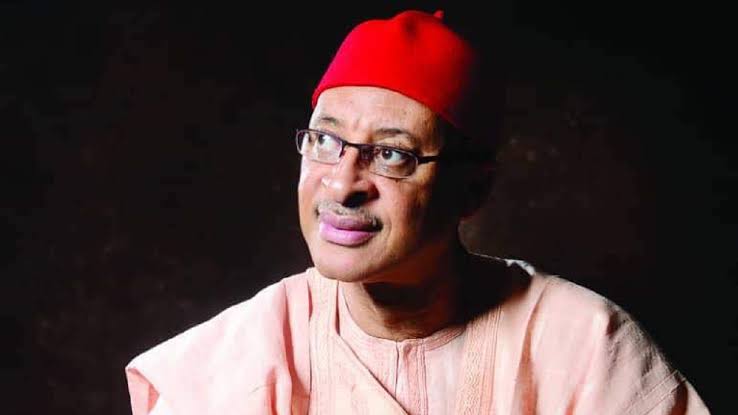
Renowned political economist, Professor Pat Utomi, has officially unveiled his long-anticipated ‘Shadow Cabinet’ as part of a broader push for value-based governance under the African Democratic Congress (ADC) coalition.
Unveiling the cabinet on Wednesday at the conclusion of a two-day retreat of the “Big Tent” political coalition in Abuja, Utomi said the ADC’s adoption as the coalition’s official platform marked a major step toward building a credible political alternative for Nigerians.
“The coalition is a work in progress, aimed at using value-driven projects to move the country forward,” Utomi said. “It will give Nigerians an alternative.”
Members of the shadow cabinet include Nana Kazaure (Information); Riwang Pam (Security); Nike Omola (Women and Gender Development); and Peter Agada (Infrastructure, Urban Development and Housing).
Utomi clarified that the shadow cabinet is not intended to rival the ruling All Progressives Congress (APC), but to offer expert policy reviews that could help guide national development.
“Our purpose is not to compete with the government but to enrich governance through constructive alternative views,” he said.
“Good governance depends on the welfare of the people, and for that, we must ensure policy accountability and viable alternatives.”
He emphasized that strong democratic institutions thrive on checks and balances, adding that Nigeria must embrace similar mechanisms to ensure effective leadership.
Utomi criticized the widespread practice of lawmakers implementing constituency projects, calling it a distortion of legislative responsibility.
“Legislators are elected to make laws, not to execute projects.
“This practice reduces them to beggars, reliant on the executive for favors, and weakens their primary role of providing oversight,” he argued
The Lagos Business School professor recalled discussing the idea of a shadow cabinet with the late President Umaru Musa Yar’Adua in 2007. He noted that while Yar’Adua supported the initiative and even offered him a role in government, he declined in order to maintain his independence.
Utomi attributed many of Nigeria’s governance challenges to a lack of political will and the absence of a coherent national development strategy. Citing the ongoing Coastal Road project, he argued that such infrastructure should be the product of inclusive planning involving affected states and regions.
“Nigeria has the data and capacity to be great,” he said. “What we lack is the discipline and will to govern effectively. Policy inconsistencies remain a major setback.”
He also took aim at the federal government’s approach to agriculture, insisting that modern farming demands mechanization, not the continued use of hoes and cutlasses.
Utomi called for urgent government action to tackle national challenges, especially insecurity, and reiterated his call for the establishment of state police to enhance internal security.
