

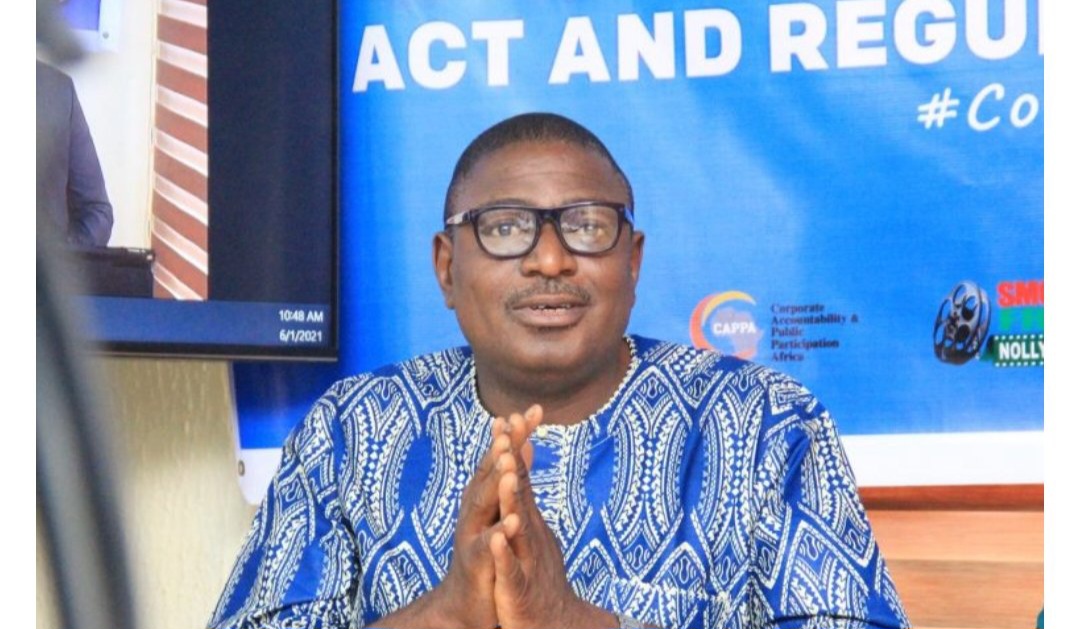
Ike Nnachi, Abakaliki
The Corporate Accountability and Public Participation Africa (CAPPA) has called on the Federal Government to urgently increase the Sugar-Sweetened Beverage (SSB) tax from its current ₦10 per litre to at least ₦130 per litre.
It argued that the proposed increase is a necessary step to curb the rising tide of non-communicable diseases (NCDs) in Nigeria.
The Executive Director of CAPPA, Akinbode Oluwafemi, made the call at a two-day journalism training on SSB tax and industry interference, held at Exclusive Serene Hotel and Suites, Enugu.
Addressing journalists drawn from the five South-East states of Abia, Anambra, Ebonyi, Enugu and Imo, Oluwafemi warned that Nigeria stands at a critical public health and economic crossroads, with sugary drinks driving a surge in NCDs such as type 2 diabetes, heart disease, and obesity.
He said: “Noncommunicable diseases currently account for about 30 percent of all deaths in Nigeria.
“Yet, the industry responsible for flooding our markets with sugar-laden drinks continues to profit while using lobbying and misinformation to block meaningful policy interventions.”
He described Nigeria’s current ₦10 per litre SSB tax, introduced in 2021, as ineffective and symbolic, noting that it adds only ₦3 to the price of a typical 33cl soft drink bottle that now retails for over ₦300.
“It is a drop in the ocean compared to the health crisis we are facing,” he added.
Oluwafemi cited international evidence, including the World Health Organisation’s recommendation that sugary drink taxes should raise retail prices by at least 20 percent to have any meaningful effect.
According to him, an effective tax in Nigeria would be at least ₦130 per litre.
“Research has shown that such a tax would reduce consumption, encourage product reformulation, and raise revenue that can be reinvested in health and social services,” he said.
“This is not just a fiscal tool—it’s a moral and public health necessity.”
He also condemned what he described as aggressive interference by the sugary drinks industry, accusing it of using front groups, lobbying, and misinformation to oppose stronger taxes.
He specifically mentioned a recently surfaced group, ThinkBusiness Africa, which he said was spreading misleading claims about potential job losses.
“But experiences from countries like Mexico and South Africa show otherwise,” Oluwafemi stated.
“Mexico saw a 12 percent drop in sugary drink consumption after introducing a 10 percent tax, without any long-term job losses. South Africa’s levy led to a 29 percent drop among low-income groups within a year,” he added.
He urged the media to play an active role in holding the government and the industry accountable.
“This training is about empowering journalists to report accurately on SSB tax, expose industry interference, and spotlight the human cost of unchecked sugar consumption. Your reporting can drive policy change and help save lives,” he said.
Oluwafemi concluded by urging journalists to use their platforms to amplify the call for an increased SSB tax, stressing that the health of over 200 million Nigerians should not be compromised for the profits of a few beverage companies.
“Raising the SSB tax to ₦130 per litre is not just necessary—it’s urgent. Nigeria’s health future depends on it,” he declared.
