

…EEDC increased our bill from ₦9,000 to ₦47,000 per month – Protesters
Stephen Ukandu, Umuahia
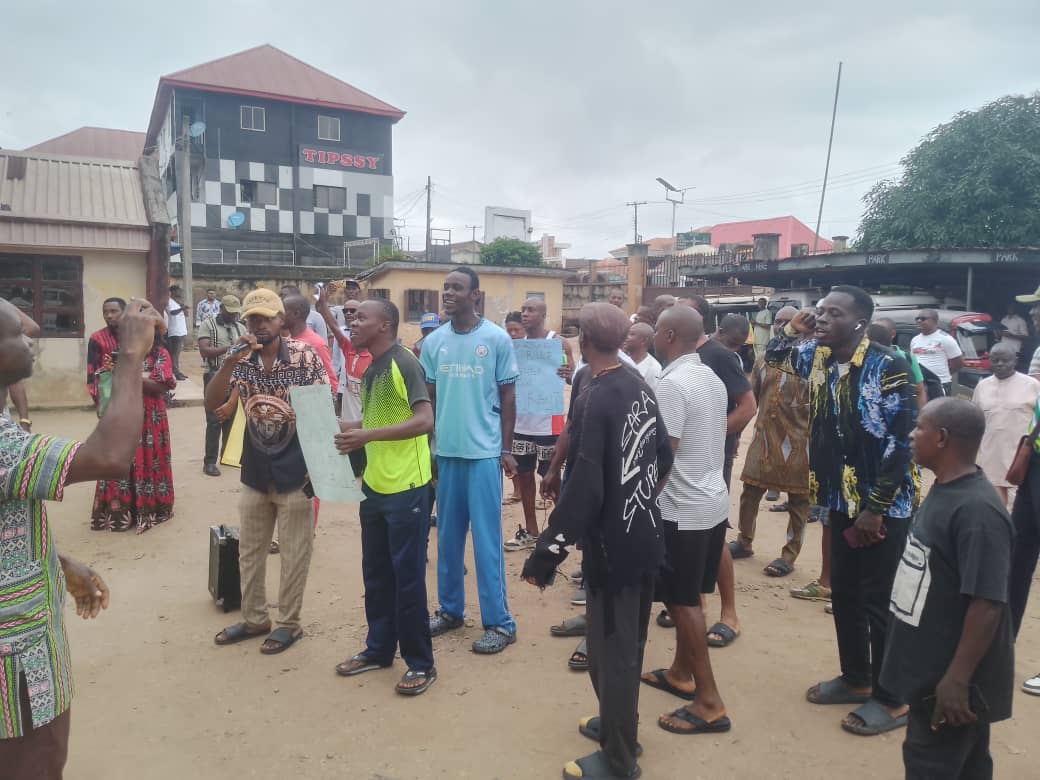
Residents of Umuahia, the Abia State capital, on Tuesday took to the streets to protest what they described as an outrageous hike in estimated electricity bills.
According to the protesters, households in the World Bank Housing Estate, Umuahia, have had their monthly bills arbitrarily increased from about ₦9,000 to between ₦47,000 and ₦50,000.
During the peaceful demonstration, the residents appealed to the management of the Enugu Electricity Distribution Company (EEDC) to reverse the hike. They also called on the state government to intervene, lamenting that the new charges were beyond their means.
“It makes no economic sense for us to pay electricity bills higher than our house rent. Most of us are salary earners and cannot cope with this kind of exploitation,” one of the protesters said.
Carrying placards with inscriptions such as “World Bank cries out, power bills higher than house rent” and “Estimated billing illegal and criminal,” the protesters marched through major streets before meeting with EEDC officials.
President of the Estate Residents Association, Mrs. Florence Kanu, while addressing EEDC’s Operations Manager, Engineer Amaga, said the residents preferred prepaid meters to estimated billing.
“The residents are mostly civil servants and low-income earners. How can we cope? Many of us noticed sharp increases in our July bills. How do you explain a situation where someone received a ₦47,000 bill against ₦9,000 in June?” she queried.
She further alleged that when residents requested prepaid meters, they were asked to pay ₦100,000, insisting that meters should ordinarily be provided free of charge.
“Someone earning below ₦80,000 monthly cannot pay as much as ₦47,000 for electricity. It is outrageous,” she added.
Responding, the Umuahia District Operations Manager of EEDC, Engineer Amaga, explained that the increase was due to the transfer of the Estate to Band A billing. He, however, noted that the district had little control over the situation since the charges were generated from estimated meters.
