

Stephen Ukandu, Umuahia
A new Igbo socio-cultural group, Igwebuike Alaigbo, has accused the Federal Government of hypocrisy over the continued detention of the leader of the Indigenous People of Biafra (IPoB), Mazi Nnamdi Kanu, while at the same time claiming to be interested in restoring peace in the South East.
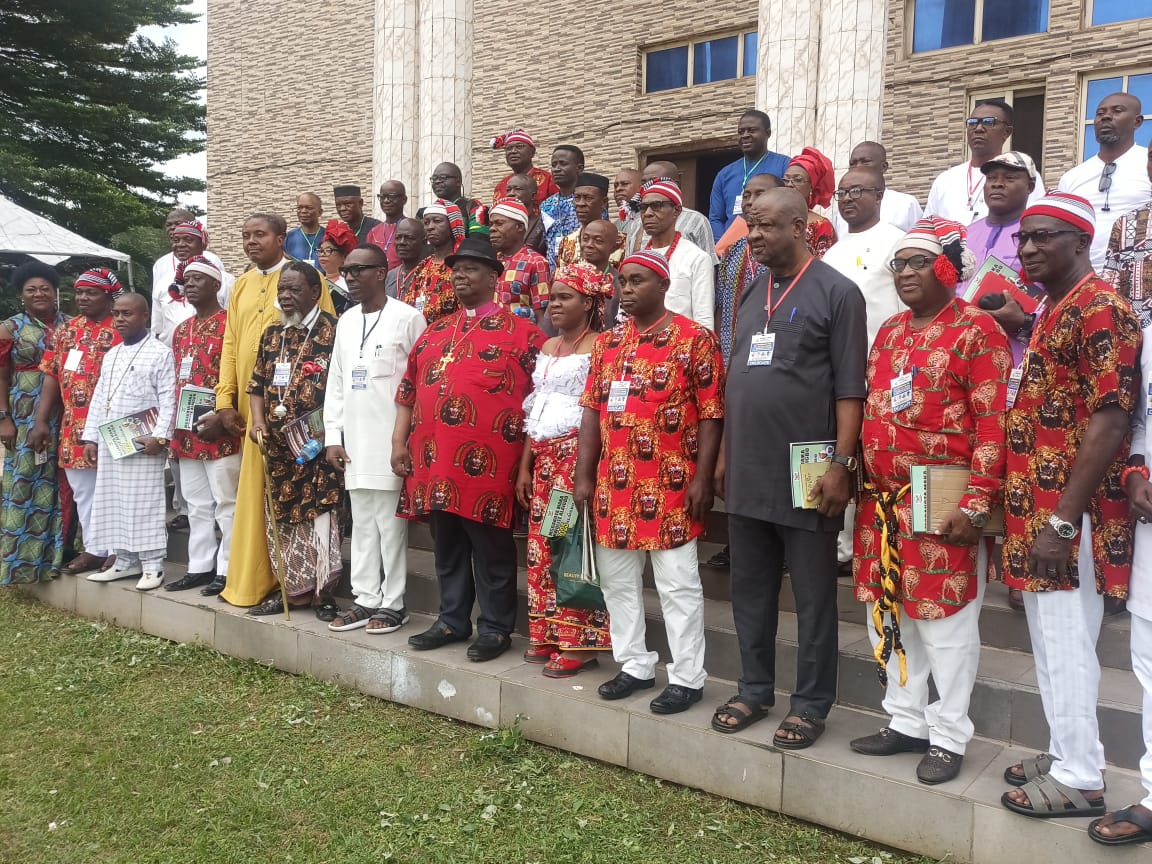
The group, which held its inaugural conference in Umuahia, Abia State, insisted that Kanu’s release was critical to reducing tension in the region.
Delegates at the conference, convened by the Ecclesiastical Archbishop of Aba Province and Bishop of Isiala Ngwa South Diocese, Anglican Communion, His Grace Archbishop Isaac Nwobia, unanimously agreed that the IPOB leader’s freedom would fast-track peace and security in the South East.
They blamed Kanu’s continued incarceration as one of the major causes of insecurity in the zone and urged the Federal Government to prove its sincerity towards Ndigbo by releasing him unconditionally.
Lamenting the huge human and economic losses his detention had caused the region, the conference — which drew representatives from Ohanaeze Ndigbo, Igbo Think Tank, Igbo Women Assembly, the Catholic Diocese of Umuahia, and other stakeholders across the seven Igbo-speaking states including parts of Delta and Rivers — declared Kanu’s release a necessary step toward national unity and rebuilding the confidence of Ndigbo in the Nigerian project.
In a 10-point communiqué read by Archbishop Nwobia and signed by former Ebonyi State Commissioner for Information, Chief Abia Onyeike, and Comrade Godson Ibekwe-Umelo, the group condemned rising insecurity in the region and called on the Federal Government, South East governors, and security agencies to “rise to the occasion and stop the wanton destruction of lives and property.”
Among other resolutions, the conference recommended the establishment of indigenous vigilante outfits to complement community policing, and urged traditional rulers to demonstrate greater commitment to the protection of their people.
The communiqué also called on South East governors to address the high rate of youth unemployment, which it identified as a driver of insecurity, and demanded that security agencies expose “hired operatives working with vested interests and highly placed Nigerians who sponsor violence in the South East for selfish gains.”
On the justice system, the group urged the Judiciary to halt what it described as “the impending collapse of Nigeria’s criminal justice system,” lamenting that criminal cases were no longer diligently prosecuted.
The stakeholders further expressed concern over the declining interest in the Igbo language among young people, warning that it could go extinct if urgent steps were not taken. They recommended that Igbo be made compulsory in school curricula, and urged families and churches to promote its use.
The conference also advocated the revival of the Igbo apprenticeship system, adoption of science and technology in development policies, and genuine youth empowerment by political leaders instead of their exploitation during elections.
Earlier in her remarks, the President of the Igbo Women Assembly (IWA), Lolo Nneka Chimezie, attributed rising agitation among Igbo youths to sustained marginalisation by the Nigerian state. She decried the migration of Igbo youths in search of greener pastures, warning that Ala Igbo risked being overrun by strangers if the trend continued.
She urged Ndigbo to invest at home and called on governors to support women in mechanised farming. Chimezie also accused Britain of complicity in the ordeals of Ndigbo, describing it as punishment for their role in the fight for independence.
Speaking in the same vein, the Publicity Secretary of the Indigenous Igbo Congress in Rivers State, Chief Ajuruchi Ogondah Ihunwo, stressed that Ndigbo in Rivers (Igwe Ocha) would never deny their identity, and commended Archbishop Nwobia for convening the group as a credible platform for unity.
Archbishop Nwobia, who facilitated the formation of Igwebuike Alaigbo, explained that the group was created to strengthen collaboration among Igbo socio-cultural organisations and to pursue security, development, and cultural values for the survival of the region.
“If the Igbo nation is not secured, there is no way business can thrive. Government will only be wasting energy searching for investors without first providing an enabling environment,” he said.
Other notable delegates included the Chairman of the Board of Trustees of Igbo Think Tank, Prof. Madubike Ezeibe; Leader of the South East Solidarity Front, Rev. Augustine Ehiemere; HRM Eze John Ibezim of Ibeku; and several vigilante leaders.
